2025 bZ4X FWD vs. Volkswagen ID.4 GTX: The EV Showdown
Electric vehicle (EV) sales are reaching new heights, and two models consistently stand out among the top sellers: the Toyota bZ4X and the Volkswagen ID.4. These aren’t just two more products in an increasingly crowded electrification space; they represent a bold statement from two of the world’s largest automakers. In this detailed 2025 bZ4X FWD 73.1 kWh vs. Volkswagen ID.4 GTX review, we’ll explore why these two electric compact SUVs are among the best options for families, commuters, and tech enthusiasts alike. It’s not just about exceptional range and performance; it’s about two distinct philosophies of design and engineering.
Drawing on years of hybrid technology and forward-thinking design, the Toyota bZ4X offers a practical yet innovative approach to going all-electric. Meanwhile, the Volkswagen ID.4 GTX builds on the brand’s established identity, delivering a sportier, performance-driven variant that has become a global bestseller. Both vehicles feature cutting-edge technology and styling for 2025, but they cater to different audiences. This review will dive into the details that make each model unique, from hardware and design to driving dynamics and technology. It’s a classic clash of philosophies: Toyota’s radical new thinking versus Volkswagen’s firm dominance. Practical efficiency or spirited performance? This guide will help you decide which EV is the right fit for your journey into electric mobility.
Quick Recap: A Snapshot of Two EV Titans
Before diving into the detailed comparison, here’s a quick overview of what makes the Toyota bZ4X FWD 73.1 kWh and Volkswagen ID.4 GTX standout electric SUVs. This summary highlights the key aspects we’ll explore in-depth throughout the review.
| Aspect | Toyota bZ4X FWD 73.1 kWh | Volkswagen ID.4 GTX |
|---|---|---|
| Manufacturer | Toyota: A powerhouse in hybrid technology and reliability. | Volkswagen: A classic automaker turned global EV leader. |
| Model Year | 2025 | 2025 |
| Body Type | Compact electric SUV | Compact electric SUV |
| Variants/Trims | Practical trims: XLE and Limited | Performance-focused GTX variant |
| Interior and Exterior Styling | Futuristic, angular design with a tech-forward, driver-focused interior. | Smooth, traditional SUV silhouette with a minimalist, spacious interior. |
| Driving and Ride | Polished, comfortable, and efficient for daily commutes. | Potent and entertaining with brisk performance from its dual-motor AWD setup. |
| Features and Innovations | Advanced Toyota Safety Sense™ and a user-friendly interface. | Volkswagen IQ.DRIVE and sporty design cues. |
| Pricing | Designed for affordability and value. | Premium pricing with a focus on power and features. |
Design Philosophies: A Tale of Two Electric SUVs
When designing an electric car from the ground up, automakers face a critical question: Should the car look like a radical new vehicle, or should it offer a familiar design that eases the transition to electric? This question defines the design philosophies of the Toyota bZ4X and the Volkswagen ID.4 GTX. While these two vehicles are entirely unique, their contrasting approaches make for an exciting comparison between futuristic innovation and traditional familiarity.
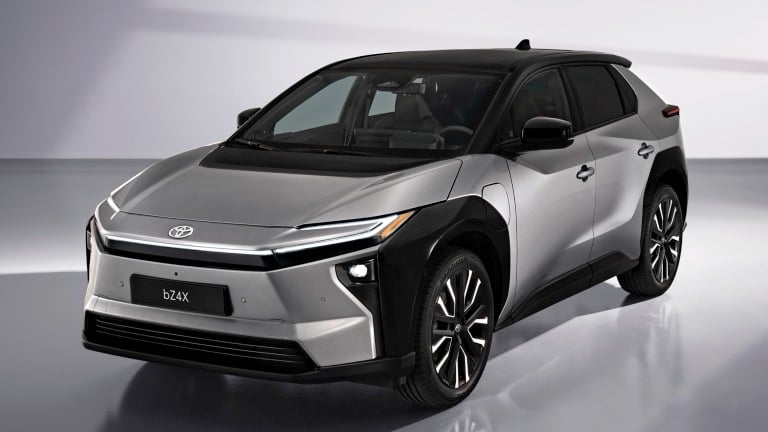
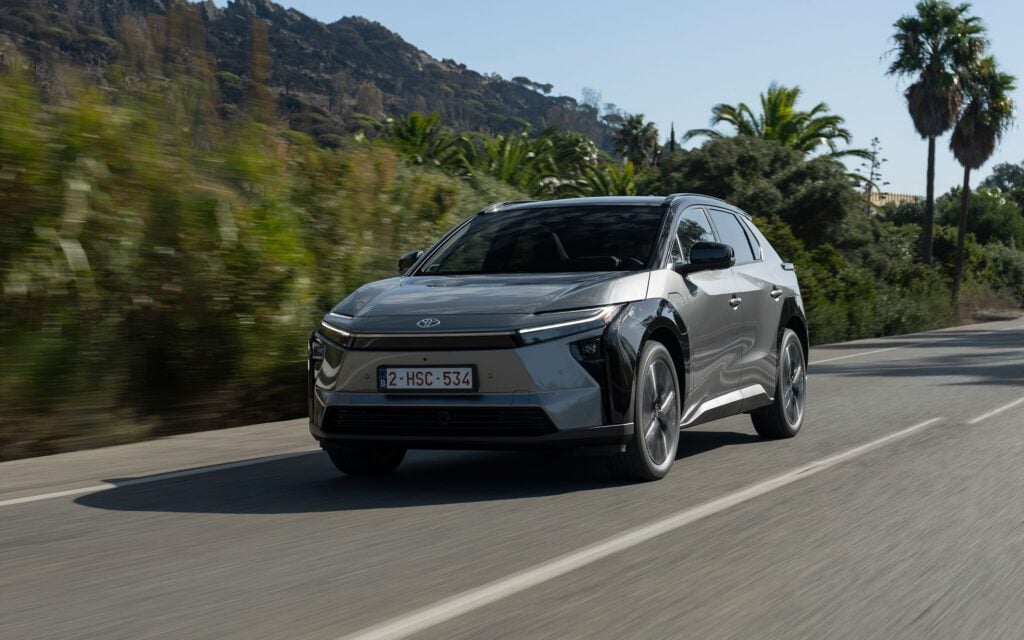
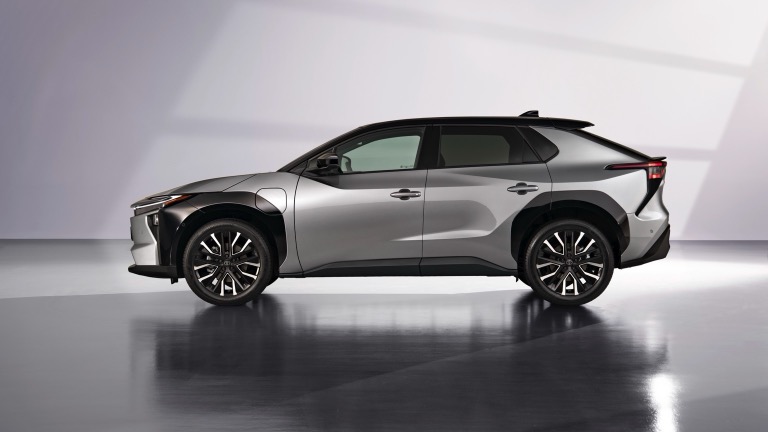
Toyota bZ4X: The bZ4X’s design philosophy, “Hi-Tech and Emotion,” is deliberately progressive. Built on the e-TNGA platform (a dedicated EV platform co-developed with Subaru), it features a long wheelbase and short overhangs, creating a spacious interior and a low centre of gravity. The exterior is a mix of sharp folds, aerodynamically precise air spoilers, and an innovative “hammerhead” nose that replaces the traditional grille with a hub for sensors and cameras. Every line and surface is sculpted for aerodynamic efficiency, extending the vehicle’s range. Toyota’s “Beyond Zero” mission is evident in the bZ4X’s futuristic yet approachable design, aimed at younger drivers and early adopters of new technology.
Volkswagen ID.4 GTX: In contrast, the ID.4 GTX embraces a more traditional design, built on Volkswagen’s modular electric drive matrix (MEB) architecture. Its sleek, dynamic silhouette prioritises volume and utility, with taut surfaces and a timeless shape. The GTX variant adds sporty elements, including specific front and rear bumpers, gloss black detailing, exclusive lighting, and rear spoilers, enhancing its performance character. However, the overall design remains warm and inviting, reassuring buyers that an EV can integrate seamlessly into their daily lives. The ID.4 GTX appeals to families and first-time EV buyers who value practicality and comfort over bold statements.
Toyota vs. Volkswagen: Appealing to Diverse Tastes
The design conflict between the bZ4X and the ID.4 GTX reflects their competing principles. Both are compact electric SUVs targeting a broad market, but they cater to different sensibilities. The bZ4X’s angular, cyberpunk-inspired profile and tech-forward interior attract younger buyers and those who want their car to make a statement. It’s a bold assertion of autonomy and innovation. Meanwhile, the ID.4 GTX’s restrained, conventional SUV design appeals to older buyers and families seeking a practical, no-nonsense electric car. Its familiar shape reassures new EV drivers, making the transition to electric feel natural and intuitive.
Key Design Highlights
- Purposeful Design: The bZ4X’s angular “hammerhead” front end and aerodynamic contours reduce wind resistance, improving driving range.
- Spacious Interior: A long wheelbase, enabled by the e-TNGA platform, provides generous legroom for both front and rear passengers, enhancing comfort on long journeys.
- Familiar Form: The ID.4 GTX’s classic SUV shape offers a sense of comfort and practicality, making the switch to electric feel natural and intuitive.
- Performance Cues: Sporty GTX-specific bumpers and lighting elements communicate the vehicle’s enhanced power and dynamic capabilities without compromising its accessible design.
Decoding the Lineup: A Breakdown of Variants and Trims
For most buyers, choosing an electric car often comes down to selecting the best trim level that fits their budget. Toyota and Volkswagen both offer EV SUVs with distinct versions that cater to different needs and preferences. In this section of our 2025 bZ4X FWD 73.1 kWh vs. Volkswagen ID.4 GTX review, we’ll break down the trims and their value propositions to help you decide which model suits you best.
The 2025 Toyota bZ4X lineup focuses on accessibility and efficiency, offering plenty of standard features without overwhelming buyers with too many options. The XLE trim is a comfortable, well-equipped base model designed for those who want advanced safety, technology, and a smooth ride without unnecessary extras. The Limited trim takes things up a notch, adding premium materials, enhanced comfort, and cutting-edge technologies for a more luxurious experience.
Volkswagen’s ID.4 lineup takes a different approach, starting with the Pro and Pro S trims as solid baselines for range and power. The GTX, however, is a performance-focused model that stands apart as the top-tier option. With its dual-motor AWD configuration, sporty design, and enhanced traction, the GTX is tailored for those who crave excitement and dynamic driving capabilities.
Comparing the 2025 Toyota bZ4X and Volkswagen ID.4 Trims
| Feature Category | Toyota bZ4X XLE (FWD) | Toyota bZ4X Limited (FWD) | Volkswagen ID.4 GTX (AWD) |
|---|---|---|---|
| Powertrain | Single Motor FWD (150 kW) | Single Motor FWD (150 kW) | Dual Motor AWD (Approx. 250 kW) |
| Wheels | 18-inch alloy wheels | 20-inch machine-finished alloy wheels | 20-inch standard GTX-specific alloy wheels (21-inch optional) |
| Infotainment | 12.3-inch Toyota Audio Multimedia touchscreen | 12.3-inch Toyota Audio Multimedia touchscreen | 12.9-inch touchscreen with updated infotainment software |
| Key Interior Features | Fabric/SofTex®-trimmed seats, Wireless charging | SofTex®-trimmed seats, Heated & ventilated front seats | GTX-branded seats with red stitching, Ambient lighting |
| Driver Assistance | Toyota Safety Sense™ 3.0 (TSS 3.0) | TSS 3.0 with Panoramic View Monitor | IQ.DRIVE suite with Travel Assist |
| Value Proposition | High-value entry with comprehensive safety and tech | Premium comfort and convenience features for a luxury feel | Top-tier performance and sporty styling |
Optional Packages and Notable Upgrades
Both Toyota and Volkswagen offer optional packages to further enhance their respective trim levels. For the Toyota bZ4X Limited, buyers can opt for an advanced audio package featuring a JBL® sound system for premium sound quality. Other options include a split rear spoiler and a fixed panoramic glass roof, which improve aerodynamics and create a more spacious feel inside the cabin. These packages allow buyers to enjoy luxury amenities without necessarily upgrading to a higher trim level.
The Volkswagen ID.4 GTX, already a top-tier model, can be made even more luxurious with several additional packages. A panoramic glass roof adds a sense of openness to the cabin, while upgraded 21-inch wheels give the vehicle a sportier stance. Buyers can also opt for a premium audio system, transforming the GTX into a concert hall on wheels. These options allow GTX buyers to fully customise their vehicle with every available feature and tech upgrade.
- Smart Value: The bZ4X XLE trim includes Toyota Safety Sense™ 3.0 as standard, offering advanced driver aids like Full-Speed Range Dynamic Radar Cruise Control for a stress-free commute.
- Elevated Comfort: Upgrading to the bZ4X Limited provides heated and ventilated SofTex®-trimmed front seats, ensuring comfort in any climate.
- Confident Performance: The ID.4 GTX’s dual-motor AWD system delivers exceptional traction and stability, enhancing confidence during acceleration and cornering in various weather conditions.
- Distinctive Style: The GTX variant features unique bumpers, badging, and interior accents, making it clear you’re driving the performance-focused model in the ID.4 lineup.
Performance and Feel: The Toyota bZ4X Driving Experience
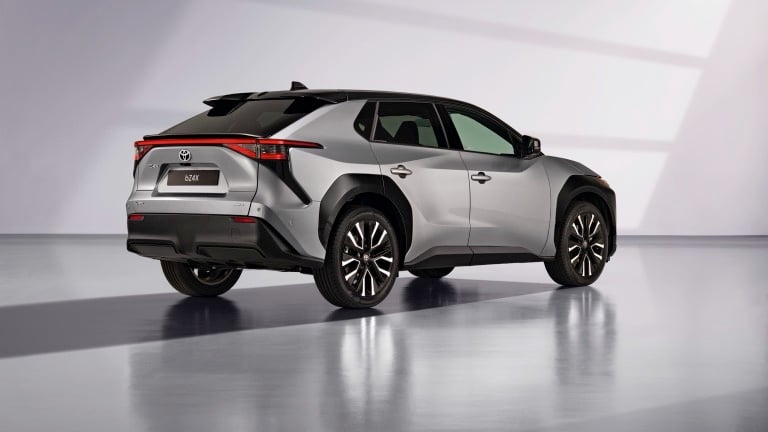
A car’s true character is revealed on the road, and the 2025 Toyota bZ4X has been meticulously designed to deliver a smooth, confident, and dependable driving experience. In this comparison of the 73.1 kWh bZ4X FWD vs. Volkswagen ID.4 GTX, the bZ4X distinguishes itself by focusing on relaxation, efficiency, and reliability. Whether it’s a daily school run or a weekend getaway, the bZ4X offers a quietly efficient drive that makes every trip feel effortless.
The single-motor front-wheel-drive (FWD) bZ4X is powered by an AC synchronous permanent magnet (APM) electric motor, delivering 150 kW of power, equivalent to 201 horsepower and 266 Nm of torque. Unlike traditional engines that require revving, the bZ4X provides instant torque as soon as you press the accelerator, making city traffic and merging onto highways a breeze. The one-speed transaxle ensures a seamless flow of power, eliminating gear shifts that could disrupt the serenity of the drive. With a 0-100 km/h acceleration time of 7.5 seconds and an electronically limited top speed of 160 km/h, the bZ4X strikes a balance between performance and efficiency, making it a laid-back yet engaging vehicle to drive.
Handling is another strong suit of the bZ4X, thanks to its e-TNGA platform, which positions the sizable battery pack low in the chassis. This design reduces body roll during cornering and enhances the car’s connection to the road. The steering is light and precise, making it easy to navigate tight parking spaces while maintaining stability and calmness at highway speeds. The suspension, featuring a MacPherson strut front and multi-link rear setup, is tuned for comfort, absorbing road imperfections and creating a tranquil cabin environment free from noise and vibration.
The bZ4X also offers customizable driving modes to suit different conditions and preferences. Normal mode balances performance and efficiency, Eco mode conserves energy by limiting power output and climate control functions, and Snow mode reduces throttle input to improve traction on slippery roads. Additionally, the Regenerative Braking Boost Mode enables a near “one-pedal” driving experience, where lifting your foot off the accelerator slows the car while converting kinetic energy into battery power. This feature not only enhances efficiency but also reduces driver fatigue in stop-and-go traffic.
- Instant Torque: The 201-horsepower electric motor provides immediate acceleration, making city driving and highway merging effortless and responsive.
- Composed Handling: A low centre of gravity from the e-TNGA platform ensures a stable, planted feel through corners, boosting driver confidence.
- Refined Ride Quality: The suspension is expertly tuned to smooth out bumps and road imperfections, ensuring a comfortable and serene journey for all passengers.
- Efficient Braking: The Regenerative Braking Boost Mode enables a near “one-pedal” driving style, reducing driver fatigue and increasing overall range.
bZ4X FWD 73.1 kWh: Cabin Design, Comfort, and Technology
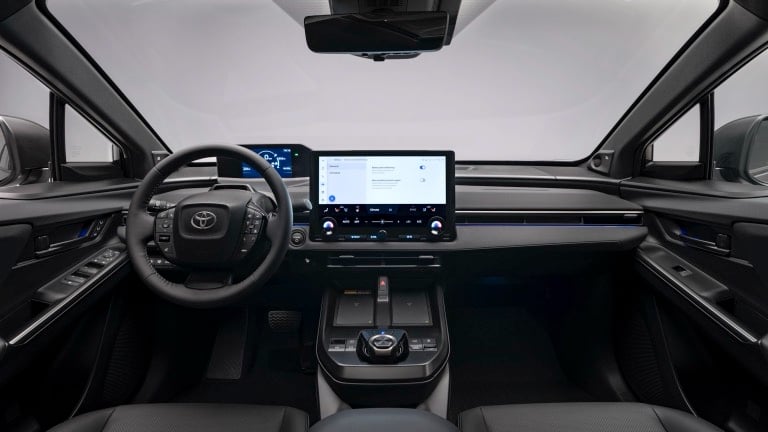
Step inside the 2025 Toyota bZ4X, and you’ll find an interior as futuristic as its exterior. Toyota has seamlessly blended driver focus and passenger comfort into a cockpit that’s equally suited for thrilling drives and relaxing cruises. This section of our bZ4X FWD 73.1 kWh vs. Volkswagen ID.4 GTX review highlights the smart design, premium materials, and state-of-the-art technologies that make the bZ4X a standout choice.
An Unconventional and Driver-Centric Cockpit
The bZ4X’s cockpit immediately catches your attention with its innovative design. Toyota has replaced the conventional instrument cluster with a Top-Mount Multi-Information Display. This 7-inch digital screen is positioned high on the dashboard, above the steering wheel, allowing drivers to access essential information such as speed and battery status at a glance. This ergonomic design minimises eye movement, enhancing safety and reducing driver fatigue.
The interior styling is simple yet airy, enhanced by soundproof glazing that creates a quiet, home-like atmosphere. High-quality materials, including soft-touch surfaces, rugged fabrics, and available SofTex®-upholstered seating, add a touch of luxury. Heated and ventilated seats, available on the Limited trim, ensure comfort in any climate. The centre console, finished in piano black, houses the rotary dial shifter, electronic parking brake, and wireless charging pad, all within easy reach.
Seamless Connectivity and Intuitive Infotainment
The bZ4X features a 12.3-inch Toyota Audio Multimedia display, positioned prominently on the dashboard. This high-resolution touchscreen serves as the command centre for navigation, audio, and vehicle settings. With wireless Apple CarPlay® and Android Auto™, you can connect your smartphone effortlessly, enjoying your favourite apps and music without the clutter of cables. The interface is clean and intuitive, making it easy to use even for first-time EV drivers.
Voice control takes connectivity a step further. By simply saying “Hey, Toyota,” drivers can interact with the system’s Intelligent Assistant to adjust the climate, get directions, or change the audio source. This hands-free feature allows you to stay focused on the road while customising your driving experience. The bZ4X also includes up to five USB ports, ensuring that every passenger can keep their devices charged and ready to go.
Space, Practicality, and Advanced Driver Assistance
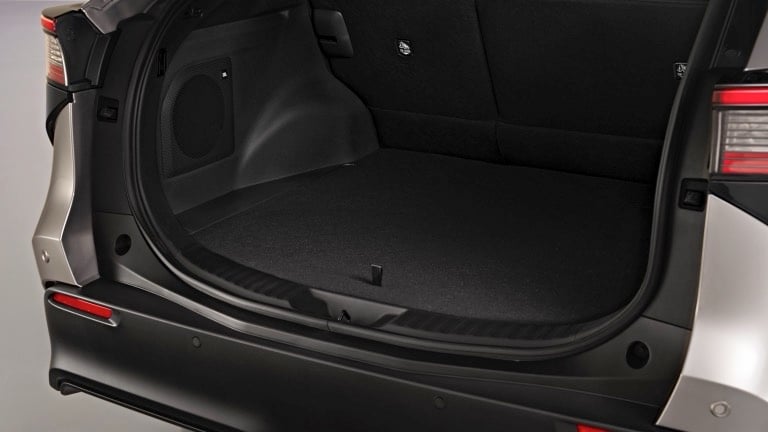
The bZ4X’s bespoke e-TNGA platform creates a surprisingly spacious cabin. The flat floor and long wheelbase provide ample legroom for both front and rear passengers, making long trips comfortable for everyone. Smart storage solutions include a large open tray beneath the centre console, useful door pockets, and a generously sized glovebox. The rear seats can be folded in a 60/40 split, expanding the already generous cargo space for larger items.
Technology in the bZ4X isn’t just about entertainment; it’s about safety. All models come standard with Toyota Safety Sense™ 3.0 (TSS 3.0), a comprehensive suite of advanced active safety and driver-assist technologies. Features include a Pre-Collision System with Pedestrian Detection, Full-Speed Range Dynamic Radar Cruise Control, Lane Tracing Assist, and Proactive Driving Assist. Higher trims can also be equipped with a Panoramic View Monitor, which uses four cameras to provide a 360-degree overhead view, making parking and manoeuvring in tight spaces easier and safer.
- Heads-Up Design: The Top-Mount Multi-Information Display sits above the steering wheel, allowing you to check speed and range with minimal eye movement.
- Intuitive Control: A large 12.3-inch touchscreen with wireless Apple CarPlay® and Android Auto™ keeps you connected to your digital world without the clutter of cables.
- Spacious Comfort: The flat-floor design, made possible by the e-TNGA platform, provides exceptional legroom for rear passengers, making long trips more enjoyable for everyone.
- Confident Driving: Standard Toyota Safety Sense™ 3.0 provides advanced driver aids like Dynamic Radar Cruise Control to reduce fatigue during highway travel and enhance overall safety.
Safety and Reliability: Engineered for Peace of Mind
Choosing a new car, especially an electric one, can feel overwhelming with all the buzzwords and promises about performance and technology. However, nothing compares to the importance of safety and reliability. Toyota has long been known as the safe choice for car buyers, offering products that remain dependable for years. The 2025 Toyota bZ4X builds on this legacy with a solid body, modern safety features, and unmatched confidence. In this section of the 73.1 kWh bZ4X FWD vs. Volkswagen ID.4 GTX 2025 review, we’ll explore the features that make the bZ4X a reliable partner for your daily journeys.
A Foundation of Strength and Advanced Protection
Safety begins with the body and frame of a vehicle. Built on Toyota’s purpose-designed e-TNGA (Toyota New Global Architecture) platform, the bZ4X is engineered for both engaging driving dynamics and outstanding crash safety performance. High-strength steel surrounds the passenger compartment, designed to crumple and deflect energy away from occupants in the event of a collision. The battery pack is integrated into the chassis and housed in a robust cross-cage structure, shielding it from impacts while enhancing overall vehicle stiffness.
The bZ4X is equipped with a total of eight airbags, including driver and front passenger airbags, side curtain airbags, and front seat-mounted side airbags, creating a protective shell for all occupants. Its advanced braking system, the Electronically Controlled Braking (ECB) system, combines hydraulic braking with regenerative braking for strong and reliable stopping power. Traditional safety features like Anti-lock Braking System (ABS), Brake Assist (BA), and Smart Stop Technology® (SST) work seamlessly together to provide enhanced control during emergency braking situations.
Standard Smart Safety: Toyota Safety Sense™ 3.0
What truly sets the bZ4X apart is that its advanced safety features are not optional; they come standard across all trims. The Toyota Safety Sense™ 3.0 (TSS 3.0) package is designed to enhance driver awareness and reaction times, helping to prevent accidents and reduce stress on the road. This comprehensive suite includes:
- Pre-Collision System with Pedestrian Detection: Utilises a camera and radar to detect potential frontal collisions with vehicles, pedestrians, or cyclists. If a risk is detected, it provides audible and visual warnings and can automatically apply the brakes to mitigate or avoid a collision.
- Full-Speed Range Dynamic Radar Cruise Control: Maintains a preset speed while automatically adjusting to keep a safe following distance from the vehicle ahead, even bringing the car to a complete stop if necessary.
- Lane Tracing Assist: Uses road markings to help keep the vehicle centred in its lane when cruise control is active, reducing driver fatigue on long highway journeys.
- Proactive Driving Assist: Provides gentle braking and/or steering to support tasks like maintaining distance from other vehicles, pedestrians, or cyclists, enhancing overall driving confidence.
Built for the Long Haul: Toyota’s Legacy of Reliability
Reliability is at the core of Toyota’s brand, and the bZ4X is no exception. As an EV, the bZ4X benefits from having fewer moving parts compared to traditional internal combustion engine vehicles. This means no oil changes, spark plugs, or exhaust systems, resulting in reduced maintenance needs and fewer potential issues over the vehicle’s lifetime.
Toyota’s decades of expertise in battery technology, honed through its leadership in the hybrid market, are evident in the bZ4X’s 73.1 kWh battery. Designed for durability and resilience, the battery features an advanced cooling and management system to maintain optimal health over years and tens of thousands of kilometres. This commitment to quality ensures that the bZ4X delivers the dependable driving experience Toyota owners have come to expect for generations.
- Rigid Foundation: The e-TNGA platform creates a high-strength safety cell, providing a robust structure designed to protect occupants in a collision.
- Standard Intelligent Safety: Every bZ4X comes with Toyota Safety Sense™ 3.0, offering advanced driver aids that help prevent accidents and reduce stress on the road.
- Confident Braking: An advanced Electronically Controlled Braking system delivers powerful and reliable stopping performance in all conditions.
- Dependable by Design: With fewer moving parts and a battery system backed by decades of hybrid expertise, the bZ4X is engineered for long-term reliability and lower maintenance.
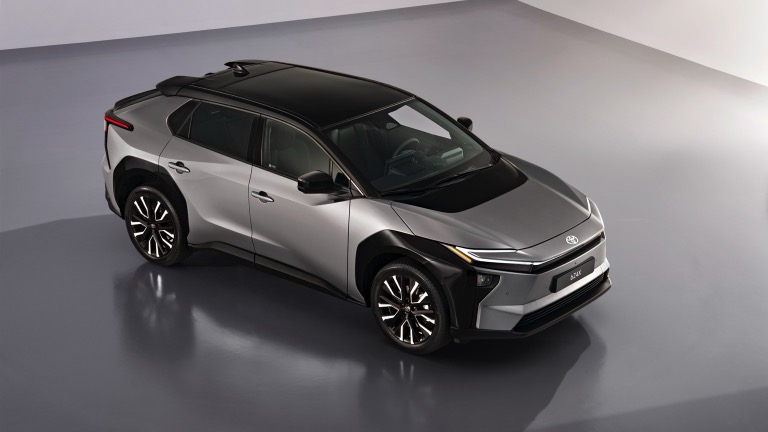
Head-to-Head: How the bZ4X and ID.4 GTX Stack Up
With the electric SUV market more competitive than ever, choosing the right model can feel overwhelming. The Toyota bZ4X and Volkswagen ID.4 GTX are two standout contenders, each offering unique strengths in design, performance, and technology. To help you navigate the landscape, we’ve compared these two models against other class leaders, the Tesla Model Y and Hyundai IONIQ 5. By examining key metrics like price, performance, range, and overall value, this comparison will help you decide which electric SUV best fits your needs.
The Competitive Landscape: bZ4X vs. Key Rivals
The table below provides a snapshot of how the Toyota bZ4X, Volkswagen ID.4 GTX, Tesla Model Y, and Hyundai IONIQ 5 compare across key specifications. While the data focuses on base models for fairness, figures may vary depending on trim levels, options, and regional availability.
| Feature | Toyota bZ4X XLE (FWD) | Volkswagen ID.4 GTX (AWD) | Tesla Model Y Long Range (AWD) | Hyundai IONIQ 5 SEL (RWD) |
|---|---|---|---|---|
| Powertrain | Single Motor FWD | Dual Motor AWD | Dual Motor AWD | Single Motor RWD |
| Power (approx.) | 201 hp | 335 hp | 514 hp (est.) | 225 hp |
| 0-100 km/h (approx.) | 7.5 seconds | 5.4 seconds | 4.8 seconds | 7.3 seconds |
| Range (WLTP est.) | Up to 516 km | Up to 515 km | Up to 533 km | Up to 488 km |
| Design Philosophy | Futuristic & Angular | Sporty & Conventional | Minimalist & Sleek | Retro-Futuristic & Geometric |
| Starting Price (est.) | Most Accessible | Premium | Premium Plus | Competitive |
| Value Proposition | Reliability, Safety, Efficiency | Performance, Brand Legacy | Tech, Performance, Charging Network | Design, Charging Speed, Features |
Which Electric SUV Is Right for You?
Each of these electric SUVs caters to a different type of buyer, offering distinct advantages based on your priorities:
- For the Pragmatist: Choose the Toyota bZ4X for its unmatched blend of reliability, standard safety features, and overall efficiency, ensuring peace of mind for years to come.
- For the Enthusiast: The Volkswagen ID.4 GTX delivers a spirited driving experience with its powerful dual-motor setup, perfect for those who want performance without sacrificing SUV practicality.
- For the Technophile: The Tesla Model Y leads with cutting-edge software, industry-defining performance, and access to the extensive Supercharger network.
- For the Trendsetter: The Hyundai IONIQ 5 is the choice for those who prioritise unique design and ultra-fast charging capability, making a stylish statement wherever they go.
Why Choose Between the bZ4X and ID.4 GTX?
Both the Toyota bZ4X and Volkswagen ID.4 GTX are exceptional electric SUVs, representing the best of what their brands have to offer. While they cater to different audiences, they share a commitment to innovation and quality. Here’s how they stack up:
- The Toyota bZ4X: A brilliant combination of efficiency, comfort, and intelligent design, with legendary reliability at its core. It’s the ideal choice for drivers seeking a smooth, stress-free transition to electric driving. With its spacious cabin, refined ride, and comprehensive safety features, the bZ4X is perfect for families and commuters alike.
- The Volkswagen ID.4 GTX: Designed to thrill, the ID.4 GTX offers quick acceleration, all-weather confidence, and sporty styling. It’s the perfect choice for drivers who want a practical SUV with the heart of a performance car.
The Toyota bZ4X: The Intelligent Choice
The Toyota bZ4X represents the next chapter in the brand’s journey toward electrification. It combines the latest technology with Toyota’s signature dependability, making it an excellent choice for anyone looking to go electric. Whether you’re commuting, running errands, or embarking on a family road trip, the bZ4X’s serene ride, roomy cabin, and advanced driver aids ensure a comfortable and confident experience. With its focus on reliability, safety, and efficiency, the bZ4X is a smart, sophisticated, and worry-free way to embrace the future of driving.
The Volkswagen ID.4 GTX: The Driver’s Choice
The Volkswagen ID.4 GTX takes the solid foundation of the ID.4 and adds a dose of excitement. With its dual-motor AWD system, sporty styling, and premium interior, the GTX is perfect for drivers who want a practical family SUV that doesn’t sacrifice performance. Whether you’re navigating city traffic or tackling twisty mountain roads, the ID.4 GTX delivers a dynamic and engaging driving experience that’s sure to impress.
The Right Electric SUV for Your Journey
Ultimately, the choice between the Toyota bZ4X and Volkswagen ID.4 GTX comes down to your priorities. The bZ4X is the rational choice for those who value reliability, safety, and efficiency, while the ID.4 GTX appeals to drivers who crave performance and sporty styling. Both models are excellent examples of what their brands represent, offering compelling visions of the future of electric mobility.
Step into the bZ4X FWD 73.1 kWh and unlock a new driving experience. Schedule your test drive today at The.Car is your gateway to the best electric SUVs.