Proace Verso M 75 kWh vs Citroën ë-SpaceTourer: Which Electric People Carrier Wins on Comfort and Range?
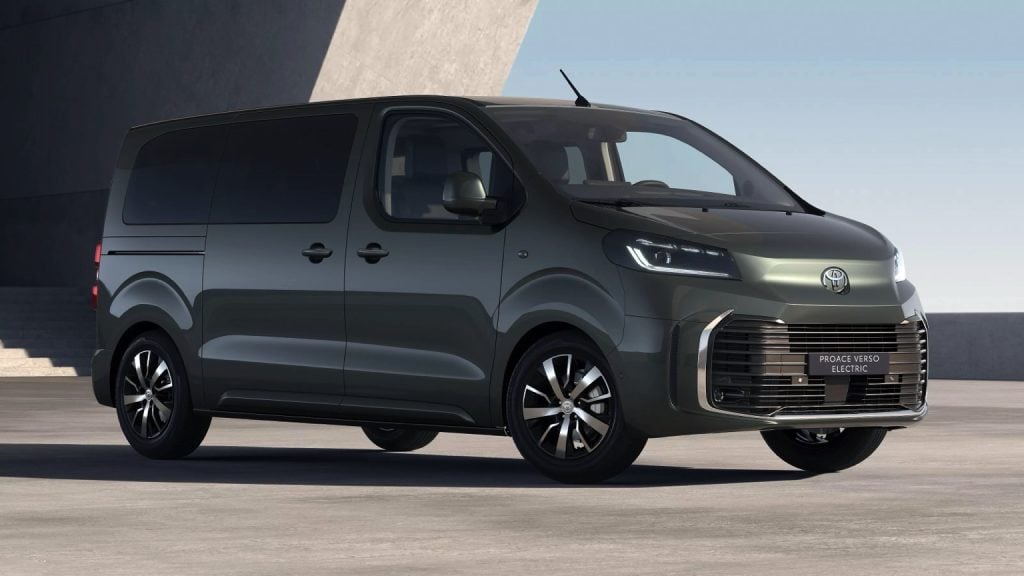
The electric people mover segment is growing rapidly, and two cars have clearly emerged as best sellers: the Toyota Proace Verso Electric, along with its sibling, the Citroën ë-SpaceTourer. Built on a common platform, these vehicles have become bestsellers that pack such an attractive combination of space, usefulness and zero-emission driving under one badge. No wonder they are popular, as they address directly the increasing requirements of large families and companies looking for e-mobility solutions without having to give up versatility or comfort.
These two do stand out in a crowded field by fulfilling the core promises of today’s EVs. With large battery options, such as the powerful 75 kWh pack, they solve one of the major concerns of people who want to buy an EV: distance. This enables one to take long-trip family holidays or do long runs of shuttle service on a daily basis without having to stress over repeated charging. In addition to their astonishing range, both cars are filled with cutting-edge technology and offer a smooth and quiet ride that changes the driving experience at its core for both the driver and passengers, making every trip more relaxing.
As a multi-purpose electric car, the Proace Verso and ë-SpaceTourer can satisfy an impressive range of needs. They are intended to be the quintessential family station wagon, dependable company van or inviting mobile office. The latest updates have brought subtle but significant design changes, new jets of air blades to the walls, new lights in the cabin and more user-friendly technology. From performance specifications to interior space, this detailed comparison will explain every aspect so you exactly know the difference between these two class leaders for people carriers. We’ll compare Toyota’s reputation for reliability and engineering focused on the customer against Citroën’s heritage of comfort and uniquely stylish design to give you a clear answer as to which car offers the best package for your particular needs.
A Quick Recap of the Contenders
Before we dive deep into the specifics, here is a brief overview of what the Toyota Proace Verso M 75 kWh and the Citroën ë-SpaceTourer bring to the table. This summary gives you a snapshot of their key characteristics, from design and performance to price, setting the stage for our detailed comparison.
- Manufacturer: Proace Verso is from Toyota, the most reliable car brand in the UK and the best car company to work for, with excellent engineering. The ë-SpaceTourer belongs to the Citroën brand, which has always been committed to comfort and innovative design solutions.
- Model Year: We are concentrating on the most recent versions, which are outfitted with new technology and have enhanced battery efficiency and modern designs.
- Body Type: Both are large MPVs (electric people carriers) and are at the top end of the spectrum as far as space and comfort for passengers and luggage are concerned.
- Available Trims/Variants: All the models come in some trims, from practical versions for business to high-spec family ones, which can be filled with features of luxury and driver aids.
- Interior and Exterior Designs: Although they are based on the same platform, they clearly look different. The Proace Verso boasts the sharp and contemporary design language of Toyota, while the ë-SpaceTourer embodies the softer, more comfort-centric design of Citroën.
- Performance and Driving Experience: Both provide a quiet, smooth, and responsive electric driving experience. Toyota’s ride focuses on being well-balanced and trustworthy, while Citroën’s is geared towards being soft and puckery.
- Powertrain Options: At the heart of this comparison is the 75 kWh battery pack, which provides a significant electric range. Both versions have the same output of power and torque from a single electric motor located at the front wheels.
- Innovations & Features: Innovations include a host of advanced driver assistance systems (ADAS), large touchscreen infotainment systems integrated with smartphones and flexible seating arrangements that enable quick switches between carrying passengers and cargo.
- Versus: In this roundup, we compare them all side by side, testing real-world range and charging speeds, as well as assessing cabin comfort and overall bang for buck to find which is best for which buyer.
- Price Range: The price is reasonable in the electric multi-purpose vehicle market, and the price will vary according to the trim level and the options. The final price matches the amount of luxury, technology, and number of passengers you want to take with you.
Overview & Design Inspirations: Proace Verso M 75 kWh
Although the Toyota Proace Verso Electric and Citroën ë-SpaceTourer are based on the same platform, the two design and engineering cultures offer similar philosophies but with two contrasting ideal versions of an electric people carrier. This is the divergence where the choice between them really starts to matter. Both use the Stellantis EMP2 platform, a flexible platform that delivers efficiency, safety, and supports electrification for both vehicles. But each company has put its unique stamp on the final product.
Toyota’s philosophy is Norwegian at its heart in Quality, Durability, and Reliability (QDR). Practicality, discreteness and meaningfulness are all the messages that the Proace Verso Electric conveys in its design. The manufacturer’s directive could be boiled down as “Engineered for life’s demands.” The clean exterior styling is crisp with sharp lines and a confident posture that exhibits dependability. When it comes to making things work better, Toyota has simply ensured that every aspect, from the seating layouts right through to the driver’s cockpit, feels intuitive and is tough enough to withstand being used, as there are growing families to feed or demanding businesses to run daily.
Citroën, meanwhile, takes inspiration from its history of pioneering design, and the utmost consideration for passengers’ well-being is led by its “Citroën Advanced Comfort” programme. Softer, more rounded: the ë-SpaceTourer embodies this principle. Its design is less about sharp edges and more about a warm, calming interior. The brand’s ethos is designed to make every trip as relaxing as can be. This is true from the suspension tuning that leans toward smooth rather than crisp handling, to the bright and airy cabin that’s meant to evoke a lounge on wheels.
Toyota Similarities and Differences
Essentially, these two are rivals because they provide the same answer to the same issue. They are both big, fully electric MPVs, both with the same 100 kW motor and 75 kWh battery pack option, and both with fairly similar figures in terms of performance and range. They deliver an immense, flexible interior room for as many as nine passengers, and they should be a full competitor to large families as well as taxi companies and shuttle operators looking to electrify. Compared to their shared platform gives they have similar sizes, safety, and core technology.
But it’s the differences that make or break the buyer’s decision. The Toyota Proace Verso design language, more aggressive front grille with sharper styling details inside and outside, will attract the buyer more focused on having a more modern and professional look. Its simple, practical interior is the selling point for anyone who wants long-term durability. It’s so much like a tool that’s been honed to perfection.
The more welcoming and softer Citroën ë-SpaceTourer will surely attract a different kind of audience, whose priorities lie more in lifestyle and comfort. Its interior design sometimes incorporates lighter colours and materials and a stronger focus on establishing a more relaxed atmosphere, which family-oriented patrons who view the car as an extension of their home may appreciate. And that makes the competition interesting: it’s not only about specs, but about whether you want proven harshness or cushiony comfort.
Shared Architecture
- Shared architecture: Both are built on the efficient and flexible EMP2 platform, creating a firm baseline.
- Toyota’s QDR Philosophy: The Proace Verso has been designed to deliver quality, durability, and reliability to the practicality-focused audience.
- Citroën’s Comfort Focus: Ride comfort and relaxation, and peacefulness inside the cabin are obvious priorities for the ë-SpaceTourer.
- Direct rivals: Same powertrain choices and cabin space capacity put them head-to-head in the electric MPV arena.
Variants & Trims Breakdown: Proace Verso M 75 kWh
The choice of vehicle is often a question of details, and that is just what trim levels are for. Toyota Proace Verso Electric and Citroën ë-SpaceTourer are available in a range of variants, so you can choose the one that best suits your requirements, whether that be an efficient, functional family transport or a high-end executive shuttle. Knowing about these different packages is the key to squeezing the best value out of your chosen people carrier and making sure it’s perfectly kitted out for what you want it to do.
Toyota breaks down the Proace Verso Electric range with a straightforward, functional and progressive approach. The range usually begins with a solid, functional basic model and ends with a luxurious VIP variant, with a more-or-less fully kitted mid-range variant that offers a good balance of features and value. In a similar way, the ë-SpaceTourer from Citroën is available in a number of different trims to suit both commercial and leisure requirements. While the naming may be different, the purpose is the same: to suggest gradual increases in comfort, technology, and style. Let us explain what every trim level brings to the table.
| Trim Level | Key Features & Value Proposition |
|---|---|
| Toyota Proace Verso – Shuttle | Value Focus: The essential workhorse. Designed for durability and maximum passenger capacity. Features include manual air conditioning, durable fabric seats, Bluetooth connectivity, and a full suite of safety features. It’s the ideal choice for businesses needing a reliable, no-frills electric shuttle. |
| Citroën ë-SpaceTourer – Business | Value Focus: Similarly positioned as a functional people mover. It offers a highly practical interior with easy-to-clean surfaces and flexible seating. Standard equipment is geared towards professional use, prioritising utility over luxury. |
| Toyota Proace Verso – Family | Value Focus: The family-friendly all-rounder. This mid-range trim adds significant comfort and convenience features like automatic climate control, a larger touchscreen infotainment system with smartphone integration, rear parking sensors, and improved interior materials. It represents the sweet spot for most families. |
| Citroën ë-SpaceTourer – Feel | Value Focus: A direct competitor to the Family trim. It enhances the passenger experience with extra comfort features, such as improved seat upholstery, sun blinds, and additional storage compartments, all while maintaining the brand’s signature smooth ride. |
| Toyota Proace Verso – VIP | Value Focus: The premium executive experience. This top-tier model includes leather upholstery, massaging front seats, a panoramic sunroof, a head-up display, advanced driver-assistance systems, and Xenon headlights. It’s designed for those who demand luxury and the latest technology. |
| Citroën ë-SpaceTourer – Shine | Value Focus: Citroën’s luxury offering. It mirrors the VIP trim’s premium ambitions with features like leather seating, advanced navigation, a premium sound system, and a comprehensive suite of safety and convenience technologies, all wrapped in a comfort-first package. |
Notable Upgrades and Optional Packages
Above the usual grades, the two brands also provide option packages and separate accessories to customise the vehicle to your needs even more. For the Proace Verso Electric, popular options often comprise the Toyota Safety Sense package on the base grades, with additional advanced driver aids such as Pre-Collision System and Adaptive Cruise Control. You can also opt for a sunroof or high-end audio systems on mid-level trims.
Citroën offers similar flexibility. ë-SpaceTourer customers can, with the exception of Base, most Common Sense Line and Extreme Line versions, that can be adapted with the optional Grip Control system that increases traction on different terrains, for those living in the countryside or in areas where the weather is often not the best. Other popular options are a motorised hands-free tailgate (great when you’ve got your hands full) and enhanced navigation systems with live traffic. Optional upselling does let buyers single out high-end features without buying the top trim.
- Tiered trim levels: Each model has a distinct path-up offering from base utilitarian to premium luxury, so you only pay for the features you want.
- Mid-Sized family focus: The Proace Verso Family and ë-SpaceTourer Feel trims strike the best value-for-money combination in the majority of buyers’ eyes.
- Premium VIP/Shine Trims: For an executive-class experience, luxury is standard with leather, massaging seats and cutting-edge technology in top-tier models.
- Customisable configurations: Select packages (i.e. advanced safety and convenience features) further enhance your vehicle.
Performance & Driving Experience: Proace Verso M 75 kWh
The powertrain is at the heart of all electric vehicles, and the Toyota Proace Verso Electric and Citroën ë-SpaceTourer are powered by the same winning powertrain. Both cars run the same electric motor with a battery pack, so performance figures on paper are identical. That common base makes such subtle aspects of driving feel and ride quality all the more important in determining which car best meets your needs. The powertrain is designed to be smooth, quiet and efficient, enabling a driving experience that is inherently different from the one you get in a traditional diesel-powered people carrier.
The electric motors of both vehicles deliver a healthy 100 kW, equating to 136 horsepower and 260 Nm of immediately accessible torque. This power is delivered to the front wheels via a single-speed automatic transmission that enables smooth and linear performance. The 0-100km/h time of approximately 13 seconds isn’t going to win any speed records, but it is more than enough for a car of this size and function. That instantaneous torque makes city driving a snap, which lets you pull away briskly from traffic lights and merge into traffic with confidence. The maximum speed is electronically restricted to 130km/h (about 81mph) to aid in battery range preservation, a reasonable move for a car that’s focused on getting you where you need to go most efficiently, not on getting you there fast.
The On-Road Feel: Comfort Meets Control
This is where the two brands’ philosophies truly diverge. While both people carriers offer a quiet and refined ride, their suspension setups and steering feedback create distinct driving personalities. The Toyota Proace Verso Electric is tuned to deliver a balanced and composed experience. Its suspension effectively absorbs most road imperfections, but it remains firm enough to provide a reassuring sense of stability, especially when cornering or driving on motorways. The steering feels precise and well-weighted, giving the driver a clear connection to the road without feeling overly heavy or cumbersome in tight urban environments. It strikes an excellent balance between comfort and driver confidence, embodying Toyota’s commitment to creating a reliable and predictable driving experience.
The Citroën ë-SpaceTourer, true to its brand heritage, places a greater emphasis on creating a “magic carpet” ride. Its suspension is noticeably softer, designed to glide over bumps and potholes with exceptional smoothness. This focus on ultimate comfort makes it an outstanding long-distance cruiser, isolating passengers from the harshness of the road. However, this softer setup can result in more body roll during cornering and a slightly less connected feeling for the driver. The steering is lighter, which is a benefit for low-speed manoeuvring and parking, but it may feel less engaging on winding country roads. The choice here is clear: Toyota offers a more driver-focused, controlled ride, while Citroën prioritises passenger comfort above all else.
Adapting to the Journey: Driving Modes
To help you tailor the driving experience and optimise efficiency, both vehicles come equipped with selectable driving modes. These modes adjust the powertrain’s characteristics, including throttle response and power output, to suit different conditions.
- Eco Mode: This mode focuses on extending the range. This limits the power output of the motor (usually to about 60kW/82hp) and softens the throttle’s response. It rounds things down with the climate control as well for energy savings, so it’s your best bet for long-hauls or low battery situations.
- Normal Mode: As the name indicates, it is the most common setting for day-to-day use. It features a moderate, balanced (around 80 kW / 109 hp) amount of power that can be used to deliver very decent levels of performance and fuel efficiency in a variety of driving scenarios ranging from city streets to A-roads.
- Power Mode: When maximum performance is required, Power mode makes available the full 100 kW (136 hp) and 260 Nm of torque. This tightens throttle response for the fastest acceleration possible, which can be helpful when passing or if the car is packed with passengers and luggage.
These driving modes add a welcome layer of versatility, allowing the driver to easily switch between prioritising maximum efficiency and accessing full power when needed.
- Instant Torque: The electric motor offers 260 Nm of torque for a quick and silent acceleration, ensuring effortless city driving.
- Balanced Ride: The Proace Verso’s suspension delivers a firm, yet comfortable and stable ride that inspires driver confidence in corners and on the motorway.
- Multiple Driving Modes: Switch among Eco, Normal and Power modes to customise your driving experience according to your needs, whether you are trying to make the most of your range or want to enjoy full power.
- Sophisticated and Quiet Cabin: The electric powertrain delivers near-silent operation, contributing to a peaceful and enjoyable ride for everyone.
Interior, Comfort & Technology: Proace Verso M 75 kWh
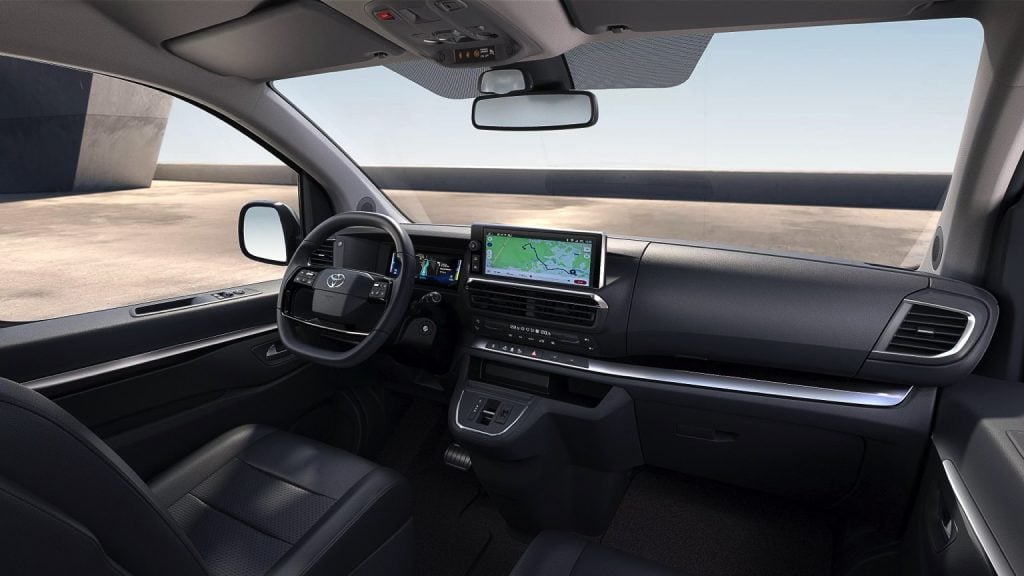
Step inside either the Toyota Proace Verso Electric or the Citroën ë-SpaceTourer, and you enter a world designed around space, flexibility, and passenger well-being. While both vehicles offer a commanding, high-up driving position and exceptional visibility, their approaches to cabin design and material choice reflect their distinct brand identities. The interior is arguably where owners will spend the most time, making comfort, technology, and practicality crucial factors in the decision-making process.
The Toyota Proace Verso Electric prioritises a sense of robust functionality. The dashboard layout is logical and driver-focused, with every control placed exactly where you would expect it. Materials are chosen for durability, with hard-wearing plastics and tough fabrics designed to withstand the demands of active family life or commercial use. This isn’t to say it lacks refinement; the build quality feels solid and dependable, giving you confidence that the cabin will look good for years to come. Ergonomically, the driving position is excellent, with ample adjustment in the seat and steering wheel to help you find the perfect setup for long journeys.
In contrast, the Citroën ë-SpaceTourer’s cabin aims to create a lighter, more relaxed atmosphere. It often employs lighter colour schemes and softer-touch materials in key areas to enhance its lounge-like feel. The design philosophy is centred on the Citroën Advanced Comfort programme, which extends beyond the ride quality and into the cabin environment. The focus is on creating a serene space that reduces stress on the move. While the fundamental layout is the same as its Toyota counterpart, these subtle differences in materials and finish give the ë-SpaceTourer a distinctly different personality, one that prioritises ambience alongside practicality.
Connectivity and Infotainment at Your Fingertips
Central to the modern driving experience is the infotainment system, and both people carriers are well-equipped. Most trim levels feature a 7-inch touchscreen that serves as the hub for media, navigation, and vehicle settings. The system is straightforward to use, with clear graphics and responsive touch controls. Critically, both models support Apple CarPlay™ and Android Auto™, allowing for seamless integration of your smartphone. This gives you easy access to your favourite navigation apps, music streaming services, and messaging, all controlled through the car’s screen or via voice commands.
Higher trim levels in both the Proace Verso and ë-SpaceTourer often include integrated navigation systems, which can provide EV-specific information like nearby charging stations. On the technology front, innovation is apparent. Some variants offer a head-up display, projecting key information like speed and navigation directions onto the windscreen so you can keep your eyes on the road. Digital instrument clusters are also available, replacing traditional dials with a configurable screen that can display a wider range of information, from driver-assistance system status to detailed energy consumption data.
Unmatched Versatility and Storage
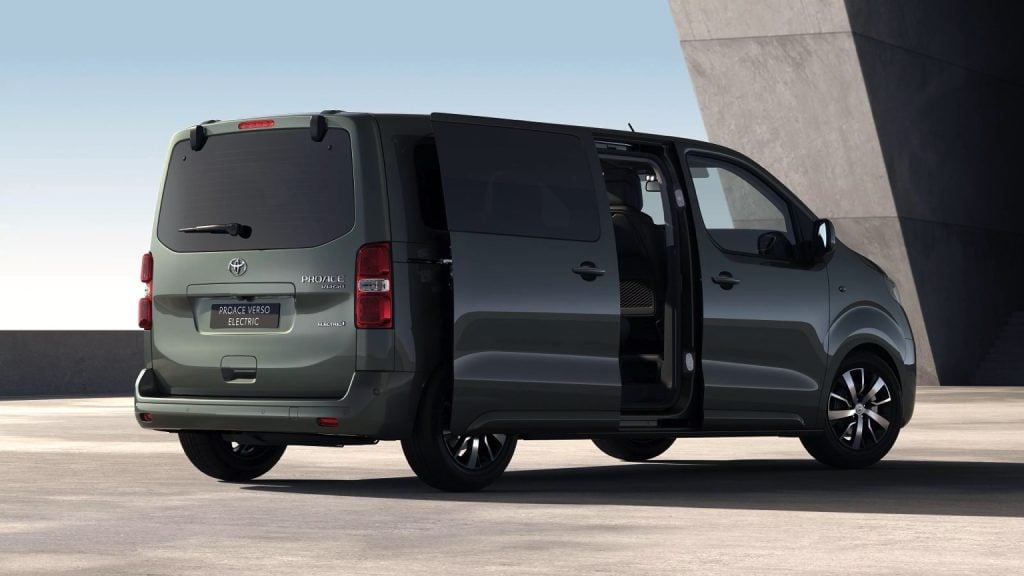
The true genius of these vehicles lies in their incredible versatility and thoughtful use of space. Both models are available in different lengths, but it is the cavernous and configurable interior that truly impresses. Seating arrangements can be specified for up to nine occupants, with seats that can slide, recline, fold, or be removed entirely. This modularity allows you to transform the vehicle from a family minibus to a van-like cargo haulier in minutes. Whether you are carrying a full sports team, luggage for a two-week holiday, or flat-pack furniture, these vehicles adapt effortlessly.
Storage solutions are abundant. You will find large door bins, multiple gloveboxes (some of which are cooled), cupholders, and clever cubbies dotted throughout the cabin. For passengers in the rear, fold-down tables on the front seatbacks and dedicated air conditioning controls ensure a comfortable and convenient journey. The sheer volume of space means that even with all seats in place, there is still a generous amount of room for luggage in the boot. This focus on practical, usable space makes both the Proace Verso Electric and ë-SpaceTourer exceptionally family-friendly and business-ready.
- Sturdy and practical cabin: The Proace Verso’s interior materials are resilient, designed for the stresses of daily family or commercial life.
- Seamless Smartphone Integration: Stay connected and entertained on the road with Apple CarPlay™ and Android Auto™, included on most trims.
- Versatile Seating Options: Provide maximum versatility for passengers and cargo with seats that slide, fold, or can be taken out entirely.
- Plenty of Smart Storage: There are numerous smart storage solutions throughout the interior to keep things neat and organised when on the road for long periods.
Safety & Reliability: Engineered for Peace of Mind
When transporting what matters most, whether it’s your family or your clients, safety and reliability are non-negotiable. Both the Toyota Proace Verso Electric and the Citroën ë-SpaceTourer are built on a modern platform engineered to provide exceptional protection for all occupants. This shared foundation means they come equipped with a comprehensive suite of safety features as standard. However, each brand’s reputation and approach to driver assistance technology adds another layer to consider when making your choice.
The structural integrity of both vehicles is designed to withstand and absorb impact forces, creating a robust safety cell around the passenger compartment. As they are based on their internal combustion engine counterparts, they benefit from years of safety development and testing. While specific Euro NCAP ratings for the electric versions can sometimes differ slightly from the diesel models, the underlying platform has a proven track record. The core safety package in both models includes a full array of airbags covering the driver, front passenger, and side curtain airbags for all rows, ensuring comprehensive protection in the event of a collision.
In addition to passive safety features, both people carriers are equipped with advanced active safety systems. Standard features include an Anti-lock Braking System (ABS), Electronic Stability Control (ESC), and Hill Start Assist, which work together to help the driver maintain control in challenging conditions. The immediate and predictable response from the electric motor, combined with regenerative braking, also contributes to a more controlled driving experience, particularly in stop-and-go city traffic.
Advanced Driver-Assistance Systems (ADAS)
This is an area where higher trim levels and optional packages truly shine. Both Toyota and Citroën offer sophisticated suites of driver-assistance technologies designed to reduce driver fatigue and prevent accidents before they happen. These systems act as a vigilant co-pilot, enhancing awareness and stepping in when necessary.
For the Toyota Proace Verso Electric, many of these features are bundled into the Toyota Safety Sense package. This includes:
- Pre-Collision System (PCS): Employs a camera and radar to monitor vehicles and pedestrians and alerts the driver with audible and visual warnings and brake assist if the driver does not take action.
- Adaptive Cruise Control (ACC): Keeps a constant speed and distance from the vehicle ahead, reducing and increasing its speed with traffic flow.
- Lane Departure Alert (LDA): Detects lane lines and warns the driver if the vehicle unintentionally begins to drift.
- Road Sign Assist (RSA): Detects road signs such as speed limits and shows them on the instrument cluster.
Citroën offers a very similar set of technologies, often grouped under names like the “Safety Pack.” These systems function in the same way, providing features like Active Safety Brake, Speed Limit Recognition, and Driver Attention Alert. The availability of these features often depends on the trim level, making it essential to check the specification sheet for the exact model you are considering. Top-tier variants typically include these advanced systems as standard, offering the highest level of protection.
A Reputation for Reliability
Reliability is a cornerstone of the Toyota brand, built on decades of engineering excellence and a commitment to Quality, Durability, and Reliability (QDR). Owners can expect the Proace Verso Electric to uphold this legacy. The simplicity of an electric powertrain, with fewer moving parts than a traditional engine, inherently reduces the number of potential failure points, leading to lower maintenance requirements and greater long-term dependability. Toyota’s extensive experience with hybrid and electric technology provides further assurance of the battery and powertrain’s longevity.
Citroën has made significant strides in quality and reliability in recent years, and the ë-SpaceTourer benefits from the robust engineering of the shared Stellantis platform. While the brand is more famous for comfort and design, the underlying mechanics of the ë-SpaceTourer are proven and dependable. Both vehicles come with comprehensive manufacturer warranties for the vehicle itself and a separate, longer warranty for the battery pack (typically 8 years or 100,000 miles), guaranteeing a minimum level of capacity and providing long-term peace of mind for buyers.
- Strong Safety Structure: Both are based on a contemporary platform with a reinforced safety cage that helps protect occupants.
- Full Bag Set: There is a full set of airbags for front and side for rows three and four, and curtain airbags for all rows as standard.
- Sophisticated Driver Aids: Such systems as Adaptive Cruise Control and Pre-Collision System are also available to ease driver strain and improve safety.
- Tested and Trusted: The simple electric powertrain is expected to require less maintenance, and Toyota’s reputation and generous battery warranties for both models back that up.
Head-to-Head: How Do They Stack Up?
Choosing the right electric people carrier involves weighing practical needs against personal preferences. While the Toyota Proace Verso Electric and Citroën ë-SpaceTourer share a platform, their distinct brand philosophies create subtle but important differences. To provide a clear picture of where they stand, we need to compare them not only against each other but also against other key players in the growing electric MPV market, such as the Mercedes-Benz EQV and the Volkswagen ID. Buzz.
This direct comparison will focus on the crucial metrics: real-world range, performance dynamics, design appeal, and overall value for money. By analysing the data and the intangible feel of each vehicle, we can determine which model best aligns with specific buyer profiles, whether you prioritise a functional workhorse, a comfortable family cruiser, or a premium-class shuttle.
Electric People Carrier Showdown
| Feature | Toyota Proace Verso M 75 kWh | Citroën ë-SpaceTourer M 75 kWh | Mercedes-Benz EQV | Volkswagen ID. Buzz |
|---|---|---|---|---|
| Powertrain | 100 kW (136 hp) FWD | 100 kW (136 hp) FWD | 150 kW (204 hp) FWD | 150 kW (204 hp) RWD |
| Battery Size | 75 kWh (usable) | 75 kWh (usable) | 90 kWh (usable) | 77 kWh (usable) |
| Official Range | Up to 205 miles | Up to 205 miles | Up to 213 miles | Up to 258 miles |
| 0-62 mph | ~13.1 seconds | ~13.1 seconds | ~12.1 seconds | ~10.2 seconds |
| Seats | Up to 9 | Up to 9 | Up to 8 | 5 (7-seat option coming) |
| Price | Mid-range | Mid-range | Premium | Premium |
| Design Focus | Functional, robust | Comfort, accessibility | Luxury, refinement | Stylish, retro-modern |
Price, Performance, and Value
When it comes to price, the Proace Verso and ë-SpaceTourer offer a compelling value proposition. They are positioned more accessibly than the premium offerings from Mercedes-Benz and Volkswagen. Their performance, with a 100 kW motor, is geared towards efficient, smooth city driving and comfortable cruising rather than outright speed. The immediate torque makes them feel responsive, but they are clearly outpaced by the more powerful EQV and ID. Buzz. The value of the Toyota and Citroën lies in their practicality-per-pound, offering immense space and seating flexibility for a reasonable investment.
The Mercedes-Benz EQV occupies the luxury end of the spectrum. Its higher price tag is justified by a more powerful motor, a larger battery, a more premium interior finish with superior materials, and the prestigious three-pointed star on the grille. It delivers a more refined and car-like driving experience. The Volkswagen ID. Buzz, meanwhile, trades on its unique, retro-inspired design and clever packaging. Built on a dedicated EV platform (MEB), it offers impressive efficiency and a more engaging rear-wheel-drive setup. Its value is tied to its distinctive style and cutting-edge brand image.
Which Buyer Does Each Car Suit Best?
The ideal vehicle depends entirely on your priorities. This head-to-head comparison clarifies the distinct advantages of each model, helping you align your needs with the right people carrier.
- Toyota Proace Verso Electric: This one is for the practical shopper who believes reliability, durability, and functionality are the best features of a vehicle. The rugged interior and poised driving characteristics are great for busy family life or workaday business. It is a purpose-built tool, engineered and backed by Toyota’s reputation for long-term quality. This consumer views their vehicle as a long-term, sensible purchase.
- Citroën ë-SpaceTourer: This vehicle is the right choice for a buyer interested in passenger comfort. If what matters most is that every trip be as smooth and relaxing as possible, then the ë-SpaceTourer’s supple ride and lounge-esque cabin make it the obvious pick. It is great for families that drive long road trips or hospitality companies seeking to deliver a peaceful travel experience.
- Mercedes-Benz EQV: Here is the person who wants an electric MPV, in lavish style. If you like the refinement and technology you get with a premium saloon, but need seven or eight seats, the EQV fits the bill. It is perfect for executives, luxury hotels, or families who want to have it all, a lot of space and prestige.
- Volkswagen ID. Buzz: This is for the style-conscious, early adopter. The ID. Buzz is more than just transport; it’s a statement. Its distinctive design turns heads, and its futuristic, technology-heavy interior is aimed at those who place importance on style and innovation. It is the perfect car for the urban family or dynamic enterprise wanting to make a statement in the crowd.
Why Choose These Sibling Rivals?
When navigating the electric people carrier market, the Toyota Proace Verso M 75 kWh and Citroën ë-SpaceTourer M 75 kWh emerge as standout choices for very specific reasons. They represent a smart, practical entry into zero-emission transport for large families and businesses alike. Their shared engineering foundation provides a proven, reliable platform, while their distinct brand philosophies offer a clear choice between robust functionality and supreme comfort. In a market with emerging premium-priced rivals, these two models deliver exceptional versatility and space without the associated high cost, making them some of the most compelling options available today.
The decision to choose one of these vehicles is a vote for practicality. They are engineered to solve a common problem: how to move many people or a lot of cargo efficiently and affordably with electric power. Both vehicles perfectly suit the demands of a busy daily commute or the school run, offering silent, stress-free operation in city traffic. The instant torque from the electric motor makes navigating urban environments effortless. For longer drives, the 75 kWh battery provides a respectable range, turning the prospect of an electric family holiday or an out-of-town business trip into a reality. Their large, adaptable interiors mean they are just as capable of hauling sports equipment and luggage as they are at providing comfortable seating for up to nine people.
Strategically, these vehicles are crucial for their respective brands. For Toyota, the Proace Verso Electric extends its legacy of electrification from hybrid pioneers to fully electric utility vehicles, reinforcing its reputation for quality and reliability in a new segment. It is a logical step that aligns with Toyota’s global vision for a sustainable mobility future. For Citroën, the ë-SpaceTourer is a perfect expression of its “Advanced Comfort” programme, demonstrating that practical, electric mobility does not have to come at the expense of a serene and pleasant passenger experience. It solidifies the brand’s identity as a leader in comfort-focused automotive design.
Pros: The Compelling Advantages
The strengths of the Proace Verso and ë-SpaceTourer are rooted in their shared design, making them highly attractive options. Their primary advantage is the sheer amount of configurable space they offer for the price. The ability to switch between a nine-seat people carrier and a cargo van provides a level of versatility that few other vehicles can match. The silent, smooth, and refined ride quality of the electric powertrain is another significant plus, transforming every journey into a more relaxing experience compared to a traditional diesel van. Furthermore, the shared 100 kW motor and 75 kWh battery pack deliver dependable performance and a practical real-world range, while the ability to rapid-charge to 80% in under an hour adds crucial convenience for long-distance travel.
Cons: The Practical Considerations
Despite their many advantages, there are some trade-offs to consider. The performance, while perfectly adequate for daily driving, is not exhilarating; the 130 km/h top speed and modest acceleration mean they are built for efficiency, not speed. The interior, particularly in the Proace Verso, prioritises durability over luxury, and the hard-wearing plastics might feel utilitarian to buyers accustomed to premium passenger cars. Finally, while their boxy shape is excellent for interior space, it is not the most aerodynamic, which impacts efficiency at higher motorway speeds. This means real-world range can be more variable than in a sleeker, purpose-built EV.
Which Electric People Carrier Should You Choose?
After a thorough examination of the Toyota Proace Verso Electric and the Citroën ë-SpaceTourer, the verdict is clear: both are excellent, highly practical electric people carriers that successfully address the need for spacious, zero-emission transport. They are absolutely worth buying for the right customer. Their shared platform guarantees a solid foundation of performance, range, and unparalleled interior versatility. The choice between them isn’t about which one is definitely “better,” but which one is better for you. Your decision will hinge on whether you value Toyota’s signature reliability and balanced driving dynamics or Citroën’s unwavering commitment to passenger comfort.
For the buyer who prioritises long-term durability, functional design, and a confident driving feel, the Toyota Proace Verso Electric is the superior choice. It embodies Toyota’s core principles of quality and reliability. The interior is built to withstand the rigours of an active family or the demands of a commercial shuttle service. Its suspension provides a composed and stable ride that gives the driver a reassuring connection to the road. This is the vehicle for the pragmatic owner who sees their people carrier as a dependable tool, a long-term investment engineered to handle anything life throws at it without fuss.
On the other hand, for the buyer whose primary concern is the well-being and comfort of their passengers, the Citroën ë-SpaceTourer stands out. It takes the same practical package and infuses it with a level of ride comfort that is unmatched in its class. The softer suspension glides over road imperfections, creating a serene, lounge-like cabin environment that makes long journeys feel shorter and more relaxing. If your definition of a premium experience is a smooth, quiet, and stress-free ride for everyone on board, the ë-SpaceTourer is the ideal companion. It’s perfect for the family-focused buyer or the hospitality business that wants to provide a truly first-class travel experience.
Ultimately, both models represent a smart and accessible entry into the world of large electric vehicles. They deliver on the promise of practicality and efficiency, offering a compelling alternative to more expensive rivals. Before you decide, consider what you value most on every journey. Is it the assurance of robust engineering and a controlled ride, or is it the bliss of floating on a cloud of comfort? Your answer to that question will point you directly to the right key.
For the latest EV news, in-depth reviews, and comparisons like this one, check out The.Car is your go-to source for electric vehicle insights.