Leaf e vs. VW ID.3: Which Compact EV Delivers the Best All-Round Package?
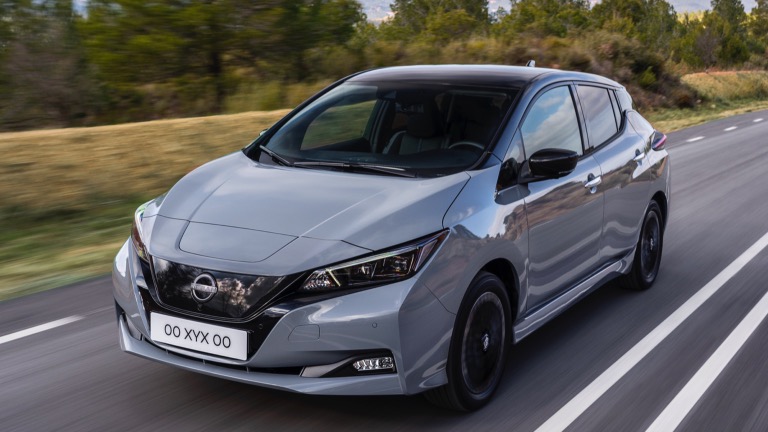
Nissan Leaf e vs. VW ID.3: A Battle for Electric Hatchback Dominance
If you check the present EV market, two models always bubble up in the small category: the Nissan Leaf e and the Volkswagen ID.3. These two models do not just trade in volume at the very bottom of the market; they effectively establish the baseline for millions of people who want to migrate to electric driving. In our in-depth Leaf e review, we find that the Nissan Leaf did indeed kick off the modern EV revolution over 10 years ago, but the VW ID.3 is a whole new chapter for German engineering, on a dedicated electric platform that aims to shake things up. They lead global sales charts because, for most buyers, their answers to the fundamental question: Can an EV deliver a practical range for a sensible price? These are the best ones available in each segment of the market.
The two vehicles’ positioning is a fascinating window into the competing reality of vintage vs. modern. The Nissan Leaf e is the result of years of real-world usage data and feedback from drivers, and represents the most refined iteration of a package that emphasises comfort, reliability, and an unexpectedly powerful powertrain.
Specs for the Leaf e: The “e” moniker (much like with the e+ long-range versions) indicates a big jump in battery capacity and horsepower, turning it from a city car to a competent long-haul cruiser. In the other corner, the VW ID.3, which is touted as the “Golf of the electric era,” leans on a cutting-edge design language and a stripped-back interior solution to entice customers who want their vehicle to look like a mobile phone case. While you can pretty much pin this down to your own tastes about physical buttons and established ergonomics vs. all-screen dominance and bleeding-edge design, choose your side.
Although the Leaf e price typically represents great value, particularly after you include all the standard equipment, the ID.3 offers faster charging and a rear-wheel-drive setup that car enthusiasts tend to prefer. Whether you go with the proven and familiar Nissan or the clean-sheet design approach of the Volkswagen, both cars feature impressively advanced driver-assistance and connectivity capabilities that make you wonder why you ever bothered with shallow dailies. This is not just a numbers comparison; it is a decision between the ultimate expression of the original pioneer or the first wave of a new generation.
Key Highlights
- 62kWh Battery Capacity: Feel secure on long highway trips without the nagging worry about finding a charge.
- E-Pedal Technology: Enables you to drive with the accelerator pedal alone in the majority of situations, helping to keep leg fatigue at bay in heavy stop-and-go traffic.
- ProPILOT Assist: Enjoy enhanced adaptive cruise control and lane centring that help make routine highway trips feel more secure and less nerve-racking.
- Dedicated EV Platforms: The result is eye-watering amounts of space inside a compact car, making you feel like you are in a tiny car with a surprisingly airy, spacious interior.
Quick Recap: The Leaf e and VW ID.3 at a Glance
Today, in this detailed Leaf e review, let us first take a look at the reasons why the Nissan Leaf e and the Volkswagen ID.3 are such attractive propositions when it comes to electric vehicles. This recap will highlight the important aspects of their design philosophy to price, giving you a quick snapshot of what they really are.
Manufacturer: Leaf from Nissan, a Japanese car manufacturer with more than a decade of experience leading the mass-market EV realm. The ID.3 comes from Volkswagen, a German giant trying to reimagine the brand for electric vehicles.
Model Year: The cars are the latest model year, and they reflect updates in technology, battery efficiency, and software.
Body Style: Both cars are 5-door hatchbacks, but they have quite different sizes and shapes. The Leaf is way more compact and city-friendly.
Trim Levels/Variants: The Leaf e is normally offered in multiple trims, including higher-spec e+ models offering longer range and more power. The ID.3 has a similar tiered setup by battery size (Pure, Pro, Pro S), and by equipment level (Life, Style, Family, Max).
Interior and Exterior Styles: The more traditional, simplified Leaf e has an easier-to-use interior featuring a number of physical buttons, and also an array of digital screens. Its exterior is a development of a well-known pattern. The ID.3 goes full-on futuristic with a clean and minimalist interior packed with touchscreens, rounded off by a sleek, aerodynamically driven profile.
Performance and Driving Experience: The ride of the Leaf e is smooth and comfy, and its unique e-Pedal allows for one-pedal driving. The ID.3 delivers a more dynamic, rear-engined feel that is agile and responsive.
Powertrain Options: Both have electric powertrains. Leaf e has two primary battery options (approx. 40kWh and 62kWh), while the ID.3 has several battery size options, typically from 58kWh to 77kWh, which affects the range and performance.
Features & Innovations: Nissan is emphasising its ProPILOT Assist driver aid system and the e-Pedal. Volkswagen is emphasising its purpose-built MEB platform, over-the-air software updates, and the smart ID. Light messaging system.
Comparison: It is a classic match-up, the seasoned pioneer vs. the upstart aspirant. Proven reliability and value of Leaf e, with the state-of-the-art design and platform technology in the ID.3.
Price Range: Both vehicles are designed to be affordable mainstream EVs. The Leaf e price usually offers good value for money with lots of equipment as standard, whereas you can pay more/less for different battery sizes and trim levels when it comes to ID.3 price.
Engineering Philosophies: Evolution vs. Revolution
The engineering philosophies behind the Nissan Leaf e and the VW ID.3 could not be more different, but they are both attempts to build the perfect electric family car. Nissan believes in continual evolution. Having been at the forefront of the mass-market EV with the original Leaf, its philosophy is based on trillions of miles of real-world insights and customer feedback. The Leaf is no radical departure; it is a careful polishing of a proven recipe. The emphasis in design is to emphasise practicality, reliability and technology that is advanced, but presented in a way consumers will understand. This method puts a focus on that gentle learning curve for EV neophytes, so that driver alteration is easy and more comforting.
Volkswagen, by contrast, took a revolutionary route with the ID.3. The vehicle was designed from the ground up using the manufacturer’s modular electric drive matrix (MEB) platform developed specifically for battery-electric vehicles. This is a “clean sheet” design that lets VW’s engineers throw off internal combustion engine architecture. Their motto was maximum space inside, minimum height for optimum driving dynamics and a futuristic, digital user interface. The ID.3 was intended as the “people’s electric car,” a spiritual successor to the Beetle and Golf, to help lead the brand’s charge into a new era of mobility. This fundamental disparity can be seen in every corner of the vehicles. The Leaf has the solidity and conventionality (in the best sense of that word) of a layout that is very straightforward and intuitive. It is an electric car that does not require you to relearn how to drive a car. With its minimalist cabin, giant glass and simple rear-wheel-drive layout, the ID.3 feels instantly different from the moment you sit in it. It is a statement piece, designed to announce a break with the old and a software-defined future. This key philosophical difference comes to the heart of our comparison and Leaf e review.
Leaf e vs. VW ID.3: Similarities and Differences
At a fundamental level, the Leaf e and ID.3 are five-door electric hatchbacks built for utility, which makes them direct competitors in the compact EV market. Both strive to address the fundamental challenges of electric motoring, delivering sufficient range for everyday use and an occasional long journey, enough practical interior space for a family and maintaining the sales price for the Leaf e price and ID.3 within the reach of the average motorist. Each vehicle also functions as a rolling demonstration of its brand’s most advanced driver-assistance features, such as Nissan’s ProPILOT Assist and VW’s Travel Assist, technologies that dramatically alleviate “the tyranny of the moving road.” Nonetheless, their contrasting design philosophies mean they appeal to very different buyers.
The Nissan Leaf e is also a more attractive option for a mature or practical buyer. With its familiar controls, a good mix of physical buttons and a touchscreen that is responsive to touch, the interior is liked by those who prefer tried and true ergonomics rather than digital gimmicks. The body design is contemporary, but not too radical, enabling it to easily hide in the urban landscape. But it is for someone who wants to sort of be able to get the benefits of electric driving, the quiet ride, instant torque, low running costs, without too steep a learning curve or too futuristic a look.
VW ID.3’s design language, on the other hand, is much more appealing to a younger and more tech-savvy crowd. The austerely furnished cabin, with its “floating” centre screen and digital driver’s display, is like a smartphone with wheels. The near elimination of physical buttons and the addition of touch-sensitive sliders can be controversial, but for a generation raised on touchscreens, it makes sense and is cleaner. The sleek, almost concept-car-like body of the ID.3 and bright paint finishes make it a more daring option. These two vehicles are pitted against each other not simply because they fall within the same segment, but because they embody two contrasting, and equally compelling, visions for the future of the everyday car.
Key Highlights
- Reliable Platform: The Leaf’s refined chassis delivers a comfortable, confident and predictable ride, giving drivers new to EVs peace of mind.
- Purpose-built EV Architecture: The ID.3 is based on the MEB platform that grants it a surprising amount of interior space that is up to par with a larger vehicle.
- Ergonomics that were friendly to the user: A mix of physical buttons and a touchscreen on the Leaf e made it easy to get to essential functions quickly and safely while behind the wheel.
- Futuristic Interface: The ID.3’s lean digital cockpit will appeal particularly to tech-savvy users, giving the driving environment a clean and modern feel.
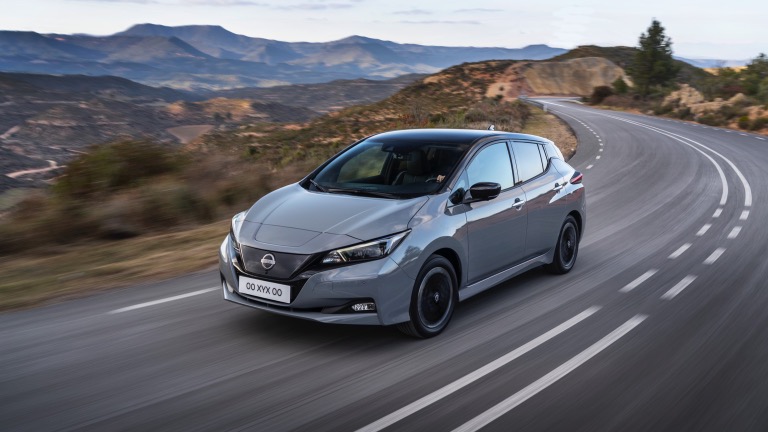
Decoding the Trim Levels: Finding the Right Leaf e+ or ID.3
Selecting the right trim is an essential part of customisation when it comes to making an electric car that meets your needs and budget. Both Nissan and Volkswagen present a clear ladder of variants for the Leaf e+ and ID.3 that buyers can choose based on what matters most: range, performance, technology or creature comforts. Keeping these in mind will help you to make the most out of your money. Part 1 of our Leaf e+ review will break down the different options to help you wade through your choices to get the best match.
For the Nissan Leaf, the range is usually quite straightforward, based on a base model plus a few incremental options. The major difference is typically the size of the battery, with the regular Leaf having a 40kWh battery while the ‘e+’ editions are equipped with the bigger 62kWh battery that allows for driving longer, plus more power. Ranking trims such as SV Plus and SL Plus (U.S.) or Tekna (UK) have popular options such as ProPILOT Assist, a premium Bose audio system, leather-appointed seats and more of the company’s advanced safety technology. This tiered setup is helpful for customers to compare the Leaf e+ price with what they get in each tier.
Volkswagen, however, has opted for a more involved, modular system with the ID.3 and ID.4 (and future plans for more models). It is size-based, historically offered in the Pure (smallest), Pro (medium), and Pro S (largest) forms, and that defines the core range and performance. On top of everything, there are the equipment packs, which usually have the names Life, Style, Family, and Max. For example, a “Pro Performance Life” model pairs the mid-tier motor with the base equipment pack, and a “Pro S Max” puts the biggest battery in the model with the maximum number of features. This provides more detailed customisation, but you have to pay more attention to the spec sheet to make sure you get what you want.
Model & Trim
| Model & Trim | Key Features | Value Proposition |
|---|---|---|
| Nissan Leaf SV Plus | 62kWh battery, ProPILOT Assist, 100kW fast charging, NissanConnect with navigation, 17-in alloy wheels. | The good vantage point for everything, including having more range and necessary tech features, for a very reasonable price. |
| Nissan Leaf SL Plus | Includes Bose premium audio system, leather seats, LED headlights, 360-degree camera, and heated steering wheel. | It is a near-luxury experience, ideal for those seeking ultimate comfort and convenience in their commute or drive. |
| VW ID.3 Pro Life | 58kWh (usable) battery, 10-inch Discover Pro navigation, heated seats and steering wheel, wireless charging. | Perfect starting point for the ID.3 platform, offering a good range and essential comfort for everyday use. |
| VW ID.3 Pro S Max | 77kWh (usable) battery, panoramic sunroof, augmented reality head-up display, 12-inch infotainment screen. | The ultimate long-distance touring machine, combining the longest range with full access to VW’s suite of technology and luxury features. |
Different Variants
The Nissan Leaf e+ models offer a powerful drive and a long list of features. The “e+” tag indicates a bigger 62kWh battery, along with a more powerful 160kW (214hp) electric motor. This update turns the Leaf from a competent city car into a surprisingly fast hatchback with enough grunt to dazzle on the motorway. What is new is how Nissan combines that performance with accessible technologies such as the e-Pedal, which makes stop-and-go traffic easier to manage, and ProPILOT Assist, a system that lets drivers keep their hands on the wheel but makes the long haul less tiring. The optional luxury upgrades apply only to higher grades, but dazzling, affordable performance is the fundamental strength of every e+ model.
The Volkswagen variants are characterised by the versatile MEB platform. The standard “Pro Performance” variant gets a 58kWh battery pack and electric motor rated at 150kW (204hp), offering a fun rear-wheel-drive experience that is nimble and exciting. Leading the pack is the “Pro S” model with a bigger 77kWh battery. While heavily derived from two or three previous models, these are designed with one goal in mind: maximising range, making it the best choice for anyone who spends a lot of time on the road. The new thing here is the choice: buyers can look for nippy urban performance or the longest range available, and then add tech and comfort packages that fit their lifestyle. Optional enhancements such as the augmented reality head-up display superimpose navigation cues directly on the road, illustrating VW’s visionary approach to technology.
Leaf e+ vs. VW ID.3 Spec Sheet Appendix
| Specification | Nissan Leaf e+ | Volkswagen ID.3 (Pro Performance) |
|---|---|---|
| Battery Capacity (Usable) | ~59kWh | ~58kWh |
| Official Range (WLTP Est.) | Up to 239 miles | Up to 264 miles |
| Motor Power | 160kW / 214hp | 150kW / 204hp |
| Torque | 340Nm | 310Nm |
| 0-62 mph (0-100 km/h) | Approx. 6.9 seconds | Approx. 7.3 seconds |
| Drivetrain | Front-Wheel Drive (FWD) | Rear-Wheel Drive (RWD) |
| Max DC Charging Speed | Up to 100kW | Up to 120kW |
| Boot Space (Seats Up) | 435 Litres | 385 Litres |
Key Highlights
- 160kW Motor: The Leaf e+ powertrain offers brisk, instant acceleration, which makes passing and merging on the motorway feel effortless.
- ProPILOT Assist: Nissan’s sophisticated driver assistance technology helps reduce driver fatigue on long drives by handling steering, acceleration and braking.
- Modular MEB Platform: The ID.3’s platform design is flexible to accommodate a range of battery and equipment options, allowing you to pick the right car.
- Augmented Reality HUD: The available head-up display of the ID.3 reflects relevant information on the windscreen to support you in keeping your eyes on the road.
On the Road: Comparing the Drive of the Leaf e+ and ID.3
The actual personality of the electric vehicle is unveiled on the road, where the specs become driving feelings. In this regard, the Nissan Leaf e+ and the Volkswagen ID.3 bring forth convincing, yet very different, experiences. Performance figures only tell part of the tale: the way each car deploys its power, handles bends and insulates its occupants from the surface of the road defines its character and whether it is likely to suit your driving style. Here in this section of our Leaf e+ review, you will discover what it is like to drive these two outstanding electric hatchbacks.
The Nissan Leaf e+ is designed for easy and fast pace and advanced progress that you would not expect so easily. It has a single synchronous electric motor powering the front wheels. This battery powers an electric motor that develops a healthy 160kW (214 horsepower) and a massive 340Nm (250 lb-ft) of torque, accessible instantly from the get-go. The Leaf e+ can reach a speed of 0-100 km/h (0-62 mph) in about 6.9 seconds with this arrangement, along with a single-speed gear reduction transmission. The driving is dominated by a feeling of refined comfort. The suspension is biased to absorb road undulations with calmness, and therefore it turns out to be a really good city companion to also circulate in the motorway bands. It is light and precise, with usability rather than sharp, sporting feedback evident in its function as a comfortable daily driver.
The VW ID.3, at least the standard Pro Performance version, is more lively and fun. The rear wheels are driven by a single rear electric motor with 150kW (204 horsepower) and 310Nm (229 lb-ft) of torque. For a 16.8-second ¼ mile run, the ID.3 pulls less power than the Leaf e+, but gets a somewhat different feel due to its rear-wheel-drive setup. Good, brisk accelerations, with 7.3 seconds at 0-100 km/h. The ID.3 has a stiffer suspension than the Leaf, and this contributes to its more road-bound feel. This equates to more flat cornering, which means more overall nimbleness for the driver who is a little more enthusiastic. The steering is quicker and gives more feedback, encouraging a more lively driving attitude on twisting roads.
Performance & Driving Experience Comparison
| Performance Metric | Nissan Leaf e+ | Volkswagen ID.3 (Pro Performance) |
|---|---|---|
| 0-100 km/h (0-62 mph) | Approx. 6.9 seconds | Approx. 7.3 seconds |
| Top Speed | Approx. 157 km/h (98 mph) | Approx. 160 km/h (99 mph) |
| Primary Driving Mode | e-Pedal (One-Pedal Driving) | D (Normal Drive) / B (Increased Regen) |
| Selectable Modes | Eco, Standard | Eco, Comfort, Sport, Individual |
| Driving Feel | Comfortable, Smooth, Refined | Agile, Connected, Dynamic |
- Immediate Torque: The Leaf e+ delivers immediate and exhilarating acceleration, making stop-and-go traffic in the city a breeze.
- E-Pedal Functionality: Enables you to go and stop in traffic with one pedal, the accelerator, reducing fatigue.
- Rear-Wheel-Drive Dynamics: The ID.3’s configuration delivers a handling experience that is on the lively side for those who like to drive with purpose.
- Adjustable Driving Modes: Both vehicles come with unique settings that enable you to choose between maximum efficiency or a more responsive driving mode tailored to your trip.
Leaf e vs. VW ID.3 Interior, Comfort & Technology
Inside a state-of-the-art EV, you do not just see a steering wheel and seats; you see a cockpit that syncs as a matter of course with your digital life. In this Leaf e review, comparing the workspace inside the Nissan Leaf e and the Volkswagen ID.3 shows the huge gap between classic car comfort and futuristic digital minimalism. Both companies have invested millions in creating inviting cabins, but the results have been very different.
The Nissan Leaf e has an interior that is immediately recognisable and similar to the previous generation. Nissan has focused on ergonomics and physical tactility, making sure everything is where you thought it was going to be. Plush supportive seats are frequently lauded for their long-distance comfort, and a cabin design that combines a modern touchscreen with physical buttons for climate and audio control. This is an approach that has little to do with fooling you with science fiction gimmicks and everything to do with minimising the times your eyes and brain need to leave the road. Materials in the Leaf e, especially in higher levels of trim, are soft-touch plastics with leather. The infotainment system, NissanConnect, is good and simple to use with standard Apple CarPlay and Android Auto. Graphics may not be as hi-res as some newer competitors, but system reliability and simple operation are its best talents.
The Volkswagen ID.3, on the contrary, follows a “screen-first” approach philosophy. The interior features a centrally located floating touchscreen and a smaller digital driver display that is fixed to the steering column. Physical buttons have virtually been replaced by touch-sensitive sliders and haptic feedback pads. This produces a really clean, open, and bright cabin space, complemented by the absence of a central transmission tunnel, a byproduct of the MEB electric platform. Based on the ID.3, the new “ID. Light” system is a highlight invention, an LED strip stretches through the whole dashboard to interact with the driver in various ways, signalling navigation turns through different colours and movements, charging status, or incoming calls. It can be argued that the learning curve is steeper for some everyday tasks, like changing the AC settings, which require going through menus, but the voice control system (“Hello ID”) is being developed with the hopes of narrowing that gap for natural language commands.
Storage and practicalities are different, too. The Leaf has a higher boot and useful door pockets, but the rear seats do not fold totally level because of the battery placement. Thanks to its flat-floor design, the ID.3 offers a surprising amount of rear legroom and a flexible centre console with modular cup holders and storage units.
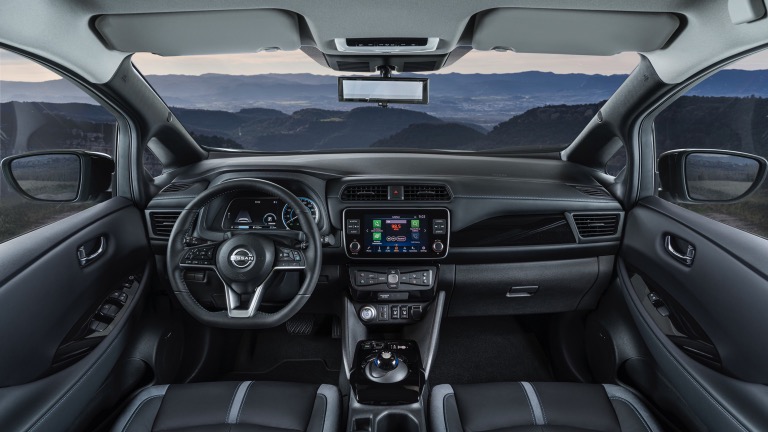
Leaf e and VW ID.3 Design & Exterior
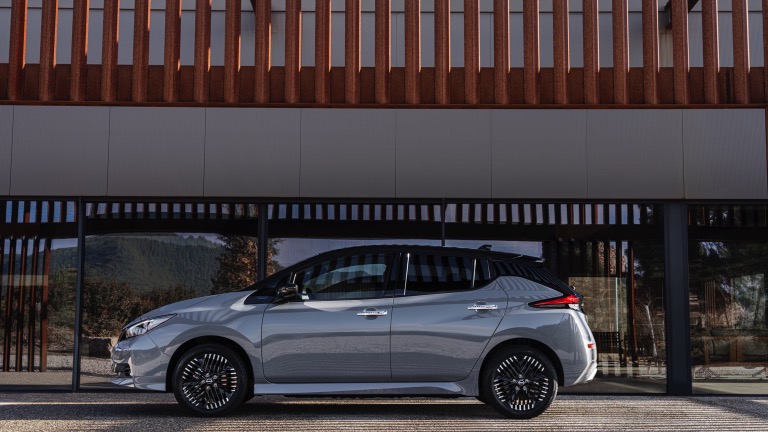
The exterior styling of the two vehicles tells the story of each vehicle’s lineage. The Nissan Leaf e distils the outline of the world’s first mass-market EV. It has a pronounced V-motion grille (which has been replaced with a closed panel for aerodynamics) and sharp “boomerang” headlights that give the vehicle a sense of movement. “It says it’s an electric car, but it doesn’t say ‘I’m an electric car’ in that very obvious, leaf-shaped way,” Norris said, noting that EV efficiency is packaged into a good-looking, modern hatchback form. The charging port is also well-placed on the nose, which is a sensible design for nose-in parking while charging.
The VW ID.3, on the other hand, does not resemble anything else in the Volkswagen range. It features a “one-box” profile with short front and rear overhangs, a long wheelbase and four wheels pushed to the corners for maximum interior space. The face is grille-free, sculpted by the smiling ‘eyes’ of its IQ. Light matrix LED headlights and a light bar that glows. The style is high-tech and clean, and the body is strongly aerodynamic-form driven to get as many miles as possible out of the battery.
| Feature | Nissan Leaf e | Volkswagen ID.3 |
|---|---|---|
| Exterior Styling | Strong character lines, V-motion grille, floating roof design. | Fluid contours, minimal overhangs and a futuristic “one-box” profile. |
| Lighting Signature | LED daytime running lights in a boomerang form; LED taillights. | IQ.Light matrix LED headlights; animated LED taillights; front light bar. |
| Aerodynamics | Underbody covers and rear diffuser for reduced drag. | Optimised airflow with aero-wheels and an active shutter system. |
| Body Detailing | Chrome accents; blue detailing to signify EV nature. | Honeycomb design elements on C-pillar/bumper; two-tone roof options. |
| Colour Palette | Classic metallics and pearlescents (two-tone available). | Vibrant, modern hues (e.g., Turquoise, Manganese Grey) with a contrasting roof. |
Key Highlights
- Familiar Ergonomics: The Leaf e still has physical climate and audio buttons, making it super easy to adjust while driving without ever having to look away from the road.
- Spacious Architecture: Taking full advantage of its custom-built EV platform, the ID.3 folds up the floor to give rear passengers legroom rivalling that of a larger saloon.
- Smart Connectivity: While both vehicles come with strong smartphone integration, the ID.3 takes it wirelessly and with advanced voice control for a truly hands-free experience.
- ID. Light Innovation: Volkswagen’s intuitive light-strip conveys navigation and vehicle information visually, a first in the industry that strengthens the car-driver dialogue.
Built for Peace of Mind: Safety and Reliability
When buying a new car, especially an electric one, buyers should prioritise safety and long-term reliability. Both Nissan and Volkswagen have spent a lot of money building cars that not only comply with, but also surpass, strict global safety regulations. This dedication can be seen in the solid body and sophisticated driver assistance systems (ADAS) of the Leaf e+ and the ID.3. In this part of our Leaf e+ review, we look at how these two cars rate in terms of security and peace of mind for you and your loved ones.
Nissan has the advantage of experience here: more than a decade working with the Leaf platform and spare parts, which culminated in a vehicle with well-demonstrated dependability. The Leaf e+ routinely scores well in crash tests, receiving praise from safety organisations such as the Euro NCAP and the Insurance Institute for Highway Safety (IIHS). Its suite of safety features, part of the Nissan Safety Shield 360, is robust. It has the basics, a full complement of airbags, anti-lock brakes (ABS) and electronic stability control, plus some fancier bells and whistles, such as Automatic Emergency Braking with Pedestrian Detection, Blind Spot Warning and Rear Cross Traffic Alert, among others. The quality of construction feels solid and built to last, which is a result of years of refinement on the platform.
The ID.3 was built from the ground up with safety in mind on the new MEB platform by Volkswagen. The design places the battery low down in the floor to form a strong, rigid platform and a low centre of gravity, which naturally gives good stability. The ID.3 also obtained maximum safety ratings, including a five-star rating from Euro NCAP, with high scores in particular for protection of adults and children. Standard on the whole lot is quite the safety stack: Lane Assist, Front Assist with City Emergency Braking and a driver alert system. Additional features can be added with certain trim levels and optional packages, including Travel Assist, which integrates distance and lane keeping for semi-autonomous driving on motorways.
Both brands also provide robust warranties, which go a long way toward reassuring consumers when it comes to reliability and long-term ownership. The most important part, the high-voltage battery, is generally warranted for eight years or 100,000 miles against excessive capacity loss, giving owners confidence in its long-term durability. The Leaf has a long history, so there is a ton of real-world data that backs up its reliability and a lot of first-gen Leafs are still on the road today. Although the ID.3 is a new model, it draws on Volkswagen’s considerable engineering expertise and on a platform that was designed from the ground up for durability and straightforward servicing. They are both a safe bet for electric mobility.
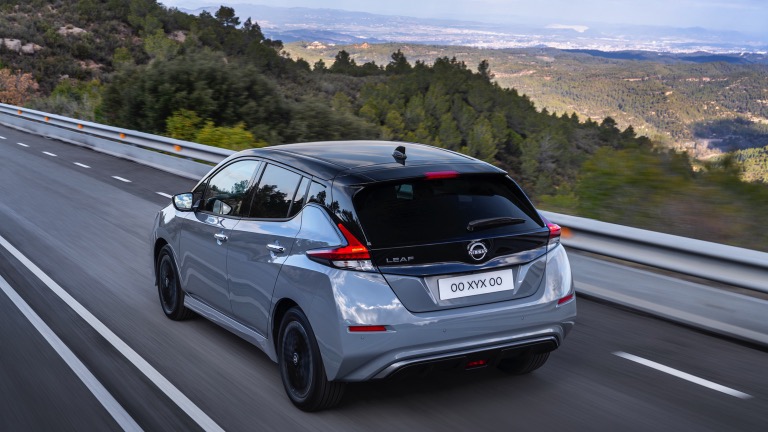
Key Highlights
- Extensive Airbag System: Both cars have been designed with multiple front, side and curtain airbags, which offer high levels of protection for all passengers should an impact occur.
- Nissan Safety Shield 360: Leaf e+ is equipped with an extensive array of active safety features that watch over you and your surroundings, nudging you to avoid hazards on or near the road.
- A rigid MEB platform: ID.3’s purpose-built electric chassis enables an exceptional degree of rigidity, and the low centre of gravity provides superior crash protection and dynamic handling stability.
- Comprehensive Battery Warranty: Both Nissan and Volkswagen support their battery packs with an 8-year/100,000-mile warranty, so you can feel good about the heart of your electric car for years to come.
Head-to-Head: How the Leaf e+ and ID.3 Stack Up Against Rivals
There is no car in a vacuum, and the small electric hatchback class is only getting more crowded. While our focus has been on the engaging battle between our Leaf e+ review and the Volkswagen ID.3, it is important to look at how they stack up against other major contenders. The Hyundai Kona Electric and Kia Niro EV are two of the most viable options in this class. They both have good range, practical features and solid warranty coverage, so they are really good and competitive options.
The Hyundai Kona Electric has been a longtime favourite for its incredible efficiency and a design that merges the ruggedness of a crossover with small-car dimensions. It frequently has one of the highest real-world range numbers in the class, which makes it a practical pick for drivers looking to minimise the number of charging stops. It is a pragmatic and well-equipped cabin, maybe not quite as stylistically bold as the ID.3. Modest performance. The driving experience is comfortable and predictable, easy to get used to and use, and not too much! Sportiest dynamics some rivals have.
Likewise, in its own segment, the Kia Niro EV stands out as an efficient and family-friendly car that comes with the space and functionality of a crossover. It benefits from the same excellent powertrain as the Kona Electric, so buyers can anticipate brisk performance and an impressive range. The primary selling point of the Niro EV is its roomy cabin and sizable boot, which often exceed what you get with more conventional hatchback designs. Its simple infotainment system and sensible controls also make it a good choice for EV novices.
Leaf e+, ID.3, Kona Electric, and Niro EV: A Direct Comparison
| Metric | Nissan Leaf e+ | VW ID.3 (Pro Performance) | Hyundai Kona Electric | Kia Niro EV |
|---|---|---|---|---|
| Price | Competitive, strong value | Mid-to-high, varies by pack | Competitive, excellent value | Mid-range, strong features |
| Performance | Quick (160kW), FWD | Agile (150kW), RWD | Punchy (150kW), FWD | Punchy (150kW), FWD |
| Range (WLTP) | Up to 239 miles | Up to 264 miles | Up to 300 miles | Up to 285 miles |
| Design | Refined hatchback | Futuristic, minimalist | Quirky crossover | Modern crossover |
| Value | Excellent standard features | Tech-focused, platform value | Range & warranty leader | Practicality & warranty |
Which Electric Vehicle is Right for You?
Upon reviewing the main competitors, the ideal buyer for each vehicle is clear.
The Nissan Leaf e+ is the vernacular EV, the sensible EV choice for those interested in solid technology, comfort and a no-hassle experience. Its blend of old-school controls with new tech, including the e-Pedal, makes for a smooth and comfy first electric vehicle experience. This is aimed at the driver who just wants a quick, easy-to-drive, comfortable daily runner without too much complexity.
The Volkswagen ID.3 is targeted to the technology-conscious early adopter. Its clean interior design, rear-wheel-drive handling and futuristic touches such as an augmented reality head-up display are ideal for anyone looking for a car that doubles as a high-tech gadget. It is for someone who cares more about a modern look and feel and a fun-to-drive experience.
The Hyundai Kona Electric is the perfect car for the range-conscious driver. When it comes to range, under which the distance between charges is maximised, the Kona Electric should be your choice. It is for the pragmatic consumer looking for a simple and efficient EV that fulfils the basic promise of long-range electric mobility.
The Kia Niro EV is designed for the maximum practical buyer. Its roomy interior, spacious boot and exceptional warranty mean it is a fantastic electric vehicle for both families and anyone who wants their four wheels to be a hardworking all-rounder. It combines the efficiency of an EV with the utility of a small crossover.
Key Highlights
- Proven Reliability: The Leaf e+ platform is backed by more than 10 years of real-world data, allowing buyers to have peace of mind and proven durability over the long term.
- Dynamic Fun: Because of its rear-wheel-drive configuration, the balanced chassis of the ID.3 is a more agile and engaging drive than many of its front-wheel-drive rivals.
- Industry-Leading Range: The Hyundai Kona Electric routinely raises the bar in efficiency, allowing drivers the confidence to go further without as much range anxiety.
- Unrivalled Practicality: Thanks to its crossover styling, the Kia Niro EV delivers far more space inside for passengers and their belongings than a regular hatchback could, making it a very practical pick for families, or anyone who needs a bit of extra room out of their EV.
Deciding on Your Drive: Why Choose the Leaf e+ or VW ID.3?
Deciding on the Nissan Leaf e+ or the Volkswagen ID.3 really depends on what your priorities and driving requirements are. So instead of a simple comparison, this part of our Leaf e+ review helps you understand why each car is brilliant in its own way. The Leaf e+ is a reflection of Nissan’s pioneering heritage and a company that truly gets the EV owner. The Leaf is not the newest or flashiest one, but it is a product of more than a decade of refinement. Nissan has made EV ownership far simpler and more practical, and the Leaf is the vehicle that demonstrates that best. It reflects the brand’s vision to approach electrification at the mass-market level with trusted and proven technology, a consistent and comfortable switch into electric mobility.
Meanwhile, the Volkswagen ID.3 is a stark reminder of a fresh start. It is its ground-up engineering and ultramodern design. In choosing the ID.3, you are buying into Volkswagen’s vision of a software-defined, highly efficient electric future. That is in keeping with the ambition of the brand to pioneer the next chapter in motoring in the same way that the original Beetle and Golf did in their day. The ID.3 is for the driver who is not only making the switch to electric but who is really excited about the next generation of automotive technology, starting with its minimalist interface and extending to its dynamic, rear-wheel-drive chassis.
When it comes to lifestyle requirements, the choice is made for you. If your driving is mostly daily travel, school runs, and busy city roads, then the Nissan Leaf e+ is a brilliant buy. Its e-Pedal system turns stop-and-go traffic into a one-pedal flowing experience that greatly alleviates driver fatigue. Its comfortable ride and familiar controls make it a calm haven in the tumult of the city. For longer jaunts, the VW ID.3 tends to have the upper hand more of the time due to its better WLTP range in some configurations and superior DC charging rate. Its firm, stable ride and sophisticated Travel Assist system also make it a great motorway cruiser, as it chews the miles with hushed precision.
Nissan Leaf e+: The Pros
The Leaf e+ benefits from the experience behind it and its thoughtful design for drivers. It is a compelling package for just about any kind of driver.
- Established Reliability: With more than 10 years on the market, the Leaf platform is one of the most reliable and well-understood EVs available today.
- Friendly Interior: The simple interface, which combines a touchscreen with several physical buttons, is straightforward to use safely on the road.
- E-Pedal Innovation: One-pedal driving is a real game-changer for city driving, streamlining the experience and making it more efficient.
- Comfort-Tuned Ride: The suspension is tuned for refinement, dissipating road imperfections and bumps for a tranquil driving experience.
Volkswagen ID.3: The Pros and Cons
The attraction of the ID.3 is the combination of its sheer modernity and driving dynamics, which provide a taste of what everyday mobility in the future might look like.
- Spacious and Light-Filled: Thanks to the dedicated MEB platform, it has an extraordinary amount of space, especially for those sitting in the rear.
- Fun RWD Dynamics: The rear-wheel-drive layout and near 50/50 weight distribution result in a nimbler and more entertaining driving experience.
- Technology Up: The augmented reality head-up display and over-the-air software updates make it genuinely futuristic.
- Improved Charge Rates: The CCS charging port enables faster DC fast charging, meaning less downtime when travelling.
Key Highlights
- Leisurely Urban Driving: The Leaf e+ is right at home in the city, gliding along with its very smooth ride and the incredibly intuitive e-Pedal, which makes stop-and-go traffic a breeze.
- Road Trip Ready: Its excellent range, steady handling and improving DC charging network make the ID.3 an assured distance runner.
- Durability You Can Trust: Buying a Leaf e+ is buying into a vehicle with an excellent track record of reliability and owner satisfaction.
- Future-Forward Tech: The ID.3 provides a fresher and more high-tech solution for those looking for the newest trends in car technology.
Your Perfect Electric Match: Which Hatchback Wins?
After a complete head-to-head in this Leaf e+ review, both the Nissan Leaf e+ and the Volkswagen ID.3 are really good electric cars. They make a convincing case, but for different drivers. Which is more “worth it” is going to be decided by what you value most in a car. There are no winners here, only the car that suits your needs and lifestyle.
The Nissan Leaf e+ is a very refined and customer-friendly electric mobility vehicle. It is the perfect pick for a purchaser who puts comfort, demonstrated reliability, as well as a smooth learning curve from a petrol car to an EV as high priorities. Its clever half-and-half design of having some physical buttons along with a capable touchscreen somehow reduces the learning curve. Elements such as the e-Pedal reveal Nissan’s profound understanding of actual driving, making stressful city journeys into fluid, one-pedal experiences. For those who want a reliable, comfortable and well-equipped daily car without worrying about having a flying car or looking through futuristic gimmicks, the Leaf e+ remains a superb and sensible buy. The competitive Leaf e+ price makes it a very appealing, low-risk way to enter EV ownership.
On the other hand, the Volkswagen ID.3 is aimed at the technology-savvy driver who relishes a rapidly evolving driving experience. The minimalist interior, high-tech digital displays and rear-wheel-drive layout give the impression that it comes from the future. The ID.3 is for the person who values nimble handling, state-of-the-art features such as the augmented reality head-up display, and long-distance touring capability made possible by its rapid charging speeds. It is a statement car, a leap into a new era of motoring. If you want your car to be as much a technological device as it is a form of transportation, the ID.3 is by far the most alluring proposition.
In the end, to go for the Leaf e+ is to choose experience, to opt for the ID.3 is an endorsement of daring innovation. Both electric vehicles are just as good, so it is a close call to decide who wins out as the best, pushing the electric vehicle market ahead.
Your Next Step to an Electric Future
It is one thing to read about the Nissan Leaf e+ and its silent strength and smart engineering, but it is another to hold it in your hands. If a combination of everyday comfort, practical technology and tried-and-tested reliability sounds like the right match for you, then the best way to find out is from behind the wheel.
The Nissan Leaf e+ has long been a proven, reliable vehicle with familiar ergonomics and fantastic levels of comfort, making it perfect for those looking for a solid and easy-to-understand daily electric vehicle.
The Volkswagen ID.3 brings a top-tier selection of innovative digital features, a fun-to-drive rear-wheel-drive performance, and a forward-looking style to the taste of drivers who treasure bleeding-edge tech and a modern driving experience.
The Leaf e+ is a good fit for practical commuters and families seeking an easy EV ownership transition with a well-equipped base model.
The ID.3 is targeted at technology enthusiasts who are willing to be among the first to adopt new technologies which offer greater connectivity, customisation and long-distance capabilities.
Both deliver the best of the modern EV world, so you can choose between the comfort of tried-and-tested EV engineering or the promise of game-changing EV technology.
Ready to see the Nissan Leaf e+ in action?
Visit our website at The.Car to explore Leaf e offers, schedule a test drive, and start your electrifying journey today.