Audi Q6 e-tron Performance vs BMW iX: Electric SUV Showdown
The New Era of Premium Electric SUVs
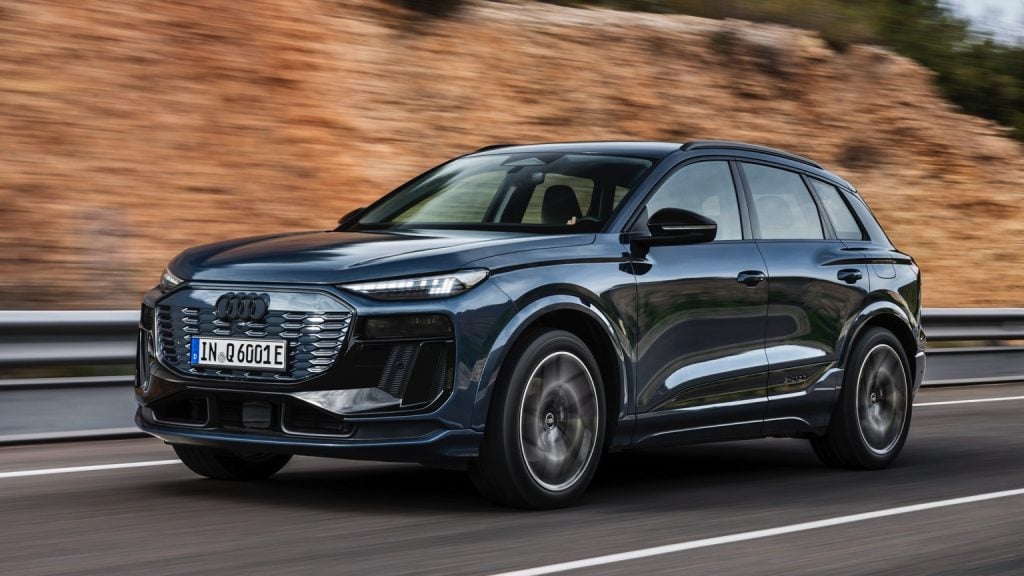
German auto giants Audi and BMW are leading the charge as the luxury electric SUV market undergoes a major shake-up. Two specific models are grabbing the focus of premium buyers and shaping the segment’s future: the new Audi Q6 e-tron and the BMW iX. These products are far more than just a transition to electrification; they are demonstrations of engineering excellence, luxurious appointments and visionary styling that increasingly dominate sales in this highly competitive segment.
What sets these two cars apart is the winning combination of long-distance range, thrilling performance and state-of-the-art technology. Premium Platform Electrification. The Audi Q6 e-tron, based on the new Premium Platform Electric (PPE) platform, promises a new high in charging speed and efficiency. By comparison, the BMW iX has the advantage of its maturity and the established brand’s luxury and renowned reliability in tow. Both are squarely in the luxury EV camp, tempting those who want performance and sustainability, but not without a bit of panache. This comparison is shaping up to be a treat and a battle of interests: Audi’s new invention versus BMW’s established superiority. As we get down to the nitty-gritty in this in-depth Q6 e-tron review, we’ll find out how each vehicle makes its own unique statement. Audi brings a revolutionary electronics architecture and a breathtaking new design language to the table, while BMW perfects the formula for its signature combination of daring design and dynamic driving experience. This isn’t just a stats comparison; it’s a vision test between two very different schools of thought. It’s a classic matchup of a challenger with next-generation technology facing off against the defending champion, establishing its legacy in the electric age.
Quick Recap: Audi Q6 e-tron vs BMW iX Specifications
Before getting bogged down in the technical details of our Q6 SUV e-tron performance review, let’s take a moment to set the stage. They both showcase the full electricity potential of their respective brands, but they seem to be targeting the luxury SUV market a little differently.
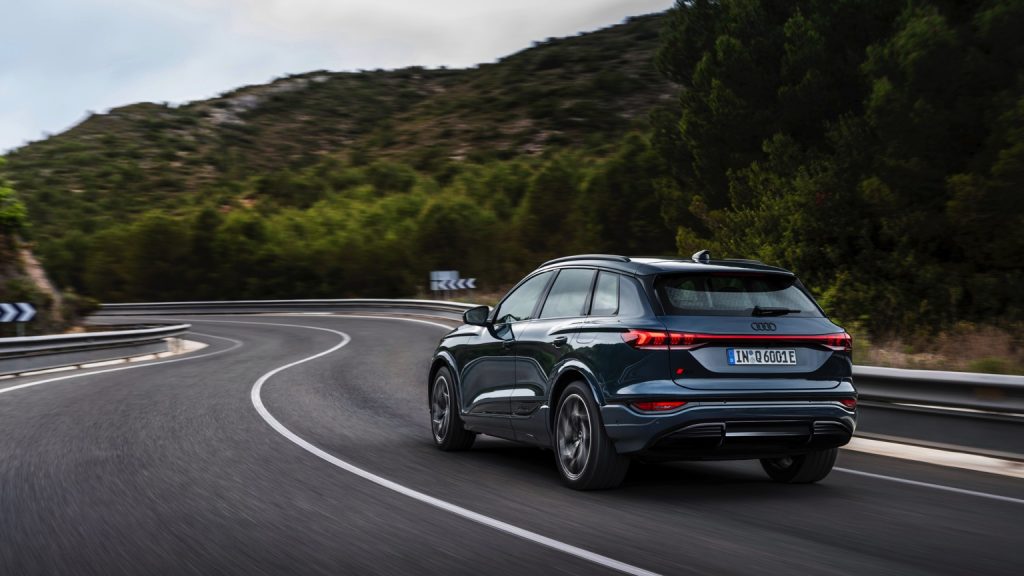
The all-new Audi e-tron Q6 e-tron is the new entrant that signals a new dedicated platform set to redefine charging and efficiency. BMW iX has been a reference point already, confusingly, since this vehicle represents a predicted end-of-the-world midpoint in a series of vehicles that keep getting better but more divided in the lines they draw based on their personality yet increasingly radical philosophies scarily dictate thoughts that are not far from where they used to be in terms of comfort but not easier to understand with futuristic design. If you like modern with hitting the right notes, you’ll like modern design.
Key Specifications Snapshot
Here is how the two models stack up across the most critical categories:
- Manufacturer
- Audi: The Volkswagen Group’s high-end marque with shared high-end architecture.
- BMW: The Bavarian powerhouse, now independent, which is laser-focused on “The Ultimate Driving Machine” for the electric age.
- Model Year
- Audi Q6 e-tron: 2025 (All-new model).
- BMW iX: 2025 (Facelifted model).
- Body Type
- Audi Q6 e-tron: Mid-size Luxury Crossover SUV; size-wise sits between the Q4 and the Q8 e-tron, but tech-wise leads both.
- BMW iX: Mid-size Luxury Sports Activity Vehicle (SAV); Approximately X5-sized with a one-of-a-kind, bespoke EV silhouette.
- Available Trims/Variants
- Audi: Q6 e-tron quattro, SQ6 e-tron (Performance-oriented).
- BMW: iX xDrive50, iX M60 (High-performance).
- Interior and Exterior Designs
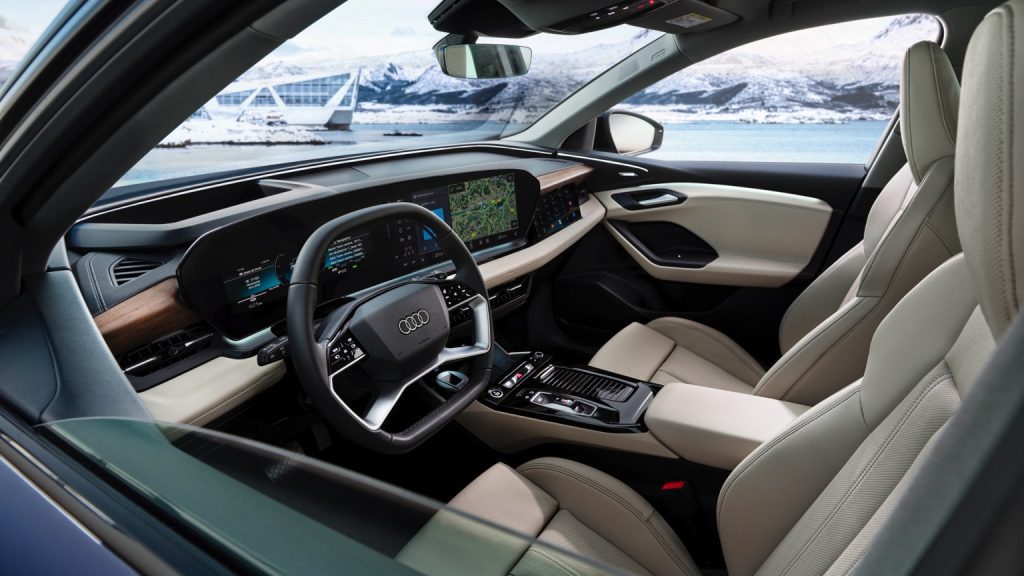
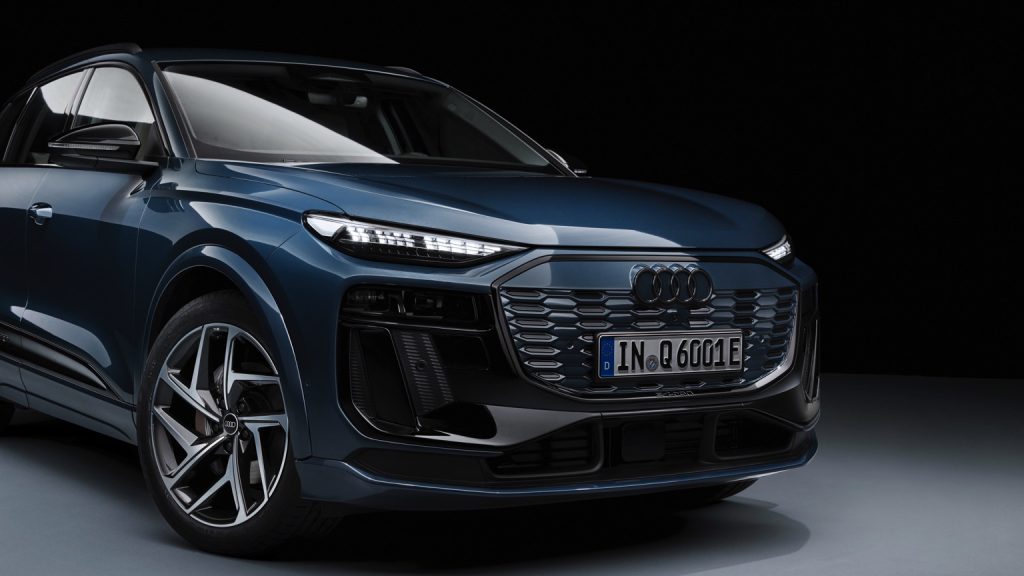
- Audi: It has the “Digital Stage” cabin that includes a curved OLED panoramic display and a separate passenger screen. The shape is a more polished, muscular interpretation of the traditional Audi design language.
- BMW: Invites the “Shy Tech” ethos, and the minimal lounge-like cabin is showcased throughout. The exterior is striking and futuristic, with the large, self-healing vertical kidney grille.
- Performance and Driving Experience
- Audi: “Sporty and comfortable, now with new adaptable suspension systems for accurate handling.”
- BMW: Known for its “Magic Carpet” smooth ride and surprising agility for its weight, thanks to the use of carbon-fibre-reinforced plastic (CFRP) in the chassis.
- Powertrain Options
- Audi: Based on the 800-volt Premium Platform Electric (PPE). Has a ~100 kWh battery pack designed for ultra-fast charging (up to 270 kW).
- BMW: Incorporates BMW’s Gen5 eDrive technology with 400-volt architecture. Batteries have capacities reaching up to ~111.5 kWh gross, with charging power of up to 195 kW.
- Innovations & Features
- Audi: Introduces the E3 1.2 electronic architecture, active digital light signatures that interact with other road users and an augmented reality HUD.
- BMW: The Curved Display runs iDrive 8.5/9, and an electrochromic panoramic sunroof, and a hexagonal steering wheel.
- Comparison
- Positioning: The Q6 e-tron is targeted at those who want next-generation efficiency and charging speed within a traditionally handsome package. The iX is for those who want to make a bold statement with a lounge-like cabin environment.
- Price Range
- Audi: Typically, a difference of slightly lower up front in price to be placed more in the mid-strata of the premium market (Est. starting ~£65,975, dependent on market).
- BMW: Has a higher entry premium to start (From ~£93,205+ for xDrive60 models).
Design Philosophy: Audi’s Evolution vs. BMW’s Revolution
Comparing such flagship electric vehicles as this with the Audi Q6 e-tron, or BMW iX, design and engineering are more than just aesthetic and practical decisions; they are declarations of purpose. Both marques have decades of heritage in the electric era, and their takes are clearly showing. Sophisticated evolution is the way Audi goes, evolving its proven design language for the electric age. By contrast, BMW has chosen to make a radical break with tradition, signalling a new beginning with a car that is explicitly a revolution, rather than an evolution.
Audi’s Q6 e-tron strategy is built around the concept of”Vorsprung durch Technik,” Progressive through Technology. The car rides on the all-new Premium Platform Electric (PPE) architecture, an 800-volt system developed in partnership with Porsche. This platform isn’t only a base, it’s a statement of technical excellence, engineered for maximum efficiency, fastest charging and performance. Externally Q6 e-tron follows this principle through with an unmistakably Audi design. It has a muscular stance, short overhangs, and the Singleframe grille – now adapted for an EV. The company stresses an “inside-out” design methodology, with the user experience and digital cabin driving the shape of the vehicle.
On the flip side, the BMW iX embodies the future-thinking ethos of its “i” sub-brand. It is based on a custom CLAR platform and uses carbon fibre reinforced plastic (CFRP) extensively in the “Carbon Cage” for the reduction of weight and enhancements in rigidity. This technical decision leads to a roomy, open-concept cabin. BMW’s head of design describes the philosophy underpinning the iX as “Shy Tech,” in that technology is concealed until immediately required, which makes for a tranquil, lounge-like interior environment. The iX looks radical on the outside by design. Its massive vertical kidney grille housing sensors, and even self-healing technology, slim headlights, and flat horizontal surfaces reflect a polarising, futuristic look that signals a clear break from BMW’s combustion-engine heritage.
Similarities and Differences in Design Appeal
Both are 5-seat premium electric SUVs, yet their design languages are worlds apart, making them direct competitors for two very different types of customers. The only thing they really have in common is subjective: Provide a large, space, technology and luxury-filled cabin riding on a powerful dual-motor electric powertrain. Each of these also employs active aerodynamics to increase range and incorporates state-of-the-art lighting technology.
Only the contrasts are much starker. The Audi Q6 e-tron’s styling will probably be more attractive to a mature traditional luxury buyer. Its sleek lines, familiar ratios and the technologically leading yet driver-centric cockpit provide a feeling of evolution without creating a futuristic automobilistic look. It’s just a natural next step for an Audi driver today. The emphasis on identifiable musculature and high-end detailing gives a reassuringly adult look.
The ultramodern exterior and minimalist interior of the iX are expected to be more appealing to a younger, more technology-oriented market than the BMW i3. These customers are generally less interested in traditional brand heritage and more in making an outrageous statement. The roomy, bright interior feels more like a contemporary living room than a vehicle, and its unconventional look has become a badge for early adopters. So this competition between the two models is not just about stats, but about identity. The Q6 e-tron and iX embody two competing concepts for the future of luxury mobility, compelling consumers to decide between polished evolution and radical revolution. This essential philosophical difference makes them ideal foes in the luxury electric SUV segment.
Q6 SUV e-tron Performance Review: Variants, Trims, and Pricing
And with two giants competing in the all-electric SUV space, the choice often comes down to specific trim level details. Audi and BMW also offer their lineups in configurations that span a range of drivers, those interested in maximum efficiency and those who want sports-car-level acceleration. In this part of the Q6 SUV e-tron review, we detail precisely what you will get for your money at each trim level.
It is necessary to know the precedence of these models. Audi unveils the Q6 e-tron distinction between mainstream luxury model and sportier, higher-budget sibling. BMW, on the other hand, has a stepped system, with the highest levels of power and price being far higher.
Detailed Trim Breakdown: Audi Q6 e-tron vs. BMW iX
The table below provides a side-by-side look at how these manufacturers have positioned their key variants. Note that pricing and specific equipment can vary by market, so we have used estimated starting figures based on current global announcements.
| Feature | Audi Q6 e-tron quattro | Audi SQ6 e-tron | BMW iX xDrive50 | BMW iX M60 |
|---|---|---|---|---|
| Market Position | Core Luxury Model | Performance Variant | Core Luxury SAV | High-Performance Flagship |
| Est. Starting Price | ~£68,000 | ~£87,600 | ~£100,000 | ~£111,905 |
| Drivetrain | Dual-motor AWD | Dual-motor AWD (Performance tuned) | Dual-motor AWD | Dual-motor AWD (M-tuned) |
| Horsepower | 422 hp (456 hp w/ launch control) | 483 hp (509 hp w/ launch control) | 516 hp | 610 hp |
| 0-60 mph | ~4.9 seconds | ~4.1 seconds | 4.4 seconds | 3.6 seconds |
| Key Standard Features | 19″ wheels, 14.5″ OLED display, Sustainable materials | 20″ wheels, Sport Adaptive Air Suspension, S-badging | 20″ wheels, Panoramic Sky Lounge LED Roof, Radiant Heating | 21″ wheels, 2-axle Air Suspension, Bowers & Wilkins Sound |
| Value Proposition | Best balance of range, comfort, and latest tech at a competitive price point. | Offers near-supercar acceleration without sacrificing daily usability. | A statement piece with a uniquely luxurious, lounge-like interior. | The ultimate expression of electric power and luxury for the BMW loyalist. |
Optional Packages and Notable Upgrades
Both manufacturers have lengthy options lists that enable purchasers to customise their vehicles.
Audi is very focused on technology upgrades. The “Tech Pro” package is a highlight, bringing the Augmented Reality Head-Up Display and the adaptive air suspension to the base variants. Another cool option is the passenger display, which lets the front passenger stream content without distracting the driver, via active privacy technology.
BMW goes for the luxury and ambience. The “Luxury” package brings the crystal glass controls, wood trim, and a stronger lounge feel. For audiophiles, the Bowers & Wilkins Diamond Surround Sound System standard on the M60 is a critical option for the xDrive50 and features “4D” audio with shakers in the seats.
Analysing the Variants: Strengths and Innovations
Audi Q6 e-tron quattro: The Smart Choice
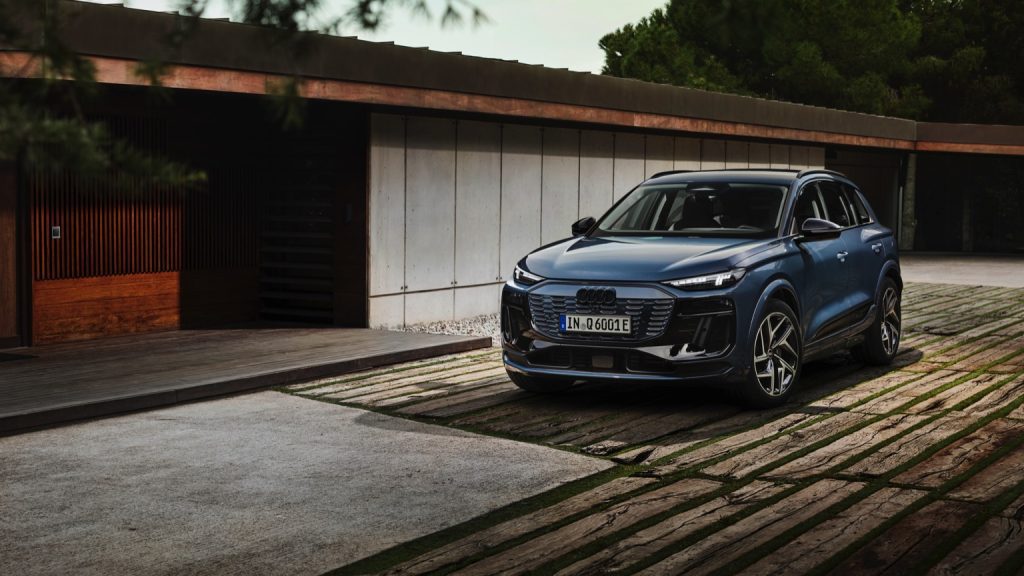
This version is the sweet spot in the range. It brings with it the new Premium Platform Electric (PPE) that supports 270 kW charging. That allows you to add up to 158 miles of range in 10 minutes at a compatible station. It is approachable: You get a high-tech, sophisticated experience, but one that’s not intimidatingly aggressive. What’s new here is the E3 1.2 electronic architecture that enables a seamless digital experience along with over-the-air updates.
Audi SQ6 e-tron: The Performance Sleeper
If you are still hungry, the SQ6 doesn’t simply add muscle but tightens the whole driving dynamic up. It has unique chassis tuning, as well as deeper bolsters in the sport seats. The “S” model is a cross between a family wagon and a sports car. The innovation is in the system for managing heat, which makes it possible to drive for long stretches at a high level of performance without the battery overheating, a frequent problem in inferior EVs.
BMW iX xDrive50: The Long-Haul Cruiser
The xDrive50 is a master of get-up-and-go for a vehicle of its size. Despite its blocky form, it has an extraordinary range on account of very efficient electric motors which are free from rare earth magnets. Its comfort in the ride is what makes it so strong, and the suspension smoothes out the road’s imperfections so well that it’s one of the best highway runners you’ll find.
BMW iX M60: The Brute Force
The M60 is coated in over-the-top excess. It defies physics with more than 800 lb-ft of torque in Launch Mode. The novelty here is that M-specific suspension tuning has been combined with the air suspension, creating a ride that is both compliant and incredibly hard in corners. It also includes a bespoke soundscape developed by Hans Zimmer, which infuses an emotional dimension to the quiet acceleration.
Spec Sheet Appendix
To help you digest the raw numbers, here is a consolidated specification sheet for the Q6 SUV e-tron performance review comparison.
| Specification | Audi Q6 e-tron (Series) | BMW iX (Series) |
|---|---|---|
| Battery Capacity (Gross/Net) | 100 kWh / 94.9 kWh | 111.5 kWh / 105.2 kWh |
| Max Charging Speed | 270 kW (DC) | 195 kW (DC) |
| AC Charging | 11 kW (Standard), 22 kW (Optional) | 11 kW |
| Wheelbase | 114.1 inches | 118.1 inches |
| Cargo Space (Seats Up) | 18.6 cu ft | 35.5 cu ft |
| Frunk (Front Trunk) | Yes (2.3 cu ft) | No (Bonnet does not open) |
| Drag Coefficient (Cd) | 0.28 | 0.25 |
| Towing Capacity | Up to 5,300 lbs | Up to 5,500 lbs |
Summary of Key Features and Benefits
- Options are varied: Audi makes a distinct separation between luxury (Q6) and sport (SQ6), while BMW offers the xDrive50 and the ice-hardened M60 for performance.
- Innovation in charging: With 270 kW charging, the Q6 e-tron far outpaces the iX’s 195 kW, cutting wait times on road trips.
- Usefulness: Audi adds practical utility that the BMW iX lacks by including a “frunk” to store cables.
- Value for money: The Audi Q6 e-tron sits in between, delivering a lower price of entry and newer platform technology, in the eyes of many, a far better value than BMW’s pricier iX.
Audi Q6 e-tron Performance vs BMW iX: Driving Dynamics & Power
When you’re buying a high-end electric SUV, you expect more than just silence; you want a concerto of power and grace. Up next: a vital part of the Q6 SUV e-tron performance review, live from the driver’s seat, away from the spec sheets. But what do these heavy hitters actually feel like on the road? The answer is two very different interpretations of modern electric performance, one that celebrates traditional driving dynamics, the other seeking to detach you from the world altogether.
Both the Audi Q6 e-tron and the BMW iX offer immense instant torque and low centres of gravity, but they are not alike. The Q6 e-tron has been designed to be connected, agile and a true driver’s car disguised as a family SUV. In stark contrast to BMW, the iX is tuned to be a haven of serenity that can unleash savagery on a moment’s notice, calling it a “Magic Carpet” ride that can make you feel as if you have no ties to the road surface, until you really lay into it.
Performance & Driving Experience Comparison
The Heart of the Beast: Motor Setup and Output
At the heart of the Audi Q6 e-tron is the new Premium Platform Electric (PPE). This creates space for a small, efficient drive unit. The Q6 e-tron quattro uses an asynchronous motor on the front axle and a permanently excited synchronous motor on the rear. This configuration means the front motor can disengage when it’s not needed for efficiency, but snap engage for maximum all four-wheel-drive traction. Total system output is a hefty 422 hp (456 hp with launch control), providing a wave of acceleration that just seems to have no end.
BMW iX xDrive50 is powered by BMW’s fifth-generation eDrive technology. Instead of utilising rare-earth magnets in its rotors, it uses electrically excited synchronous motors. This unusual engineering decision results in a power delivery that is linear all the way to the redline. With a combined 516 hp and an eye-popping 564 lb-ft of torque, the iX whizzes down hills with terrifying speed despite its considerable weight. It doesn’t just accelerate; it teleports.
Behind the Wheel: Handling and Ride Quality
That’s where the two personalities of the cars differ. The Audi Q6 e-tron bounces nimbly about. Audi has equipped it with a new passive damping system as standard, with adaptive air suspension offered on upper trims. The steering is accurate and has a good natural weight, which gives you confidence when you push it through corners. It flows through turns like a much smaller car, well masking its bulk in twisty bits. There is a real tarmac connection; you sense what the car is doing, and that makes you want to drive it hard.
By comparison, driving the BMW iX is like commanding a cumulus. The standard air suspension (on the xDrive50) is brilliant at smoothing out potholes and road imperfections. When it comes to ride comfort, it is possibly the king of its class. However, the steering is too light and numb compared to the Audi. It’s simple around town and peaceful when you get on the highway, but as you round a corner, the polygonal steering wheel and plush suspension remind you this is a luxury couch first and a sports car third.
Audi Q6 e-tron vs. BMW iX: A Specification Comparison
When considering your next electric luxury SUV, the details matter. Below is a direct comparison of the key performance and technical specifications for the Audi Q6 e-tron and the BMW iX to help inform your decision.
| Feature/Specification | Audi Q6 e-tron | BMW iX |
|---|---|---|
| Powertrain | Dual Motor AWD (Asynchronous/Synchronous) | Dual Motor AWD (Electrically Excited Synchronous) |
| Horsepower | 422 hp (456 hp w/ Launch Control) | 516 hp |
| Torque | ~431 lb-ft (Combined) | 564 lb-ft |
| Battery Capacity (Gross/Net) | 100 kWh / 94.9 kWh | 111.5 kWh / 105.2 kWh |
| Range (Est. EPA) | ~315 miles | ~307 miles |
| Max Charging Speed (DC) | 270 kW | 195 kW |
| AC Charging | 11 kW (Standard), 22 kW (Optional) | 11 kW |
| Acceleration 0-60 mph | ~4.9 seconds | 4.4 seconds |
| Top Speed | 130 mph (210 km/h) | 124 mph (200 km/h) |
| Drivetrain | Dual-motor AWD | Dual-motor AWD |
| Suspension | Steel springs (Standard) / Adaptive Air (Optional) | Two-axle Air Suspension (Standard) |
| Front Trunk (Frunk) | Yes (2.3 cu ft) | No |
| Drag Coefficient (Cd) | 0.28 | 0.25 |
| Towing Capacity | Up to 5,300 lbs | Up to 5,500 lbs |
Disclaimers and Footnotes
- Pricing and specific equipment configurations can vary by market. Figures are based on current global announcements and may not reflect final U.S. market specifications.
- Estimated ranges are based on EPA testing protocols and are subject to variation based on driving conditions, vehicle configuration, and other factors.
- Performance figures for the Audi Q6 e-tron are for the standard model; the SQ6 model offers enhanced acceleration (4.1s 0-60 mph). The BMW iX figures are for the xDrive50 model; the iX M60 model offers enhanced acceleration (3.6s 0-60 mph).
Charging Curve Reality
When considering real-world charging, the architectural differences between the Audi Q6 e-tron and the BMW iX become significant. The Q6 e-tron is built on an advanced 800-volt Premium Platform Electric (PPE) architecture, enabling it to achieve a maximum charging speed of 270 kW. In practical terms, this means that at a compatible high-power charging station, you can add significant range in a very short time—up to 158 miles in just 10 minutes. This capability dramatically reduces downtime on long journeys, making road trips more convenient. In contrast, the BMW iX utilizes a 400-volt architecture, which caps its charging speed at 195 kW. While still robust, this lower peak speed translates to slightly longer charging stops compared to the Audi. Therefore, the Q6 e-tron’s system not only offers faster charging but also represents a more forward-looking approach to electric vehicle technology, better prepared for the expanding network of ultra-fast chargers.
Driving Modes and Suspension Setup
Both vehicles come with a range of modes to customise the experience. Audi’s “Drive Select” lets you make the throttle more responsive and the dampers (if equipped with air suspension) firmer for a “Dynamic” driving mode that really tightens up the car’s responses.
BMW’s “My Modes” have a more atmospheric feel. Pressing “Sport” compresses the bolsters and blares a futuristic Hans Zimmer soundtrack, and the suspension shutters. But the iX keeps a degree of give even when you dial all the sportiness out; the Audi Q6 e-tron doesn’t hold back like that.
Performance Comparison Table
| Feature | Audi Q6 e-tron quattro | BMW iX xDrive50 |
|---|---|---|
| Powertrain Layout | Dual Motor AWD (Front Asynchronous / Rear Synchronous) | Dual Motor AWD (Electrically Excited Synchronous) |
| Max Power Output | 422 hp (456 hp w/ Launch Control) | 516 hp |
| Max Torque | ~431 lb-ft (Combined) | 564 lb-ft |
| 0–100 km/h (0-62 mph) | 5.9 seconds (4.3s for SQ6) | 4.6 seconds |
| Top Speed | 130 mph (210 km/h) | 124 mph (200 km/h) |
| Transmission | Single-speed automatic | Single-speed automatic |
| Suspension | Steel springs (Standard) / Adaptive Air (Optional) | Two-axle Air Suspension (Standard on xDrive50) |
| Driving Modes | Efficiency, Comfort, Dynamic, Off-road, Individual | Personal, Sport, Efficient, Expressive, Relax |
Summary of Key Performance Insights
- Driver Engagement: The Audi Q6 e-tron is more engaging and playful to drive with more accurate steering feedback, which is something enthusiasts who love to drive will truly appreciate.
- Ride Comfort: The BMW iX is unexcelled in comfort, offering a “bouncy bobbing, floating along” sensation that smooths out road imperfections better than most rivals.
- Power Delivery: The BMW iX has more raw horsepower, but the Audi Q6 e-tron delivers a more refined powertrain that balances efficiency with a sufficient level of performance for everyday driving.
- Suspension Tech: Audi’s mixed motor types usage (asynchronous/synchronous) leads to better coasting efficiency, whereas BMW’s air suspension prioritises supreme luxury and isolation.
Audi Q6 e-tron Performance vs BMW iX: Interior, Tech & Comfort Review
When you get in a new luxury electric SUV, you’re no longer getting in a car; you’re getting in a digital ecosystem. Here, towards the end of the Q6 SUV e-tron performance review, we will now turn our attention from horsepower to the human element. The difference is most evident in the interior, which is where you spend most of your time.
Both manufacturers deliver noise-free sanctuaries lined with high-quality materials, but how they engage drivers and shape cabins is dramatically different. Audi has doubled down on a driver-centric, screen-heavy “Digital Stage,” in effect turning its cockpit into a command centre. BMW, on the other hand, is refining its minimalist “Shy Tech” philosophy and transforming its vehicles into mobile lounges where technology recedes into the background until summoned.
The “Digital Stage” vs. The “Mobile Lounge”
Audi Q6 e-tron: The Immersive Cockpit
With the Q6 e-tron, Audi presents an entirely new interior layout. The showpiece is the “Digital Stage,” a stand-alone, curved OLED panoramic display that integrates an 11.9-inch Audi virtual cockpit with a 14.5-inch MMI touch display. “The curve is not a styling element only but also an ergonomic feature, the driver can easily reach the curve,” the brand stated, “The curve goes hand in hand with the brand’s core attribute of pilot engagement.”
What really makes the Q6 e-tron unique in this class is the optional 10.9-inch MMI front passenger display. Accessible from a touch screen that’s seamlessly integrated into the dashboard design, the front passenger can help out with directions or even entertain themselves. Critically, it has “Active Privacy Mode,” in which the light being emitted toward the driver is blocked by a shutter, so you won’t be distracted by a movie playing in your peripheral vision while you’re driving at night.
BMW iX: The Minimalist Sanctuary
The BMW iX is minimalist to a fault. The dashboard is low and flat and dominated by the BMW Curved Display, which rests on an invisible support. It combines a 12.3-inch information display with a 14.9-inch control display. The iX doesn’t have the closed-in cockpit feel of the Audi; instead, it feels open and airy, thanks in part to no centre tunnel.
Details testify to BMW’s “Shy Tech” ethos. There are a few buttons. Made of FSC-certified wood, the complete centre console includes a control panel with buttons concealed under the surface that can be located by touch. The crystal glass iDrive controller and gear selector bring a jewellery-like touch to the interior, which focuses on luxury rather than sheer utility.
Materials, Comfort, and Ergonomics
Definitions of luxury are shifting from leather and metal finishes to sustainable materials and textures. Both labels have adapted to this change, but to very different tactile extents.
With the Audi Q6 e-tron, a “Softwrap” stretches from the doors all the way across the full cockpit and reaches out to the centre console, providing an integral, enveloping impression. Audi makes extensive use of high-quality, recycled materials. Made of 100% recycled polyester, the Elastic Melange fabric provides a warm, tactile alternative to standard leather. The seats are nailed down in a way that holds you firm, and with the car’s more sprightly handling comes a slightly sportier seating character to match.
The BMW iX is all about lounge-like comfort. The wider, flatter seats look more like pieces of high-end furniture than racing buckets. They are extremely comfortable for long-distance sailing, but provide less lateral support than the Audis’ seats when you get popping off in tight bends. The hexagonal steering wheel peeks under the curved display, but it can feel odd when doing hand-over-hand turns. The feeling of space is accentuated by the panoramic glass roof, which incorporates electrochromic shading to become opaque with the press of a button, a feature that does away with the need for a physical headliner and increases headroom.
Infotainment and Connectivity
Operating Systems
The Q6 e-tron is the first model to feature Audi’s new E3 1.2 electronic architecture. The infotainment system now runs on Android Automotive OS, meaning arguably better integration of third-party apps such as Spotify and YouTube right into the MMI, without requiring a smartphone. The voice assistant has undergone a major transformation; it is now a voice self-learning assistant that can manage over 800 vehicle functionalities and processes natural language commands, also for things like looking for chargers or controlling the temperature.
BMW uses iDrive 8.5 (or 9 for newer versions), and it’s very pretty but can be overwhelming. The tile-like system is configurable, but the extensive number of icons and sub-categories may make the learning curve even steeper than that of Audi’s arguably more rigid menu system. But BMW’s gesture control still stands as a unique, if occasionally gimmicky, way to mute incoming calls or adjust volume by swiping across your hand.
Audio Experience
Both cars offer incredible soundstages for audiophiles. Audi teams with Bang & Olufsen for the Premium Sound System with 3D sound, creating personal sound zones with speakers in the headrests. BMW is fighting back with the Bowers & Wilkins Diamond Surround Sound System (standard on the M60) featuring “4D” sound where exciters embedded in the front seats vibrate with the bass, producing a listening experience that is as visceral to feel as it is to hear.
Advanced Driver Assistance Systems (ADAS)
Safety and convenience technology in this class is highly competitive. The Audi Q6 e-tron comes with a new AR HUD (Augmented Reality Head-Up Display). This information (navigation arrows, speed limit, etc.) is projected on the windshield like floating about 200 metres in front of you. It relaxes the eyes and allows the driver to process the instructions faster.
There’s also an AR view in the BMW iX, but it is mostly on the centre control screen (or instrument cluster) rather than the HUD, and it superimposes directional arrows over a live video feed of the road ahead. Both vehicles come with all the bells and whistles like adaptive cruise control, lane-keeping assist, and automated parking. But Audi’s “Adaptive Driving Assistant Plus” leverages swarm data from other Audi vehicles to enhance the lane centring trustworthiness on roads with deteriorated lane markings.
Safety and Reliability: A Deep Dive into the Q6 e-tron and iX
When it comes to premium electric SUVs, performance and technology aren’t the full story. Peace of mind on the road is everything, and so safety and reliability play a major role in any buying decision. In this section of our in-depth Q6 e-tron performance review, we’ll also look at the safety features, build quality, and long-term reliability potential of both the Audi Q6 e-tron and the BMW iX. Designed to be just as safe as the best, both models comfortably comply, but they marry their safety assist tech in ways that are very telling of their differing brand personas.
Audi and BMW have established their reputations on outstanding engineering, and this is true when it comes to the structural framework of their electric cars. The battery pack, a huge part of any EV, is built into the car’s floor, forming a solid structure that lowers the centre of gravity and boosts crash protection. This strong base is bolstered by numerous active and passive safety systems developed to avoid crashes and to safeguard occupants in the event one occurs. We examine how each firm tackles this vital question from airbag deployment to advanced driver-assistance systems.
Reliability is another cornerstone of the premium ownership experience. For the new Audi Q6 e-tron, dependability is expected due to its new PPE platform and the Volkswagen Group’s stringent testing protocols. Although the BMW iX has only been available for a few years, its track record offers a glimpse at how it holds up. Both brands offer warranty coverage, which we will compare as well. It’s a good indication of how a manufacturer feels about its product.
Structural Safety and Crash Performance
Official crash test ratings from the likes of Euro NCAP and the IIHS haven’t yet been published for the all-new Audi Q6 e-tron, but its platform derives a lot of its crashworthiness from the structure. Based on the Premium Platform Electric (PPE) platform, the Q6 e-tron’s body incorporates ultra-high-strength steel in the passenger cell. The large battery is shielded by a strong frame to stop intrusion and thermal runaway in a crash. Audi has a proven track record for top safety marks, and there is no reason to believe that the Q6 e-tron will break that string.
The BMW iX has already received thorough testing, securing a five-star rating from Euro NCAP and being recognised as a 2023 TOP SAFETY PICK by the IIHS. Its “Carbon Cage,” which incorporates carbon-fibre-reinforced plastic (CFRP) in the roof frame, side sills and rear window surround, achieves extraordinary rigidity while reducing weight. This revolutionary material, borrowed from BMW’s i3 and i8 models, provides a heavily shielded survival ring for passengers. Both vehicles are outfitted with a full complement of airbags, including front, side, knee and curtain airbags, to maximise protection from every angle.
Advanced Driver-Assistance Systems (ADAS)
Today’s vehicle safety is as much about preventing crashes as it is about mitigating them. Both models have a wide sensor suite—camera, radar and ultrasonic sensors, among others—that send information to their respective ADAS systems.
The Audi Q6 e-tron introduces a further development of Audi’s assistance systems. With its “Adaptive Driving Assistant Plus” package, it not only controls the speed and distance but, based on swarm data from other connected Audi vehicles, offers even more precise lane guidance, even on roads with obscured markings. With Intersection Assist, which brakes when it recognises a possible crash while entering an intersection, and Exit Warning, which signals to vehicle occupants when bicycles or cars are approaching before they open the doors, the Q6 e-tron takes a proactive approach to safety. The active digital light signatures can also project warning symbols along the road, alerting other drivers.
The BMW iX also has a comparable all-inclusive offering in the form of its “Driving Assistant Professional” suite. This system is capable of excellent motorway semi-autonomous driving, with strong lane-keeping, acceleration and braking. One of the key features of the car is the assisted lane-change feature, which enables the car to change lanes by itself with a tap on the indicator stalk when the system determines it is safe to do so. It can even remember and autonomously execute complex parking manoeuvres at a distance of some 200 metres, which is also a practical advantage when pulling into the garage at home.
Reliability and Warranty Coverage
Considering the brand’s track record and the engineering of the new platform, we can assess the long-term reliability of a new vehicle such as the Audi Q6 e-tron. The PPE platform, which shared development with Porsche, indicates an emphasis on robustness and high performance. The limited vehicle 4-year/50,000-mile warranty provides coverage for vehicle components due to materials or workmanship, and a separate 8-year/100,000-mile warranty for the high-voltage battery against early degradation.
Reliability on the BMW iX has been high since its release. The majority of related complaints have been minor software-related issues, which are common in tech-heavy modern cars and tend to be addressed with over-the-air updates. The technology, especially the fifth-generation eDrive motors and batteries, has been reliable. BMW offers a 4-year/50,000-mile limited warranty and an 8-year/100,000-mile battery warranty, which is equal to what Audi offers on the Q6, providing peace of mind for long-term ownership.
Summary of Key Safety and Reliability Benefits
- Advanced Materials (BMW): The iX’s “Carbon Cage” offers exceptional structural rigidity and occupant protection, as confirmed by the highest ratings from IIHS and Euro NCAP.
- Predictive Assistance (Audi): The Q6 e-tron’s application of swarm data for lane-keeping assist is now a bit more reliable on a wider range of roads.
- Parking Innovation (BMW): The enhanced Parking Assistant can learn and perform a complex series of parking manoeuvres, eliminating a common source of stress for drivers.
- Communication Safety (Audi): The active digital light signatures, which can also communicate warnings to other road users, take a proactive approach to collaborative road safety.
The Definitive Comparison: Q6 e-tron vs. iX and the Competition
Choosing a premium electric SUV is about more than just numbers on a page; it’s about which vehicle best fits your lifestyle, values and driving preferences. Although we are comparing the Audi Q6 e-tron and BMW iX, it’s also interesting to see how these two giants compare to the rest. No vehicle exists in isolation, and strong competition from rivals, including Mercedes-Benz, Genesis, and Tesla, helps shed essential light on this decision.
The luxury electric SUV segment is fiercely competitive, with a slightly different luxury, technology and performance mix offered from each brand. Featuring a revolutionary 800-volt charging system and a driver-focused cockpit, the Audi Q6 e-tron is making its world debut. The BMW iX makes a play with its tried-and-true name, polarising styling, and focus on ultimate driving comfort. For good measure, we will toss the stylish Mercedes-Benz EQE SUV and the daring Genesis GV70 Electrified into the mix to see how they all handle the primary aspects of price, performance, and daily practicality.
Head-to-Head: The Premium Electric SUV Showdown
This comparison will help clarify where each vehicle excels and for whom it is best suited. We’ve distilled the key metrics into a comprehensive table to highlight the strengths and weaknesses of each model at a glance. The following data represents the core or most comparable trim levels to provide a fair and balanced overview.
| Feature | Audi Q6 e-tron quattro | BMW iX xDrive50 | Mercedes-Benz EQE 500 SUV | Genesis GV70 Electrified |
|---|---|---|---|---|
| Est. Starting Price | ~£68,000 | ~£100,000 | ~£108,760 | ~£65,915 |
| Performance (HP) | 422 hp | 516 hp | 402 hp | 429 hp (483 hp boost) |
| Range (Est. EPA) | ~315 miles | ~307 miles | ~280 miles | ~236 miles |
| Design Ethos | Evolutionary Sportiness | Futuristic Lounge | Aerodynamic Elegance | Athletic Luxury |
| Key Value Prop | Next-gen charging speed and a driver-focused, tech-forward cockpit in a classically handsome package. | Unmatched ride comfort, a bold statement design, and a spacious, minimalist interior sanctuary. | Classic Mercedes luxury and build quality with an optional “Hyperscreen” for an immersive tech experience. | Exceptional value, high-standard feature content, and dynamic performance in a more compact footprint. |
Which Buyer Does Each Car Suit Best?
The data reveals that each of these vehicles is designed for a specific type of premium buyer. The ideal choice depends entirely on your priorities.
The Audi Q6 e-tron: For the Tech-Savvy Driver
The Q6 e-tron is the perfect vehicle for the driver who wants the latest technology and a fun-to-drive experience. Its main selling point is the 800-volt PPE platform, which enables class-leading charging speeds that cut down on the time spent on road trips. The driver-focused “Digital Stage” and the optional Augmented Reality Head-Up Display make the interior appeal to those who want to feel at one with their car and the road. It strikes a perfect balance between futuristic design and the reassuring, familiar touch of a traditional Audi. If you want the latest tech and a sporty drive but without the polarising aesthetics, then the Q6 e-tron is your vehicle.
The BMW iX: For the Comfort-Seeking Connoisseur
The BMW iX was designed for an occupant who craves calm and wants to make a powerful design statement. Its ride quality is unmatched in the segment, making it the perfect long-distance cruiser that cocoons occupants away from the outdoors. The minimalist cabin, reminiscent of a lounge, is spacious and tranquil, which will resonate with those who consider their vehicle a refuge. The iX is for the person who knows what they like, doesn’t care what everyone else does, and wants a remarkably comfortable and quiet ride, above all else.
The Mercedes-Benz EQE SUV: For the Traditional Luxury Buyer
The EQE SUV is the classic pick for the diehards who are moving to Mercedes-Benz electric vehicles. Its build quality, finishing materials, and classic luxury feel are impeccable and what you’d expect from the brand. Its performance and range are competitive, but its real appeal lies in the familiar feeling of luxury and the optional, mind-blowing Hyperscreen, which turns the whole dashboard into one glass surface. It is an understated but handsome choice for shoppers looking for established luxury in an electric package.
The Genesis GV70 Electrified: For the Value-Conscious Enthusiast
The Genesis GV70 Electrified treads its own path by presenting strong performance and a respectable list of standard equipment for a really affordable price. Its range is less than its German competitors’, but it also features an 800-volt architecture for rapid charging. The practical buyer who wants a sporty, luxurious experience without the premium cost, that’s what the GV70 is for. It shows that you can have power and features without breaking the bank in the electric SUV segment.
Summary of Key Comparison Insights
- Leading the Charge: With 800-volt architecture, the Audi Q6 e-tron and Genesis GV70 Electrified can charge faster than most of their competition.
- Ride Comfort vs. Sportiness: While the BMW iX leads undisputedly in ride comfort, the Audi Q6 e-tron is an altogether sportier, more engaging driving experience.
- Value Proposition: The Genesis GV70 Electrified offers the best value by delivering high performance and a ton of goodies at a more reasonable price.
- Buyer Profiles: Audi for the tech-hungry driver, BMW for the comfort buffs, Mercedes for the traditionalists, and Genesis for the budget-conscious.
Why Choose the Q6 e-tron or iX for Your Next EV?
When deciding between the Audi Q6 e-tron and the BMW iX, it’s essential to consider which electric SUV aligns better with your lifestyle and priorities. These two vehicles represent distinct philosophies in the premium electric SUV market, offering unique strengths that cater to different types of buyers.
The Case for the Audi Q6 e-tron Performance
The Audi Q6 e-tron emerges as the most well-rounded and future-ready offering in the high-end electric SUV segment. It’s more than a new model; it’s the spearhead of the next generation of Audi’s electric vehicles, developed around a platform that addresses the fundamental pain points of EV ownership. With its combination of performance, efficiency, and advanced technology, it is a strong candidate for best in class.
The Q6 e-tron is designed to fit effortlessly into your life. Its responsive handling and instant torque make it a breeze to dart through city traffic on daily commutes, and its compact size makes finding a parking spot a cinch. On long drives, the revolutionary 800-volt charging system slashes waiting times, enabling you to add more than 150 miles of range in just 10 minutes. This technology revolutionises the EV ownership experience, making cross-country travel as convenient as in a petrol-powered car.
Pros: A New Benchmark in Charging and Dynamics
The main strength of the Q6 e-tron is its Premium Platform Electric (PPE) architecture. This 800-volt system allows for ultra-fast DC charging at rates of up to 270 kW, enabling better thermal management and sustained performance. “This means the car can keep on being driven hard for a longer period of time without its performance being compromised, which is great for those who have a passion for the road,” stated the Stella Team. The intelligent rear-biased all-wheel-drive system helps provide a classic sports car feel, and the available adaptive air suspension provides an ideal blend of comfort and agility.
Benefits: Tech That Serves the Driver
Inside, the Audi “Digital Stage” delivers both immersion and ease of use. The curved OLED display is bent towards the driver, and the optional Augmented Reality Head-Up Display beams important information directly into your line of view. This focus on the individual user minimises distraction and increases engagement. Another considerate innovation is a front passenger display with active privacy mode, where your copilot entertains themselves or helps with navigation without distracting you from the road.
A Strategic Move for Audi
The Q6 e-tron is a pillar of Audi’s market offensive. It is aimed at the sophisticated buyer who is EV-ready but doesn’t want to compromise on driving enjoyment or premium looks. With the Q6 e-tron, Audi presents a very familiar, muscular-looking, driver-oriented interior that offers a straightforward way for its current buyers to go electric. It is a reminder that tradition and progress can live side by side, securing Audi as a leader in “Vorsprung durch Technik” (Progress through Technology).
The Case for the BMW iX
The BMW iX, on the other hand, is a statement piece that prioritises comfort and tranquillity. It is designed for those who value a serene and minimalist cabin atmosphere, making it a rolling sanctuary. The iX’s ride quality is unmatched, and its futuristic design appeals to buyers who want to make a bold statement.
Future-Proof Charging (Audi):
The Q6 e-tron’s 800-volt architecture offers significantly faster charging speeds, making it the more practical choice for drivers who frequently undertake long journeys.
Established Luxury (BMW):
The iX leverages a proven platform to deliver an unparalleled sense of isolation and calm, making it ideal for those who see driving as a time to relax and de-stress.
Frequently Asked Questions: Audi Q6 e-tron vs. BMW iX
Which is better for family space?
Both SUVs offer ample room, but they cater to slightly different needs. The BMW iX is a larger vehicle overall, which generally translates to more expansive rear-seat legroom and a greater sense of interior openness, making it an excellent choice for families with older children or those who frequently travel with adults in the back. The Audi Q6 e-tron, while still spacious, is a bit more compact but is designed with smart storage solutions and a comfortable cabin suitable for daily family use and trips with younger children.
Which feels more premium?
The perception of “premium” often comes down to personal taste, as both Audi and BMW are masters of high-end interiors. The BMW iX is known for its avant-garde design, featuring unique materials like open-pore wood, crystal glass controls, and a minimalist dashboard dominated by a large curved display. It feels like a luxurious, futuristic lounge. The Audi Q6 e-tron presents a more classic, tech-focused luxury. It combines high-quality materials with an intuitive and driver-centric cockpit, featuring multiple integrated screens and sophisticated ambient lighting. The feel is one of refined, sporty elegance.
Which has better performance and handling?
Both vehicles deliver impressive electric performance, but with different driving characters. The Audi Q6 e-tron, built on the new Premium Platform Electric (PPE), is engineered for dynamic, agile handling that feels distinctly Audi. It offers a sporty and engaging driving experience. The BMW iX leans more towards providing a serene, smooth, and exceptionally comfortable ride, isolating passengers from road imperfections. While it possesses powerful acceleration, its focus is on effortless cruising rather than sharp, athletic cornering.
Which offers a better technology and infotainment experience?
Both brands are at the forefront of in-car technology. The BMW iX features the striking iDrive system on a large, curved screen, offering intuitive control and rich graphics. The system is comprehensive and visually impressive. The Audi Q6 e-tron debuts a new digital stage with its Android Automotive-based system, featuring a panoramic display that includes a dedicated screen for the front passenger. This setup provides deep integration of apps and a highly customizable, connected experience that may feel more familiar to smartphone users.
Which is the better choice for long road trips?
For long-distance travel, the Audi Q6 e-tron holds a distinct advantage due to its 800-volt architecture. This allows for ultra-fast charging speeds of up to 270 kW, significantly reducing time spent at charging stations. At a compatible charger, you can add substantial range in just a few minutes. The BMW iX, with its 400-volt system and a maximum charging speed of 195 kW, still charges quickly but cannot match the pace of the Q6 e-tron, resulting in slightly longer stops on a journey.
Is the Audi Q6 e-tron the New King of Electric SUVs?
After thoroughly examining this Q6 SUV e-tron performance review, the verdict is in: the past, present, and future of the premium electric SUV segment are all converging. Both the Audi Q6 e-tron and the iX are marvels of engineering, yet they have strikingly divergent answers to the same question. The decision between the two is no longer about which car is “best” in a vacuum, but rather which philosophy best fits your personal driving story.
For the driver who sees the car as an extension of their lifestyle, someone who enjoys driving, who appreciates leading-edge connectivity, and who wants a design that takes inspiration from heritage that feels modern, the Audi Q6 e-tron Performance is the obvious and only choice. Employing the 800-volt Premium Platform Electric (PPE) technology, it changes the game, enabling charging rates that at last make electric travel as easy as internal combustion. It feels agile and responsive and, if I’m being honest, intuitively “Audi,” all wrapped up in a futuristic tech package that feels surprisingly familiar and confident.
The BMW iX still remains a powerful contender, however, for those who prefer complete isolation and cutting-edge luxury. It’s a rolling sanctuary, perfect for the purchaser who wants to close off the world and float in silence. But for a lot of our customers, the Audi Q6 e-tron is the better compromise. It has the motoring excitement that car enthusiasts demand, yet it’s still comfortable enough to haul the family every day. It is the more versatile all-rounder and combines the character of a driver’s car with the luxury of a cruiser remarkably well.
Who Should Buy the Audi Q6 e-tron?
The Audi Q6 e-tron is recommended for anyone willing to leap into next-generation electric mobility without giving up the joy of driving. That makes it a great choice for tech-savvy professionals and families who want efficiency and speed not just on the road but also at the charging station. If you like a cockpit shaped around you, as opposed to a lounge you get to sit in, the Q6 e-tron is your car.
On the strength of the Q6 e-tron Performance, the brand-new model earns our top recommendation. It is not just on par with the veterans; it raises the bar in charging tech and driver engagement. It is a buy you can make with both your mind and your heart, knowing you are at the wheel of one of the most sophisticated vehicles on the road today.
Ready to Experience the Future?
Reading about performance is one thing, but feeling that torque instantly and experiencing the “Digital Stage” up close and personal is quite an eye-opening and ear-opening experience. Discover why the Audi Q6 e-tron is redrawing the boundaries of the luxury SUV by experiencing it for yourself.
Visit The.Car today to configure the new Audi Q6 e-tron Performance, see full specs and book your test drive. Contact us today, and we can help you choose the ideal specification to suit your lifestyle.