Electric Titans Clash: BYD Seal 82.5 kWh RWD Design vs Lucid Air
The Battle for Electric Dominance: Innovation Meets Luxury
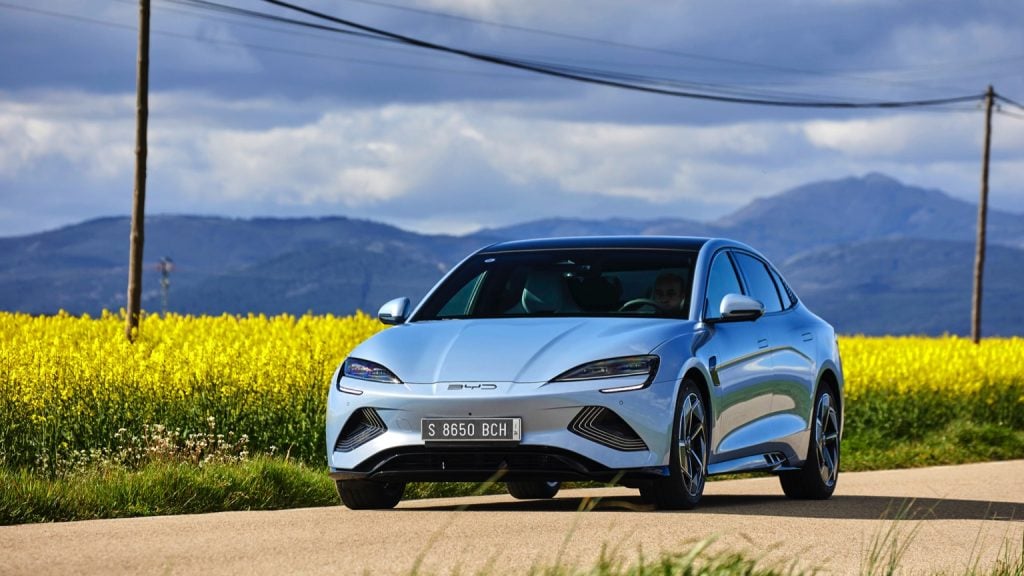
The picture of electric cars is being remoulded beneath our feet, not by straightforward competition among the traditional car industry, but also now fierce competition between well-known players and newly arrived challengers. Here, at this high level of competition, two philosophies are clearly clashing. On the one hand, we have the BYD Seal 82.5 kWh RWD Design representing the embodiment of aggressive innovation and accessible performance from a global powerhouse. On the other hand is the Lucid Air, the ultimate example of American luxury engineering designed to change what an electric sedan can be.
These two vehicles aren’t just playing in the market; these two vehicles are reshaping the market. By now, the Lucid Air has established itself as a technological sensation that provides range figures that force its competitors to scramble for answers and a price point that isn’t meant for everyone. In contrast, the BYD Seal RWD Design signals a tectonic change in the “expense accessible” high-end market. It defies the idea that you have to pay six figures to get access to cutting-edge blade battery technology, ocean-inspired designs, and a really fun driving experience. One caters to a legacy of high-end luxury, while the other makes the promise of elite EV performance for all.
As we dive into this BYD Seal 82.5 kWh RWD Design vs Lucid Air: the future isn’t just about spec sheets, it’s about questioning what mobility really means, and we have two different answers here. Whether you’re enticed by the outright luxury of the Air or the more affordable Seal, it’s important to know where they stand. This BYD Seal RWD Design Review will analyse how these vehicles compare in range, performance, and the all-so-important driver connection, to assist you in choosing between unadulterated luxury and intelligent innovation.
Market Positioning
The Lucid Air targets the ultra-luxury segment with record-breaking specs, while the BYD Seal disrupts the market by offering premium features at a more accessible BYD Seal 82.5 kWh price.
Technological Focus
Lucid emphasises raw efficiency and range dominance; BYD focuses on safety and integration through its proprietary e-Platform 3.0.
Snapshot: BYD Seal 82.5 kWh RWD Design vs Lucid Air
Before digging into the nitty-gritty of our BYD Seal 82.5 kWh RWD Design vs Lucid Air comparison, let’s lay down some basics. These electric sedans sit on opposite ends of the premium EV scale, but both are intent on upending the status quo with best-in-class engineering.
BYD Seal 82.5 kWh RWD Design: The Disruptor
- Manufacturer: BYD (Build Your Dreams)
- Model Year: 2024/2025
- Body Type: Mid-size Electric Sedan (D-segment)
- Available Trims/Variants: Dynamic, Premium, Performance AWD (Focus here is on the Long Range RWD “Design” trim)
- Interior and Exterior Designs: “Ocean Aesthetics” design language featuring fluid lines and a sporty silhouette; interior boasts a rotating 15.6-inch screen and quilted leather seats.
- Performance and Driving Experience: 0–100 km/h in 5.9 seconds; tuned for a balance of sportiness and daily comfort with rear-wheel drive dynamics.
- Powertrain Options: Single motor RWD configuration delivering 230 kW (308 hp).
- Innovations & Features: CTB (Cell-to-Body) technology integrating the Blade Battery into the chassis for rigidity; iTAC (Intelligent Torque Adaptation Control).
- Comparison Focus: Offers flagship-level tech and range at a fraction of the cost of legacy luxury EVs.
- Price Range: Highly competitive BYD Seal 82.5 kWh RWD, positioning it as a value leader in the premium segment.
Lucid Air: The Luxury Benchmark
- Manufacturer: Lucid Motors
- Model Year: 2024/2025
- Body Type: Full-size Luxury Electric Sedan
- Available Trims/Variants: Pure, Touring, Grand Touring, Sapphire
- Interior and Exterior Designs: “Post-Luxury” minimalist aesthetic with an emphasis on aerodynamics (drag coefficient of 0.197); interior features the floating “Glass Cockpit” display.
- Performance and Driving Experience: Renowned for rapid acceleration and sustained highway cruising comfort; base models hit 0–60 mph in roughly 4.5 seconds.
- Powertrain Options: Single motor RWD (Pure) to Tri-motor AWD (Sapphire).
- Innovations & Features: Miniature electric drive units for maximising interior space; 900V+ electrical architecture for ultra-fast charging.
- Comparison Focus: Competes on raw specs, range dominance, and ultra-premium material quality.
- Price Range: Positioned firmly in the high-end luxury bracket, significantly higher than the Seal.
Key Takeaways
- Market Position: The Lucid Air targets the executive luxury buyer, while the BYD Seal RWD Design Specs cater to the performance-oriented driver seeking smart value.
- Design Philosophy: Lucid favours aerodynamic minimalism, while BYD embraces a sporty, organic “Ocean Aesthetics” design.
Overview & Design Inspirations: Sculpting the Future of Mobility
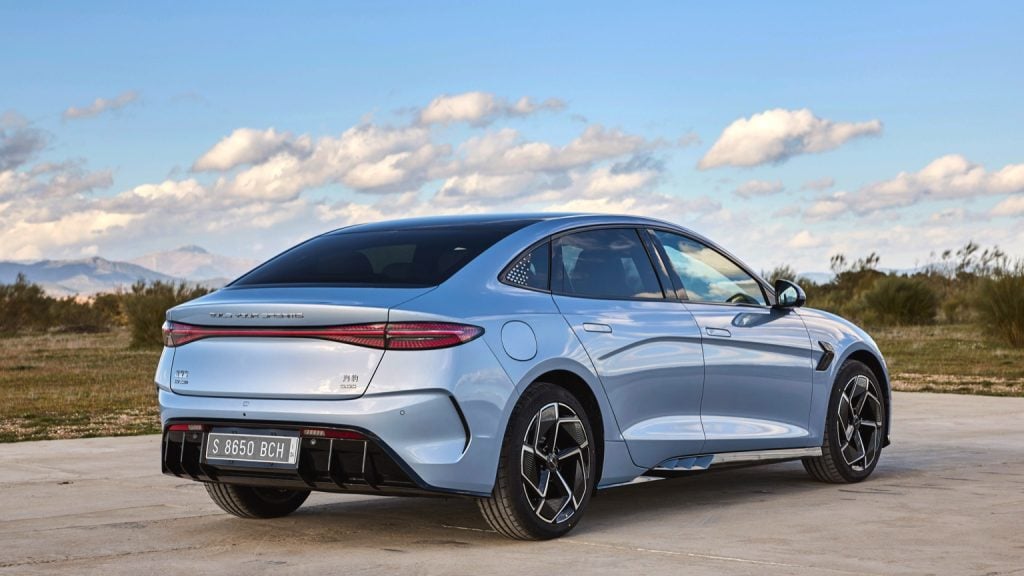
When we compare the BYD Seal 82.5 kWh RWD Design with the Lucid Air, we are not just comparing metal and glass; we are comparing two separate styles in the automotive scene. The two carmakers have escaped the traditional constraints of internal combustion engine design to take full advantage of electric architectures and design from scratch. But who they’re taking cues from couldn’t be more different.
Engineering Philosophies: Efficiency Meets Emotion
If you want to get these cars, you have to get what’s behind them. BYD brings a natural and holistic ethos to the Seal. The automaker notes the Seal is “developed on the e-Platform 3.0 to enhance efficiency and safety,” using their revolutionary Cell-to-Body (CTB) technology. It’s not just engineering; it’s a structural philosophy, and the battery is an essential component of the car’s skeleton, which lowers the centre of gravity and allows for new design possibilities.
For Lucid Motors, it’s “Post-Luxury.” Their engineering strategy is characterised by miniaturising the powertrain to increase the space for passengers, which they call a “Space Concept.” Lucid wants to take the smaller exterior footprint with a larger interior volume and get rid of the traditional luxury excess in order to focus on a more intelligent design and what they call ‘aerodynamic purity.’
BYD Seal RWD Design vs Lucid Air: Similarities and Differences
At a quick look, both cars boast the shape of the current age of the electrics: a squat, fastback shape made to be aerodynamic. However, the treatment differentiates them into two totally different worlds.
The BYD Seal: Ocean Aesthetics
The BYD Seal RWD Design Review highlights its “Ocean Aesthetics” design philosophy. It is smooth and natural, and by design, emotive. The “X” shaped styling face representing the ripples of the ocean in the front-end, the double U-shaped floating LED headlights lend it a fierce, focused look. It seems dynamic and fun. The waistline swoops boldly, recalling crashing waves.
This distinctive theme directly appeals to a younger, tech-savvy group. It is bold, it looks ahead, and it is less interested in traditional signifiers of status and more about conveying that sense of agility, moving forward into the future. It’s very friendly, but clearly very new.
The Lucid Air: Aerodynamic Minimalism
In contrast, the Lucid Air is a study in simplicity and reserve. It is shaped by the wind tunnel to an industry-leading drag coefficient. The lines are long and unbroken, reminiscent of aircraft. The “Platinum Look” pillars, as well as the glass canopy, distinguish the stylish design of the roof, emanating an airy and voluminous sensation that defines the concept of luxury. This one is geared towards older buyers, after all, they know what stealth wealth means. You could certainly say that it does not yell at you to get your attention; it makes you pay attention to it because of its shape and size.
Why These Two Models Are Rivals
Why the BYD Seal 82.5 kWh RWD Design vs Lucid Air comparison when they look so different? Because these are two intellectual territory disruptors competing for the same space.
- Innovation Over Heritage: Both brands reject the legacy baggage of traditional automakers. They appeal to buyers who want the absolute latest technology, not just a badge with history.
- Performance Credentials: Both models use their design to enhance performance. BYD uses its aerodynamic shape to extend range and stability, while Lucid uses it for silence and efficiency.
- The “Smart” Choice: They are rivals because they force the consumer to choose between two definitions of the future: the democratisation of high-performance tech (BYD) versus the pinnacle of luxury efficiency (Lucid).
Key Takeaways
- Design Language: BYD utilises “Ocean Aesthetics” for a sporty, organic look; Lucid employs “Post-Luxury” minimalism for aerodynamic perfection.
- Target Audience: The Seal appeals to younger buyers seeking bold expression and value, while the Air targets those desiring understated luxury and cutting-edge technology.
Variants & Trims Comparison: BYD Seal vs Lucid Air
Below is a comparison between the BYD Seal 82.5 kWh RWD Design and the Lucid Air range that illustrates the unique spectrum positioning of each. The Lucid Air has a wider selection of ultra-high-performance models, but the BYD Seal’s Design variant offers a tightly focused, value-oriented package, going toe to toe with features and practicality.
| Glass Canopy Roof: Optional immersive view, Surreal Sound Pro: 21-speaker system, Premium Leather: Sustainable options available | Powertrain | Key Features & Innovations | Performance (0–100 km/h) | Range (WLTP) | Approx. Price |
|---|---|---|---|---|---|
| BYD Seal Design (82.5 kWh RWD) | Single Motor RWD 230 kW (308 hp) 360 Nm Torque | CTB Technology: Battery integrated into chassis 15.6″ Rotation Screen: Adaptive infotainment HUD: Heads-up Display included Glass Roof: Panoramic, with UV resistance | 5.9 seconds Top Speed: 180 km/h | 570 km | ~£45,695 (Market dependent) |
| BYD Seal Excellence (AWD) | Dual Motor AWD 390 kW (523 hp) 670 Nm Torque | iTAC: Intelligent Torque Adaptation Control Frequency Selective Damping: For enhanced ride quality Semi-Active Suspension | 3.8 seconds Top Speed: 180 km/h | 520 km | ~£48,695 |
| Lucid Air Pure RWD | Single Motor RWD 320 kW (430 hp) 550 Nm Torque | Space Concept: Maximised interior volume 900V Architecture: Ultra-fast charging capable Micro Lens Array LED: Advanced lighting | 4.5 seconds Top Speed: 200 km/h | ~660 km (EPA) (WLTP est. higher) | ~£72,900 |
| Lucid Air Touring | Dual Motor AWD 462 kW (620 hp) 1,000+ Nm Torque | Glass Canopy Roof: Optional immersive view Surreal Sound Pro: 21-speaker system Premium Leather: Sustainable options available | 3.4 seconds Top Speed: 225 km/h | ~684 km (EPA) | ~£84,000 |
| Lucid Air Grand Touring | Dual Motor AWD 611 kW (819 hp) 1,200+ Nm Torque | Extended Range Battery: Industry-leading capacity DreamDrive Pro: Lidar-enabled driver assistance 21″ Aero Blade Wheels | 3.0 seconds Top Speed: 270 km/h | ~839 km (EPA) | ~£110,000 |
Value Proposition
The BYD Seal 82.5 kWh RWD Price significantly undercuts the entry-level Lucid Air Pure, offering a premium experience for nearly £8,916–£14,857 less, depending on the market.
While the Lucid Air Sapphire (not listed for brevity) and Grand Touring focus on hypercar-beating stats, the BYD Seal RWD Design Variants prioritise a balance of spirited driving dynamics and daily comfort, with the RWD Design trim offering the “sweet spot” for range and agility.
The BYD Seal is notable for including features like the Head-Up Display (HUD) and panoramic roof as standard in the Design trim, whereas comparable vehicles often charge extra for such amenities.
Appendix: BYD Seal 82.5 kWh RWD Design vs Lucid Air Spec Sheet
This section contains a technical comparison which pits BYD Seal RWD Design Specs against the base Lucid Air Pure. These numbers illustrate the technical differences between BYD’s energy-efficient “Ocean Aesthetics” design and Lucid’s high-powered “Post-Luxury” design.
| Specification Category | Metric | BYD Seal Design (82.5 kWh RWD) | Lucid Air Pure (RWD) |
|---|---|---|---|
| Powertrain & Performance | Drivetrain Layout | Rear-Wheel Drive (Single Motor) | Rear-Wheel Drive (Single Motor) |
| Max Power Output | 230 kW (308 hp) | 320 kW (430 hp) | |
| Max Torque | 360 Nm | 550 Nm | |
| Acceleration (0–100 km/h) | 5.9 seconds | ~4.5 seconds (0-60 mph) | |
| Battery & Charging | Battery Capacity | 82.5 kWh (Blade Battery LFP) | 88 kWh (Lithium-ion) |
| Range (WLTP Combined) | 570 km | ~660 km (EPA est. converted) | |
| DC Fast Charging Speed | Up to 150 kW | Up to 250 kW | |
| AC Charging Speed | 11 kW (3-phase) | 19.2 kW | |
| Dimensions & Weight | Length | 4,800 mm | 4,975 mm |
| Width (with mirrors) | 2,150 mm | 2,198 mm | |
| Height | 1,460 mm | 1,410 mm | |
| Wheelbase | 2,920 mm | 2,960 mm | |
| Curb Weight | ~2,055 kg | ~2,080 kg | |
| Practicality | Cargo Space (Rear) | 400 Liters | 627 Liters |
| Frunk (Front Trunk) | 53 Liters | 202 Liters | |
| Seating Capacity | 5 | 5 | |
| Market | Approx. Price | Compare BYD Seal 82.5 kWh RWD Price locally | Significantly higher MSRP |
Note: All specifications are manufacturer-quoted and subject to change based on regional availability and model year updates. Range figures may vary between WLTP and EPA testing cycles.
Snapshot Summary
- Dimensions: The BYD Seal 82.5 kWh RWD Design vs Lucid Air comparison shows the Lucid Air is physically larger, offering more cargo space, particularly in the “frunk.”
- Charging: While the BYD Seal offers respectable charging speeds suitable for most public infrastructure, the Lucid Air’s 900V architecture allows for ultra-rapid charging where supported.
- Efficiency: Both vehicles are designed to maximise efficiency, but their approaches differ significantly.
BYD Seal RWD Design vs Lucid Air: Performance & Driving Experience
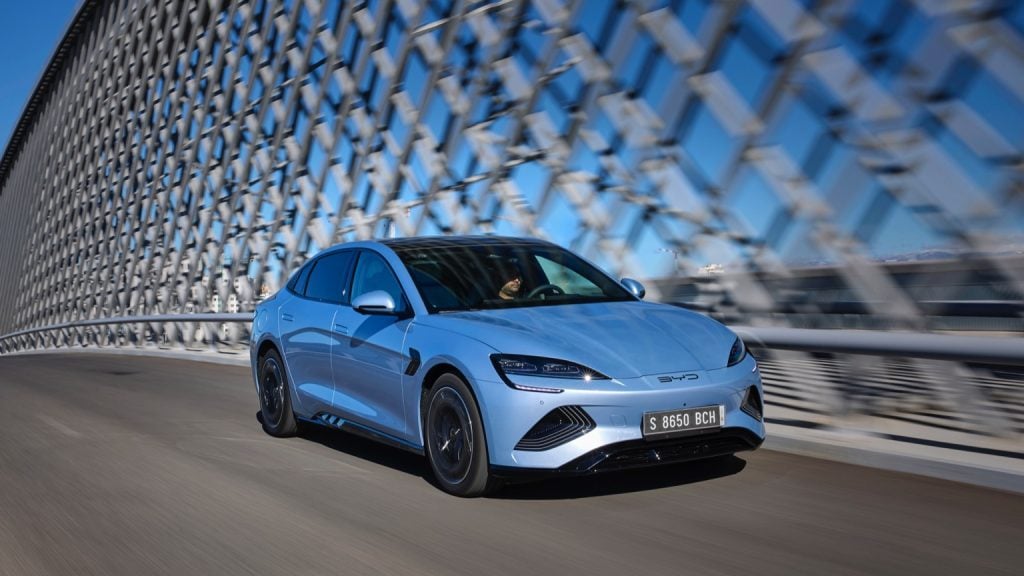
When we talk about electric sedans, we dream about driving excitement. The EV’s instant torque and quiet propulsion provide a novel palette for engineers. This is a tale of two approaches: the BYD Seal 82.5 kWh RWD Design and the Lucid Air, as we take a look at how performance differs between two teams from two different manufacturers. Can the nimble and dynamic BYD Seal compete with the raw, unfiltered power of the Lucid Air?
The Powertrain: Efficiency vs. Brute Force
Under the “hood” or, more accurately, the axle, these two cars have wildly different engineering priorities. The BYD Seal RWD Design runs on a single electric motor located at the rear axle. This configuration produces a robust 230 kW (308 hp) and 360 Nm of torque. It’s a balance-of-configuration. The “Design” trim is the perfect balance between range and performance, zipping from 0–100 km/h in just 5.9 seconds. While it won’t snap your head around, it does provide a blast of power that makes passing easy, and city driving genuinely fun. The transmission is a typical single-speed reduction gear, calibrated to deliver smooth linear power with no “jerkiness” associated with some sportier EVs.
On the other end of the spectrum, the base Lucid Air Pure (RWD) delivers a completely different set of raw numbers. With its small, highly efficient motor, it generates 320 kW (430 hp) and 550 Nm of torque. That’s good for 0–60 mph (roughly 96 km/h) in about 4.5 seconds. Lucid’s proprietary motor tech is a miniature powerhouse of engineering, producing unprecedented levels of power density.
But a page full of specifications doesn’t tell the whole story. The BYD Seal RWD Design Specs clearly show that this vehicle is designed with practicality in mind. Its strength is controllable and manageable, while the Lucid Air is more often than not a caged beast running out after the open highways.
Behind the Wheel: Handling and Dynamics
BYD Seal: The Agile Athlete
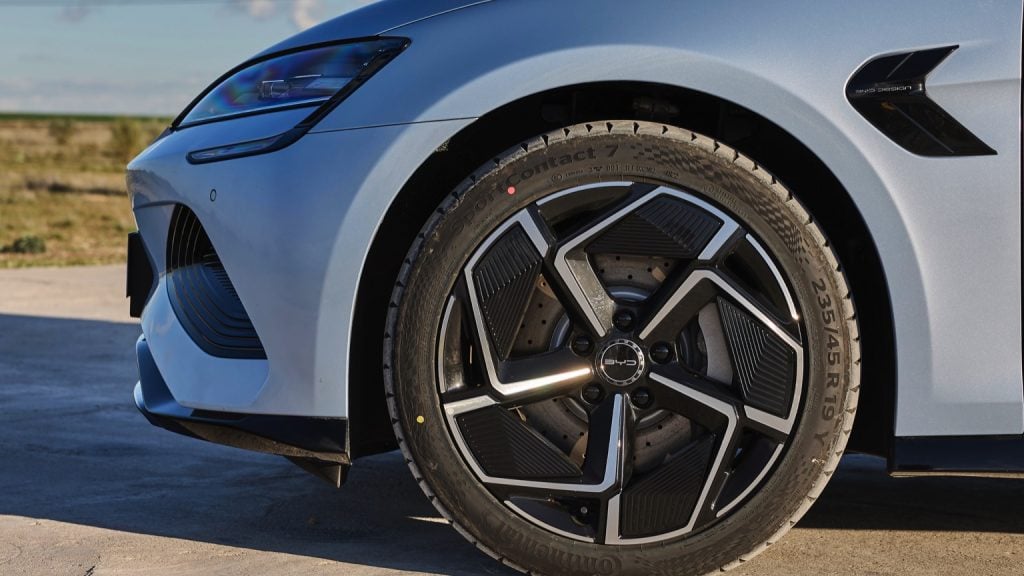
Driving the BYD Seal is surprisingly composed and lively. Due to the CTB (Cell-to-Body) design, the battery pack is embedded directly into the vehicle body. This imparts a massive torsional rigidity to the chassis, on par with dedicated sports cars.
On curvy roads, the Seal seems well anchored. The steering is accurate and has good feedback, so you know what the front wheels are up to. It doesn’t float; it carves. The rear-wheel-drive configuration lets the nose tuck in tightly on cornering for a classic sports sedan ride. You can feel the car pivot around you, and that makes it especially fun to drive through city streets or tight rural roads.
Lucid Air: The Grand Tourer
By contrast, the Lucid Air just feels heavy. It gives a good account of itself in terms of weight, but you’re always conscious of the fact that you’re driving a big, plush boat. Confident and stable rather than lithe and nimble, the handling is more about high-speed stability than corner-carving agility. The steering is lighter, and road imperfections are filtered out to favour isolation and comfort. It’s a bona fide Grand Tourer, easy-going at speed, quiet, and immensely polished.
Ride Quality and Suspension
Suspension tuning is the secret sauce of any good luxury sedan.
The BYD Seal adopts an advanced front double wishbone and rear multi-link suspension system. The ride is firm but not stiff. It smooths out bumps without completely separating the driver from the road. It’s a “sport-premium” setup: You’re connected to the asphalt, but you won’t get punished on the road’s rougher patches.
The Lucid Air prioritises glide. Even without the adaptive air suspension that’s standard on upper trims, the base Pure trim has a ride quality that’s often described as “magic carpet”-like. It flattens out road imperfections with uncanny competence, its one overriding concern being passenger comfort.
Driving Modes and Customisation
Both vehicles offer selectable driving modes to tailor the experience.
BYD Seal
Offers Eco, Normal, and Sport. The differences are distinct. Eco dulls the throttle response significantly to maximise range, while Sport sharpens it up for immediate acceleration. The steering weight also adjusts, becoming noticeably heavier in Sport mode for more confidence at speed.
Lucid Air
Features: Smooth, Swift, and Sprint. “Smooth” is the default luxury setting, perfect for cruising. “Sprint” unlocks the full power potential and tightens the suspension/steering response, transforming the character of the car instantly.
Performance & Driving Experience Comparison
| Feature | BYD Seal RWD Design | Lucid Air Pure (RWD) |
|---|---|---|
| Motor Layout | Single Motor Rear-Wheel Drive | Single Motor Rear-Wheel Drive |
| Power Output | 230 kW (308 hp) | 320 kW (430 hp) |
| Torque | 360 Nm | 550 Nm |
| 0–100 km/h (0-62 mph) | 5.9 Seconds | ~4.7 Seconds |
| Top Speed | 180 km/h | 200 km/h |
| Suspension | Front Double Wishbone / Rear Multi-Link | Multi-Link with coil springs (Air optional on higher trims) |
| Driving Feel | Sporty, Connected, Agile | Refined, Isolated, Effortless |
Engagement: The BYD Seal RWD Design Review verdict is that it offers a more engaging, driver-focused experience for those who enjoy the act of driving.
Comfort: The Lucid Air prioritises passenger comfort and long-distance cruising, making it a true Grand Tourer.
Interior, Comfort & Technology: Where Luxury Meets Innovation
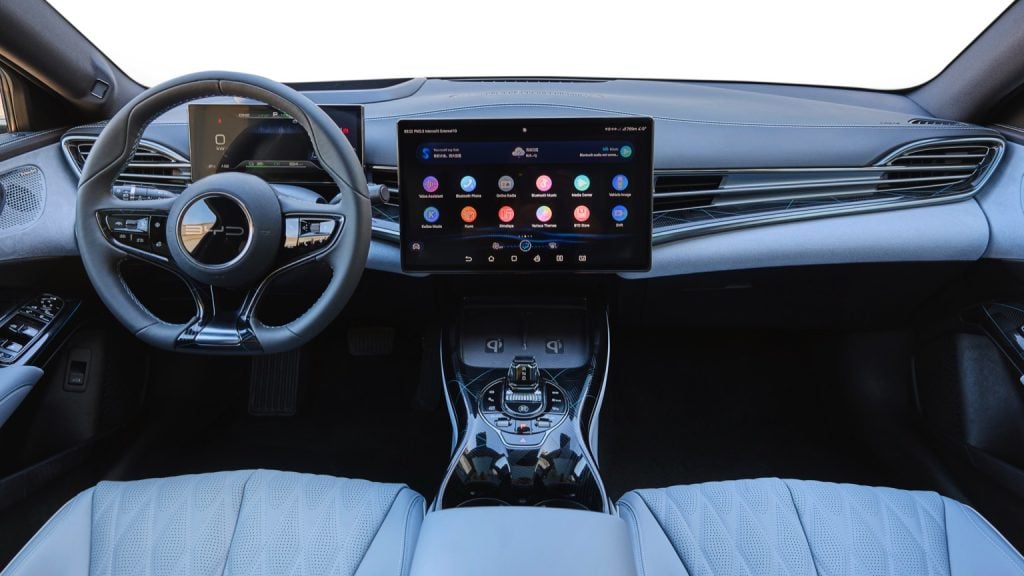
When you get into a new electric vehicle, you’re not just getting into a car; you’re getting into a mobile command centre. The fight for the best interior quality is no longer just about leather quality or wood grain; it’s about the best integration of digital life with physical comfort. Here in our BYD Seal 82.5 kWh RWD Design vs Lucid Air comparison, we showcase the sanctuaries that these two marques created. One embraces a dynamic, marine-themed tech hub; the other is a simple, post-luxury lounge.
Cabin Design & Aesthetics
BYD Seal: The Ocean Smart Cockpit
The BYD Seal RWD Design Review highlights its “Ocean Smart Cockpit” design concept inspired by the fluid lines of the exterior. When you climb into the driver’s seat, you find yourself surrounded by the rolling curves of pounding surf. The dashboard doesn’t simply remain static; it undulates.
BYD uses a combination of soft-touch plastics, suede-like materials on the dash, and leather with quilting that actually feels premium. The crystal gear selector, which occupies a prime centre position in the console, introduces a jewellery-like element that enlivens the whole cabin feel. It’s enclosed and sporty, wrapping around the driver to make you feel like you’re in a cockpit. The panoramic glass roof fills the interior with light, so you don’t feel like the dark materials are closing in on you.
Lucid Air: Post-Luxury Minimalism
Stepping into the Lucid Air is like entering a high-end architectural loft. Lucid’s “Post-Luxury” concept strips away the clutter found in traditional luxury cars. The dashboard is dominated by horizontal lines that emphasise width and space.
The materials are exquisite: sustainably sourced woods, alpaca wool blends, and Nappa leather. However, the standout feature is the “Glass Canopy” (optional on some trims, standard on others), which extends the windshield up over the front passengers’ heads, creating an uninterrupted view of the sky. It feels airy, expansive, and incredibly serene. Where the Seal wraps around you, the Air opens up around you.
Infotainment & Connectivity
BYD’s Rotating Centrepiece
At the centre of the BYD Seal is its 15.6-inch rotating multimedia touchscreen. With a simple press of a button on the wheel or on-screen, it switches from landscape mode to portrait mode. This isn’t just a gimmick; it’s useful. Landscape mode is great when watching a movie while charging or when using a wide map for navigation, while portrait mode resembles your smartphone, which is convenient for scrolling through playlists or reading notifications.
The system is powered by BYD’s DiLink OS, and is as snappy and straightforward as an Android tablet. It offers wireless mirroring solutions to both Android Auto and Apple CarPlay users. Voice support is strong, so you can change the climate, roll the windows down, or skip songs all without ever taking your hands off the wheel. The driver also has a 10.25-inch LCD digital instrument cluster that provides essential driving information with sharp clarity.
Lucid’s Glass Cockpit
The Lucid opts for a more integrated design with a 34-inch floating 5K “Glass Cockpit.” This curved display wraps around the driver, merging the instrument cluster and infotainment controls into a single, flowing, accentuated panel. Atop this rests the “Pilot Panel,” a retractable tablet-like screen that resides in the centre console and manages more advanced climate and vehicle options.
The interface is gorgeous, fluid and has a refined colour palette. It’s like a premium operating system for the future. Like the Seal, it features Alexa built in for voice commands and supports over-the-air (OTA) updates, letting the car’s software get better over time. However, some may find reliance on tap-and-swipe for just about everything, including adjusting the steering wheel and mirrors, takes a bit of getting used to compared with the Seal’s more conventional approach.
Comfort & Ergonomics
Seating and Space
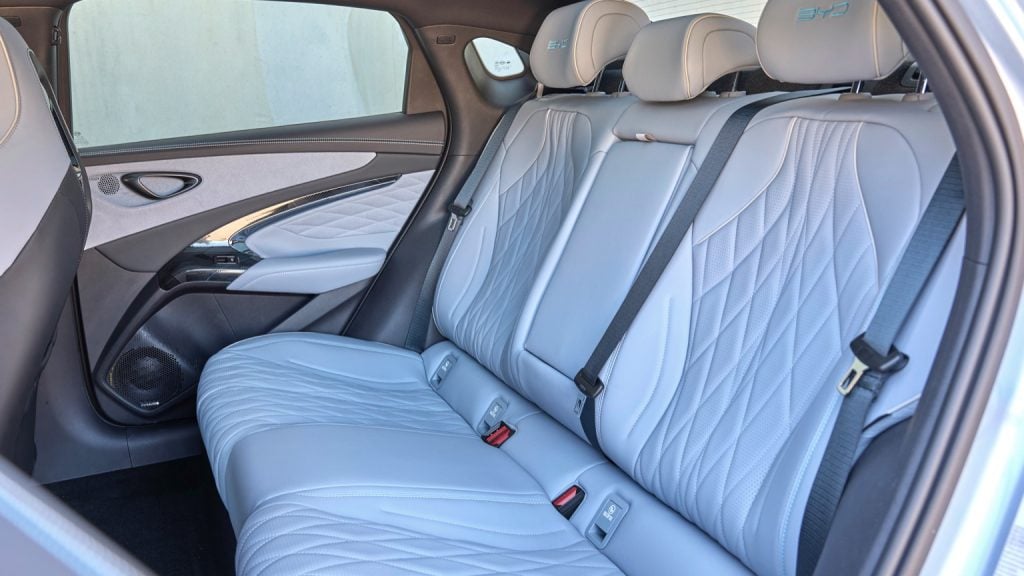
The BYD Seal RWD Design Specs include sports-styled integrated seats that appear aggressive but are comfortable enough. They heat and ventilate as standard, something rarely offered by other manufacturers and often crushed into hefty option packs. The driving seat is low and sporty, giving you a connection to the road. The flat floor created by e-Platform 3.0 provides space for good rear legroom for this mid-size sedan.
Using its miniaturised powertrain components, the Lucid Air manages to offer the most interior space in its class. The back seats are as spacious as those in a limousine. They are also wider and flatter than the Seals, as the focus was on comfort during long-distance highway cruising rather than cornering support. They come with multi-way adjustability and massage features on higher trims, so you can turn a traffic jam into a visit to the spa.
Storage Solutions
The BYD Seal provides a practical centre console with two wireless charging pads, deep cup holders, and a storage cubby beneath the armrest. It also has a “frunk” (front trunk), but it’s on the small side (53 litres), primarily useful for holding charging cables.
When it comes to storage, the Lucid Air takes the cake. Its “frunk” is gigantic, more than 200 litres, big enough for a carry-on suitcase and a backpack. Inside, the Pilot Panel slides back to reveal a storage compartment, giving you an additional layer of security for your valuables. For those who gear up for an adventure, the Air’s proportions are unmatched.
Safety & Reliability: Engineering Peace of Mind
Aside from exhilarating performance and state-of-the-art technology, the core commitment of any luxury vehicle is that your safety always takes top priority. In the realm of electric vehicles, that means reimagining structural integrity and employing smart systems that foresee danger. In the BYD Seal 82.5 kWh RWD Design vs Lucid Air battle, we take a look at which is better in terms of occupant safety and long-term reliability for both automakers.
Structural Integrity and Safety Ratings
The safety of a car starts with its structure. Both the BYD Seal and Lucid Air make the most of their EV platforms to deliver industry-leading stiffness and safety, as proven by third-party testing.
- BYD Seal: Rated a five-star top-notch by the Euro NCAP, which is considered one of the most rigorous global safety evaluation schemes. One of the reasons for this success is BYD’s groundbreaking Cell-to-Body (CTB) technique. Embedding the Blade Battery within the vehicle’s frame, the battery is transformed into a structural element, adding significant torsional rigidity. This configuration enhances handling and also forms an extremely strong safety cell that is superior at absorbing and dispersing impact forces.
- Lucid Air: Likewise, the Lucid Air received a five-star rating from Euro NCAP and, in the United States, was granted a Top Safety Pick+ by the IIHS. Its “Space Concept” layout, which downsizes powertrain elements, enables more extensive crumple zones in the front and back of the car. These areas are designed to efficiently absorb the energy of a collision while protecting the cabin. The strong framework of advanced high-strength steel and aluminium keeps the integrity of the occupant space intact during impact.
Key Safety Features and Airbag Systems
Both models include a full suite of passive safety features to protect occupants in the event of a crash.
- BYD Seal: Includes a full set of airbags, including front, side, and curtain airbags that cover both front and rear passengers. Additionally, a centre console airbag prevents front occupants from hitting each other in a side impact a feature usually only seen in higher-priced luxury cars. It also boasts ventilated disc brakes and an intelligent braking system that ensures steady braking power.
- Lucid Air: Matches this with full airbag coverage, including knee airbags for the driver and front passenger. Its powerful brakes are large enough to tame the car’s prodigious performance. It also includes advanced features such as Anti-lock Braking System (ABS), Electronic Stability Control (ESC), and Brake Assist to help maintain control during emergency stops.
Advanced Driver-Assistance Systems (ADAS)
Modern safety is as much about accident prevention as it is about crash protection. Here, both vehicles showcase their technological prowess.
- BYD Seal: Comes standard with a full suite of ADAS features, including:
- Adaptive Cruise Control with Stop & Go: Maintains a set distance from the vehicle ahead, even in traffic.
- Lane Keep Assist and Lane Departure Warning: Helps prevent unintentional drifting out of your lane.
- Blind Spot Detection: Alerts the driver to vehicles in their blind spots.
- 360-Degree Camera System: Provides a bird’s-eye view for parking, and includes a “transparent chassis” view to see obstacles directly beneath the car.
- Lucid Air: Features its proprietary DreamDrive system, which uses a sensor suite that can include up to 32 sensors (cameras, radar, ultrasonics, and even LIDAR on Pro models). Standard features include:
- Highway Assist: Combines adaptive cruise control and lane centring for more relaxed highway driving.
- Traffic Jam Assist: Manages steering, braking, and acceleration at low speeds.
- Autonomous Parking: The vehicle can steer itself into parallel and perpendicular parking spaces.
While both systems are highly capable, DreamDrive’s inclusion of LIDAR on higher trims gives it an edge in environmental perception, offering a more detailed view of the road ahead.
Reliability and Manufacturer Warranty
Robust long-term reliability and a strong warranty are important to buyer confidence for any vehicle, but especially for an EV.
- BYD Seal: As one of the world’s largest EV and battery makers, BYD has a strong track record for the robustness of its products. The BYD Seal RWD Design Specs are supported by an inclusive warranty bundle with a 6-year/93,750-mile vehicle warranty and an 8-year/125,000-mile Blade Battery warranty that ensures it will have no less than 70% of its capacity. The LFP chemistry used in the Blade Battery also lends itself to long cycle life and excellent thermal stability, which further adds to its dependability.
- Lucid Air: As a younger player, Lucid Motors is still establishing its long-term reliability track record. Nevertheless, it does cover the Lucid Air with a strong warranty: a 4-year/50,000-mile basic warranty and an 8-year/100,000-mile warranty for the powertrain and battery. This reflects the company’s belief in its highly technical engineering and build quality.
Key Takeaways
- Top-Tier Ratings: Both the BYD Seal and Lucid Air have achieved five-star Euro NCAP safety ratings, confirming their exceptional structural integrity and occupant protection.
- Innovative Structures: The Seal’s CTB technology and the Air’s large crumple zones showcase how EV architecture can be leveraged to enhance safety beyond traditional methods.
- Comprehensive ADAS: Both vehicles offer robust suites of driver-assistance features as standard, with Lucid’s DreamDrive offering an even more advanced sensor array on higher-tier models.
- Strong Warranties: Both manufacturers provide extensive battery and vehicle warranties, offering peace of mind and underscoring their commitment to long-term reliability.
Head-to-Head: BYD Seal vs. Lucid Air and the EV Elite
Selecting an electric sedan has turned into an intricate option with more and more attractive products competing for your attention. Although we have concentrated on the BYD Seal 82.5 kWh RWD Design vs Lucid Air, it is also important to see how they compare in the wider spectrum. To round out the picture, we’re adding two other segment heavyweights to the mix: the undisputed sales leader, the Tesla Model 3, and a notable legacy competitor, the Polestar 2.
This is not going to be a war of specs comparison. We will look at the core tenets of the two cars and decide which one is best for price, performance, and practicality for certain types of customers. Is it the revolutionary value of the BYD Seal, the industry-leading luxury of the Lucid Air, the sleek minimalism of the Tesla Model 3, or the bold design of the Polestar 2? Let’s find out.
Electric Sedan Showdown: A Four-Way Comparison
| Feature | BYD Seal Design (RWD) | Lucid Air Pure (RWD) | Tesla Model 3 (RWD) | Polestar 2 Long Range (RWD) |
|---|---|---|---|---|
| Price (Approx.) | ~£48,705 | ~£57,986 | ~£39,990 | ~£61,960 |
| Performance (0-60 mph) | ~5.7 seconds | ~4.5 seconds | 5.8 seconds | 5.9 seconds |
| Range (Est. EPA) | ~300 miles | ~410 miles | 272 miles | ~320 miles |
| Design Philosophy | Sporty & Organic: “Ocean Aesthetics” | Minimalist & Aerodynamic: “Post-Luxury” | Hyper-Minimalist: Screen-centric interior | Scandinavian Modern: Geometric & bold |
| Value Proposition | Premium features at a mid-range price. High-end tech like HUD and ventilated seats is standard. | Ultimate luxury and range. A status symbol with class-leading space and charging tech. | The accessible benchmark. Unrivalled charging network and proven software ecosystem. | The design-led alternative. Unique styling and a premium feel from a trusted brand. |
Who is the BYD Seal RWD Design For?
The BYD Seal RWD Design is for the smart buyer who wants 90% of a luxury EV experience minus the six-figure price tag. This driver places a high value on having an entertaining, fun-to-drive car and enjoys having upscale features like a head-up display and ventilated seats included as standard. They are tech-savvy, attracted by the rotating screen novelty and the structural advantages of the Blade Battery. The Seal is a smart pick for a value-conscious buyer who isn’t hung up about badges and wants a car that feels more expensive than its price suggests.
Who is the Lucid Air Pure For?
The Lucid Air is meant for the no-compromise buyer for whom money is no object. This person demands the best in electric vehicle engineering from its industry-leading range to its lounge-like interior. The Air buyer appreciates an unobtrusive style, technological superiority, and the quiet confidence of driving a car that keeps setting new standards. It is a showstopper for the tech executive or entrepreneur and the ultimate in comfort and long-range cruising for the businessman.
Who is the Tesla Model 3 For?
The Tesla Model 3 remains the pragmatic, tech-leaning favourite. Much of its appeal stems from its proven formula: decent range, snappy performance, and, above all, access to the world-beating Supercharger network. The driver who opts for a Model 3 is a fan of simplicity and efficiency. They’re happy with a minimalist screen-focused interior and rely on Tesla’s proven software and over-the-air updates. It’s the ideal platform for getting into a premium EV ecosystem for those focused on reliability and ease of use.
Who is the Polestar 2 For?
The Polestar 2 is for the design-conscious individual who doesn’t want to blend in amongst the sea of Teslas. This motorist loves the strong, sculptural lines of the car and the high-end feel of its Google-based cockpit. With the Polestar 2, you get a fine balance of performance and practicality with a very European flair. It is for the consumer who once might have entertained an Audi or a BMW but who is now ready to look to the future, an electric one without giving up a sense of style or the solidity of construction.
Key Takeaways
- Unmatched Value: A comprehensive BYD Seal RWD Design Review concludes that it offers the most premium features and engaging driving dynamics for its price, challenging competitors that cost thousands more.
- Segment Leaders: The Lucid Air leads in luxury and range, while the Tesla Model 3 continues to dominate in charging infrastructure and mainstream accessibility.
- Buyer’s Choice: The best car depends entirely on your priorities. The Seal is for the value-conscious enthusiast, the Air for the luxury purist, the Model 3 for the practical techie, and the Polestar 2 for the design aficionado.
Why Choose the BYD Seal RWD Design or Lucid Air?
The choice between the BYD Seal and the Lucid Air is really more about which one is the better fit for you than which is the better car. Both cars epitomise the best in electric technology, yet they appeal to two very different sets of priorities, lifestyles, and attitudes. One is about making premium technology more democratic, the other is about an uncompromising vision for the best in electric luxury. In order to make the right decision, you need to look beyond the spec sheet and consider whether the core identity of the car fits with your day-to-day and long-term needs.
This is a question of what matters most to you in a vehicle: down-to-earth, attainable performance and lots of standard equipment, or maximum driving range, immense interior space, and a showcase of technological prowess? Now, let’s take a look at the reasons why either one of these outstanding electric sedans could be your next car.
Why the BYD Seal RWD Design is a Market Standout
The BYD Seal has quickly set the standard in the electric vehicle world for one compelling reason: it perfectly combines performance, technology, and price. It flies in the face of the idea that advanced user interface and engaging driving dynamics must come at a premium. The Seal exemplifies BYD’s market approach of providing overwhelming value.
The Intelligent Performance Choice
The BYD Seal RWD Design is for the driver who loves the journey. Its layout, combining rear-wheel drive with a highly rigid chassis structure due to the integration of Cell-to-Body technology, offers a connected and nimble driving experience. It’s great for a daily run, because it’s comfortable enough to smooth out the harshness of city roads. It’s also on winding roads where it really shines and provides a level of driver engagement that is rare in the EV market. It shows that you don’t have to have insane 0-60 times to have a car that is truly great fun to drive every day.
Incomparable Value Through Innovation
One of the key elements of any BYD Seal RWD Design Review is its incredible list of standard features. While rivals make you pay for basics, the Design trim of the Seal comes with a panoramic glass roof, a crisp Head-Up Display (HUD), heated and ventilated front seats, and the distinctive 15.6-inch rotating screen. This route is in line with BYD’s move to seize the market by providing the full high-spec package right from the beginning. The addition of the safe, long-lasting and cobalt-free Blade Battery is yet another significant differentiator, offering an added layer of assurance coupled with exceptional performance.
The Perfect Fit for a Modern Lifestyle
The Seal is the perfect companion for a multi-faceted existence. It is small enough to manoeuvre through city traffic and fit in tight parking spaces, yet its roomy cabin and 570 km (WLTP) range allow it to handle long-distance travels. The crystal-clear, tablet-like infotainment system and extensive driver-assist features apply to family road trips and stressful daily commutes, with equal stress-relieving effect. It’s the car for the street-smart professional or young family who needs a vehicle that can do it all, then some.
BYD Seal 82.5 kWh RWD Design vs Lucid Air: Which One Deserves Your Drive?
After a thorough examination, it is evident that both the BYD Seal and Lucid Air are remarkable realisations in electric mobility, although tailored for quite different masters. There is no “better” car, just the car which fits your needs best, offers the best value for your money, or suits your driving philosophy. The choice now is between radical value and quintessential luxury.
The BYD Seal RWD Design is punching well above its weight class in making a claim to be one of the best-packaged EVs in the current market. It is absolutely a vehicle worth purchasing for the keen driver who desires a top experience but without the astronomical price tag. This car is for the driver who craves a fun, sporty drive and enjoys a plethora of standard features that many competitors tag as expensive options. If you’re after a vehicle that makes every day feel a little special, can host a full menu of modern technology, and can do so while still getting an impressive real-world range, the Seal is a ridiculously strong pick. It is the “high-end EV technology” made accessible for everyone, showing that you do not have to give up on features or fun when buying a practical vehicle.
The Lucid Air, meanwhile, is a feat of design for the buyer who wants the absolute utmost in electric performance and luxury. If you want to be considered the definitive vehicle for those who want to travel the longest distance in the most comfortable and quiet manner, it is for you. The Air is for the tech executive, for the frequent long-haul commuter, for anyone who sees their vehicle as a sacred space of roomy vanguard vision. Its best-in-class range and ultra-fast charging aren’t just numbers on a page; they are the tools of freedom that completely change the experience of ownership. Although its price tag places it in a different class, for those who can afford it, the Lucid Air offers a genuinely next-generation experience, cementing its place at the pinnacle.
At the end of the day, the option you pick says the most about what you care about. The Lucid Air is the one to get if your must-have item is “the most technologically advanced luxury sedan available.” Yet if your question is “Which is the best all-round e-premium sedan for the money?”, a thorough BYD Seal RWD Design Review suggests there is a definitive champion.
Experience the Future of Driving
Now there is no better way to appreciate this amazing combination of performance, luxury, and value than to get behind the wheel.
Are you ready to get your hands on the agile handling and high-end amenities of the BYD Seal 82.5 kWh RWD? Are you ready to have some fun?
Contact us today or visit our website at The.Car and schedule your test drive to find out why it’s giving the best in the electric car world a run for their money.