EQA 350 4MATIC vs Volvo XC40 Recharge Twin: A Battle of Premium Electric SUVs
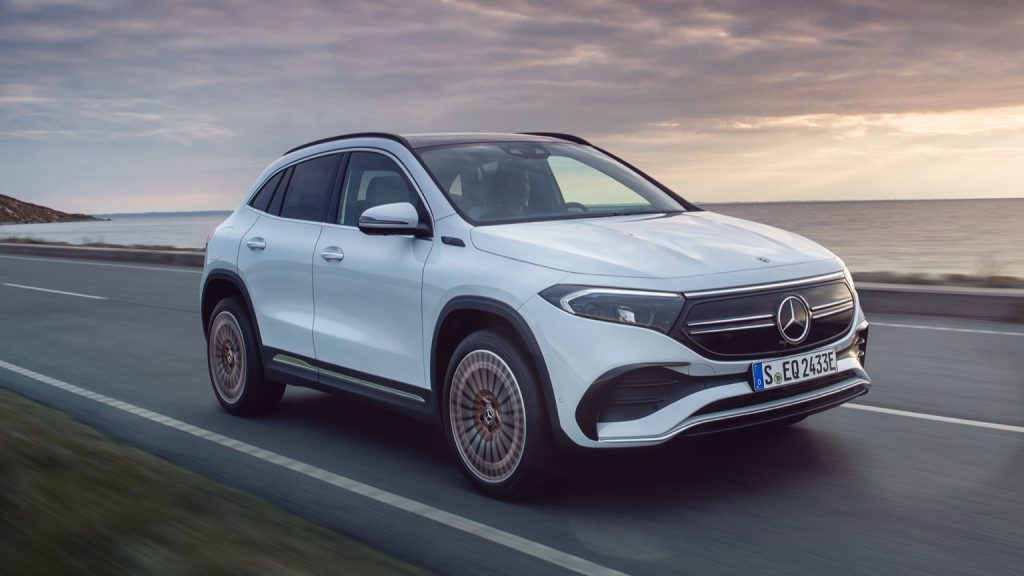
The premium small electric SUV segment is a fiercely competitive part of the market these days, but two vehicles consistently bring out the most dedicated drivers: the Mercedes-Benz EQA 350 4MATIC and the Volvo XC40 Recharge Twin. Both vehicles have made sizeable dents in the market by simply being the most attractive, practical prestige package to their customers. They do so by excelling at what I call the three pillars of the current electric era: real-world range, performance that’s a laugh-a-minute, and a dash brimming with digital magic. The pair are catered as premium compact SUVs, but they took vastly differing paths to get there, making for a delightfully intriguing rivalry.
In our detailed EQA 350 4MATIC review and comparison, read how each brand’s character shines through in these electric challengers. For Mercedes-Benz, the EQA 350 4MATIC is a heritage of automotive brilliance brought forward in time with electric power and shrouded in a clean, aerodynamically capable form. It applies over 20 years of luxury design and engineering to transform the driving experience. On the other hand, the Volvo XC40 Recharge Twin is a statement of the brand’s superiority in safety and clean, minimalist Scandinavian design, in a potent, no-nonsense, and sustainable interpretation of electric mobility.
The stage is set for a classic showdown. It’s a clash that pits the traditional luxury and high-tech innovation of Mercedes-Benz against Volvo’s pragmatic, safety-first philosophy and growing presence in the EV market. What to Look Forward to While We Compare These Two Brilliant Cars. As we gear up to compare these two fantastic vehicles, here is what to expect in terms of the differences that make them tick, business-wise and road-wise. This will help you understand which of these fabulous electric SUVs is better for you if you prefer the heritage and polish of a legacy brand, or the clean and potent simplicity of a modern challenger.
EQA 350 vs. XC40 Recharge: A Quick Recap
To help you better understand the comparison between these two top-class electric SUVs, here is a quick rundown of what to expect in this detailed comparison. This recap uncovers the basics from the EQA 350 4MATIC specs to the powerful performance credentials of the Volvo.
Manufacturer: The EQA comes from Mercedes-Benz, which is the maker synonymous with luxury and engineering excellence, while the XC40 Recharge Twin is from Volvo, a brand known for safety and clean Scandinavian design.
Model Year: Both cars are most recently made 2025 model year vehicles, and are equipped with the latest technologies in design.
Body Type: Both models are premium compact electric SUVs that aim to combine city-centric agility with family-friendly practicality.
Trim/Variant Available: The EQA 350 4MATIC is a significant TAG secured the all-wheel-drive TAG performance options, including the AMG Line for a sportier look. The XC40 Recharge Twin is the punchy, dual-motor top-tier model in the Volvo range, available in Core, Plus and Ultimate configurations.
Interior and Exterior Features: The Mercedes-Benz EQA 350 features a sleek and aerodynamic “black panel” grille and a tech-forward interior that includes the MBUX Hyperscreen fairing. Volvo brings a more rugged, classic SUV shape with a simple, neat cabin that revolves around a portrait-style touchscreen.
Handling and Ride Quality: Ride quality proved comfortable and composed in the EQA 350 4MATIC. The XC40 Recharge Twin provides explosive bursts of speed and a firm, fun driving experience, a hot hatch in a straight line.
Powertrain: Both are dual-motor all-wheel drive. The EQA emphasises balanced efficiency and power, while the XC40 Recharge Twin focuses on raw power with a greater total output.
Innovations & Features: The EQA’s pioneering features include the intuitive MBUX voice assistant and the state-of-the-art driver assistance systems. The XC40 excels with its Google-based infotainment system, and it puts a big focus on standard safety equipment.
Comparison: At the heart of our head-to-head is the EQA’s sumptuous comfort and technological wizardry versus the XC40’s unadorned power and minimalist charm.
Price Range: The two vehicles are priced similarly in the luxury range, but the final prices can differ substantially depending on the selected trim level and optional packages. The value for each is just a matter of whether or not the buyer wants a little more performance, luxury, or standard features.
Design and Philosophy: Shaping the Electric SUV
Each car speaks in its own way and tells us what the brand philosophy is and what the priorities of the manufacturer are from an engineering point of view. When you look at the Mercedes-Benz EQA 350 4MATIC vs the Volvo XC40 Recharge Twin, the styling of these two vehicles inside and out highlights two very different ways to build an excellent premium compact electric SUV. One is a tour de force in aerodynamic digital luxe, the other an ode to outdoor pragmatism.
Mercedes-Benz applies its typical “Progressive Luxury” ethos to the EQA. This is already evident in the curves of the car, flowing, seamless carpets that are meant to slice the wind with as little resistance as possible. The front is characterised by the recognisable black panel grille that features a central star and seamlessly merges with the high-performance LED headlamps. A continuous fibre-optic light strip between the two daytime running lights visually separates them, making for an instantly recognisable identity. This aerodynamic emphasis isn’t just for looks; it’s a vital engineering decision that actually improves efficiency and increases the vehicle’s range, an important EQA 350 4MATIC vehicle spec factor. Based on a legacy of comfort and sophistication, the brand translates it into the electric era with a design that is at once futuristic and unmistakably Mercedes-Benz.
Contrasting with this, the Volvo XC40 Recharge Twin is a satisfying manifestation of Scandinavian design principles and the brand’s long-held promise of safety and durability. It’s bolder and more upright, embracing its SUV DNA with a rather confident and robust appearance. Where the EQA is sleek and flowing, the XC40 is strong and chiselled with clear character lines, a concave grille (which is now covered for EV versions) and the signature LED “Thor’s Hammer” headlights. Volvo’s solution is less about being overtly futuristic and more about honest and purposeful design. The engineering aim is to produce a practical, safe, and powerful vehicle that feels solid and dependable, because that reflects the brand’s statement that the company makes cars that are “designed around people,” not the other way around.
EQA 350 4MATIC vs. Volvo XC40 Recharge Twin: Similarities and Differences
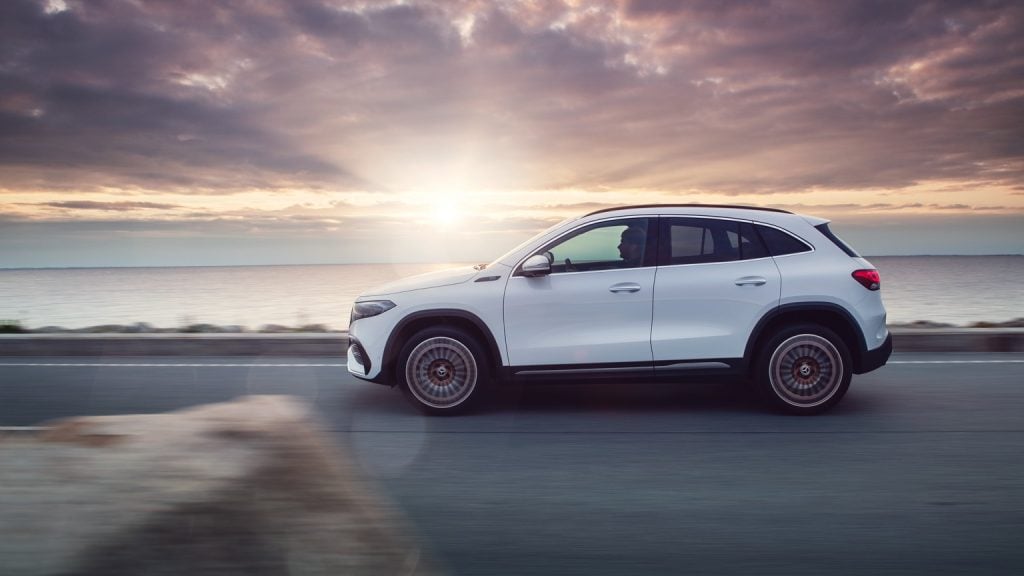
At first glance, it’s easy to see why these two cars compete head-to-head. They’re both upscale small SUVs with all-wheel drive, five seats, and a battery-electric powertrain. They are vying for the same customer: the driver who wants a practical, safe, and prestige-laden four-door daily driver, just without tailpipe emissions. Yet their implementation is light years apart, giving you a fantastic choice depending on whether you give more weight to aesthetic or functional factors.
The EQA 350 4MATIC’s design with “sensual purity” gives as end result a modern, elegant and technologically advanced vehicle with a higher level of excitement,” stated Gorden Wagener, Chief Design Officer of Daimler AG. Its coupe-like roofline and gently sculpted sides attract buyers looking for style and innovation, and it is widely touted as a choice for younger buyers or anyone who’s looking for the latest and greatest in automotive technology.
The more traditional two-box SUV shape of the Volvo XC40 Recharge Twin caters to those who prioritise utility and a rugged look. Its heftier, boxy design fosters a feeling of safety and generosity that can turn the head of families, as well as those older customers who are looking for a practical, rather austere ride. The rivalry is a delicious one because it goes beyond just specs; it represents a clash of cultures. It’s German ingenuity applied to the sleekly streamlined and seductive contours of jewel-like Swedish design; Nordic minimalism giving way to dark German digital immersion. One seems like a sophisticated gadget, the other like a high-performance tool, but both brilliantly accomplish the mission of a premium electric SUV.
- Sleek Airflow: The EQA’s shape reduces drag, which has an immediate positive effect on the range and efficiency, especially for long-distance travel.
- Signature Light Signature: The EQA features a continuous light bar at the front and rear, creating a uniform appearance and an extremely futuristic and unique look.
- Strong SUV Presence: The XC40’s tall, robust design grants a wide view of the road and a real feeling of security.
- Functional Minimalism: Volvo’s clean lines and mess-free exteriors are a sign that they’re more concerned with purpose and practicality rather than pure decoration.
Variants & Trims Breakdown: Tailoring Your Electric Experience
What makes for the best electric SUV for you isn’t just which model you choose; it’s which configuration fits your life best. Mercedes-Benz and Volvo each have unique trim levels that appeal to different priorities based on sportiness, ultimate luxury, and pure performance value. There are a few differences between the EQA 350 4MATIC models and the XC40 Recharge Twin versions that you should know before buying.
Mercedes-Benz EQA 350 4MATIC: The AMG Line Standard
For the EQA 350 4MATIC, Mercedes-Benz has made the selection simple for the majority of the markets, as in most cases it is only offered in the very popular AMG Line trim level. This isn’t just a trim. It’s a statement. It takes the advanced electric architecture and infuses it with the visual DNA of the brand’s performance division.
The AMG Line model transforms the exterior of the EQA with a specially tailored front apron complemented with an AMG-specific black panel radiator grille, plus 19-inch AMG alloy wheels (generally 5-twin-spoke, aerodynamically enhanced). The conceptualised cockpit showcases sport seats upholstered in ARTICO man-made leather and DINAMICA microfiber, a flat-bottomed multi-function sport steering wheel wrapped in Nappa leather, and brushed stainless steel sport pedals.
In addition to the standard AMG Line, there will also be the choice of packages such as the Advanced Package, Advanced Plus Package and Premium Package.
- Technology Package: Includes essential tech like the widescreen cockpit (two 10.25-inch displays) and the Parking Package with a reversing camera.
- Premium Package: Enhances sophistication with a panoramic sliding sunroof, the Burmester® surround sound system and the Keyless-Go package.
The value proposition is quite clear: you are buying a luxury, tailorable experience where the entry-level offering is already very good, and the upgrades are all about technology and comfort polish.
Volvo XC40 Recharge Twin: Core, Plus, and Ultimate
The Volvo XC40 Recharge Twin is available in three well-defined packages that cover every essential option: Core, Plus and Ultimate. This strategy follows their Scandinavian philosophy of simplicity and clarity.
- Core: It’s the point of entry, but it hardly feels entry-level. It has basic security, Google services, and a regular sound system. It’s made for buyers who want dual-motor performance but don’t need all the bells and whistles.
- Plus: This mid-level model adds a whole batch of comfort features. You usually get a heat pump (important for range in cold weather), a 360-degree parking camera and Pilot Assist for semi-autonomous driving on highways. It finds the sweet spot between value and luxury.
- Ultimate: Being the name says it all, here the Ultimate variant comes fully loaded. This variant comes with a Harman Kardon premium sound system, pixel LED headlights, a panoramic sunroof, and 20-inch alloy wheels.
Volvo’s appeal is in the sheer amount of standard content, especially safety technology, included even in the base models. The leap between levels of trim feels quite natural, adding real comfort and technology rather than just visual changes.
Comparison of Trims and Key Features
| Feature | Mercedes-Benz EQA 350 4MATIC (AMG Line Premium) | Volvo XC40 Recharge Twin (Ultimate) |
|---|---|---|
| Primary Focus | Sporty luxury & customisable tech | Comprehensive safety & Scandinavian minimalism |
| Wheels | 19-inch AMG 5-twin-spoke alloys | 20-inch 5-spoke black diamond cut |
| Infotainment | MBUX with dual 10.25-inch displays & Augmented Reality Nav | 9-inch centre display with Google Built-in (Maps, Assistant) |
| Audio System | Burmester® Surround Sound System | Harman Kardon Premium Sound |
| Roof | Panoramic sliding sunroof | Panoramic roof (standard on Ultimate) |
| Seating | Sports seats (ARTICO/DINAMICA) with memory package | Suede textile/Microtech with power memory |
| Safety Tech | Active Lane Keeping Assist, Blind Spot Assist | Pilot Assist, BLIS™ and Cross Traffic Alert |
| Climate Control | THERMOTRONIC automatic climate control | Dual-zone climate with CleanZone & Heat Pump |
| Key Optional Upgrades | Driving Assistance Package, MBUX Innovation Package | Pixel LED Headlights (often standard on Ultimate), 20″ Wheel upgrades |
Both vehicles offer unique strengths in their respective trims, catering to different buyer preferences. The Mercedes-Benz EQA 350 4MATIC leans heavily into luxury and customisation, while the Volvo XC40 Recharge Twin focuses on practicality, safety, and performance.
Performance & Driving Experience
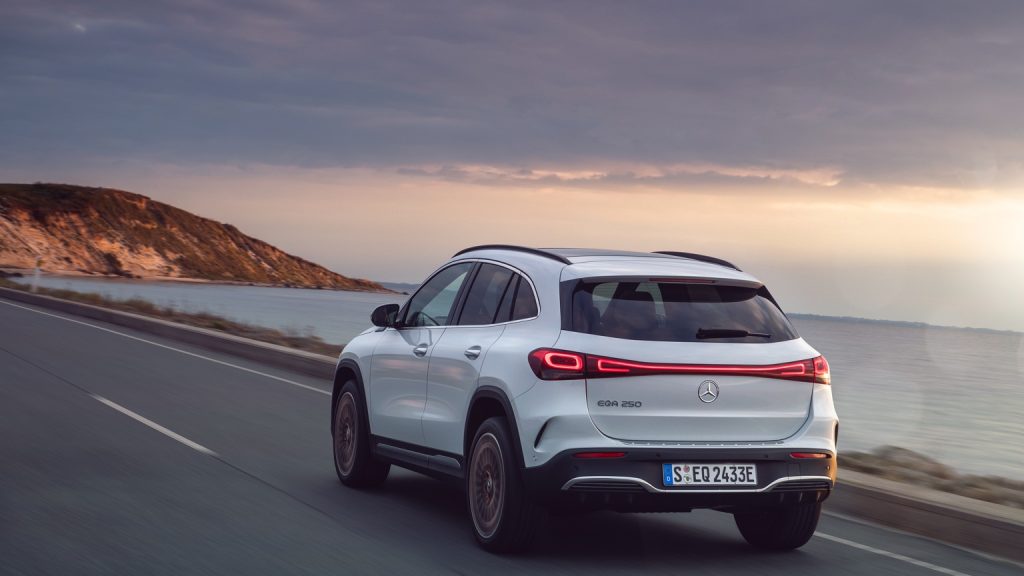
It’s on the road that the real character of a vehicle is put to the test. Both the Mercedes-Benz EQA 350 4MATIC and the Volvo XC40 Recharge Twin are premium electric SUVs, but their on-road manners and performance philosophies could hardly be more different. One emphasises mature, urbane comfort and the other promises pacey, unfiltered power.
The Mercedes-Benz EQA 350 4MATIC is designed for calm, controlled and luxurious transport. It is equipped with two electric motors, which are an asynchronous motor at the front axle and a permanently excited synchronous motor on the rear that also integrates the 4MATIC all-wheel-drive system. The combined output is a respectable 215 kW (292 hp) and 520 Nm of torque. Power is instantaneous but delivered gracefully through a single-speed transmission, and the EQA accelerates from 0 to 100 km/h in a quick 6.0 seconds. Its maximum speed is electronically limited to 160 km/h (approx. 99 mph), a choice that favours battery efficiency rather than maximum top-end speed. Its tranquillity defines the driving experience, with a suspension set up for comfort that easily soaks up road surface disturbances, ensuring a quiet cabin.
In contrast, the Volvo XC40 Recharge Twin is more like a slightly rear-biased performance car that just happens to be an all-wheel drive. It features a dual motor layout with a total output of 300 kW (408 hp) and 660 Nm of torque. This power allows the XC40 to hit 100 km/h in 4.9 seconds, placing it firmly in sports car territory. Speed is limited to 180 km/h (about 112 mph). The driving experience is immediate and thrilling, with a stiffer suspension and heavier steering that provide a sportier feel. The XC40 also offers a one-pedal driving mode, enabling strong regenerative braking that allows the car to come to a complete stop without using the brake pedal.
Performance Metric Comparison
| Performance Metric | Mercedes-Benz EQA 350 4MATIC | Volvo XC40 Recharge Twin |
|---|---|---|
| 0–100 km/h (0-62 mph) | 6.0 seconds | 4.9 seconds |
| Primary Driving Feel | Refined, Smooth, Composed | Powerful, Urgent, Engaging |
| Driving Modes | Eco, Comfort, Sport, Individual | Standard, Off-road, One-Pedal Drive Option |
| Regenerative Braking | Adjustable via steering wheel paddles | Selectable One-Pedal Drive mode |
The EQA 350 4MATIC is classic Mercedes-Benz: plush, hushed and crammed with tech that makes it all feel effortless on the road. It makes for the best travelling mate and a calm daily routine. The Volvo XC40 Recharge Twin, on the other hand, delivers an exciting, high-performance experience that turns every drive into a special occasion, wrapped in a practical and secure package.
Interior, Comfort & Technology
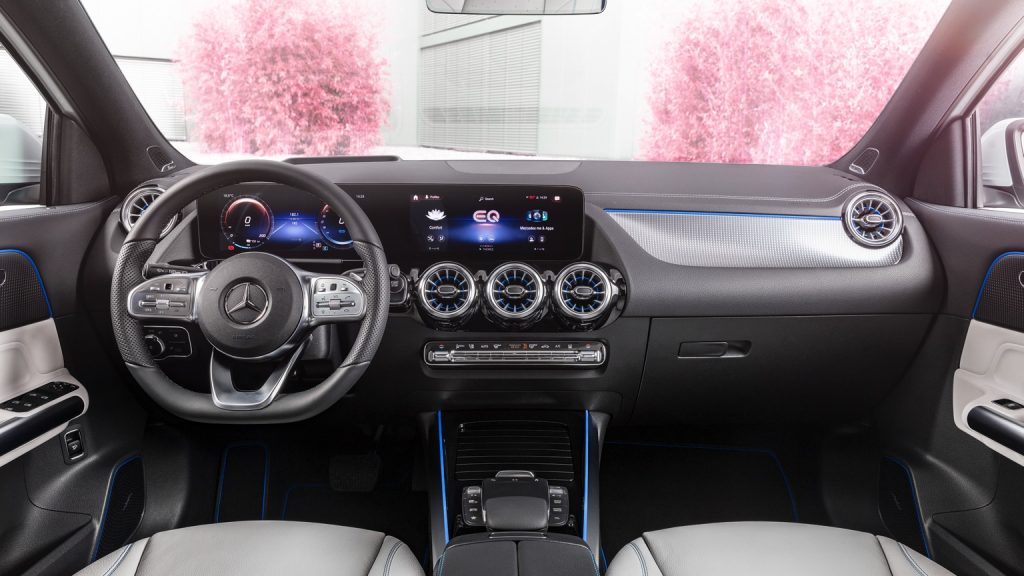
Stepping inside a contemporary electric vehicle is frequently like stepping into the future, and this is no more true than when experiencing the interiors of the Mercedes-Benz EQA 350 4MATIC and the Volvo XC40 Recharge Twin. They both belong in the same premium class, but the spaces they create are massively different. One bathes you in a digital cockpit built for luxury and customisation, the other is a minimalist Scandinavian oasis of calm.
The Digital Cockpit vs. Scandinavian Sanctuary
The Mercedes-Benz EQA 350 4MATIC is unapologetically tech-centric. When you open the door, a stunning MBUX (Mercedes-Benz User Experience) platform greets you. Depending on the equipment level, this can include two 10.25-inch screens under one piece of curved glass to form a “widescreen cockpit.” The visual result is immediate and elegant. The dashboard curves and flows into the doors, and turbine-style air vents in rosé gold or high-gloss black act as jewellery for the cabin. 64 colours of ambient lighting let you completely change the mood inside from a fast-paced, entertaining lounge to a calming, cool sanctuary.
On the other hand, the Volvo XC40 Recharge Twin is a “less is more” car. Its interior is an uncluttered design masterclass. There are very few physical buttons. Rather, almost everything is done through a portrait-oriented 9-inch touchscreen mounted in the middle of the dash. The focus of the materials is on sustainability and durability, with recycled plastics and textiles that are innovative in their approach and feel premium without being flashy. The carpet runs up into the door pockets, which are huge, because the door speakers have been removed, creating an unusual textural element. It feels solid and spacious, and is so meticulously planned that it seems to place the mind at rest rather than dazzle the eyes.
Infotainment and Connectivity: MBUX vs. Google Built-in
The operating systems war is a particularly interesting aspect of this comparison. Mercedes-Benz has its own MBUX that is almost certainly the most sophisticated in the trade. It has “Hey Mercedes” voice control capable of processing natural language requests. You can say, “I’m cold,” and the car will turn up the heat. The navigation system has Augmented Reality (AR) that places directional arrows on top of a live video feed of the road ahead taken by the central screen, a real boon when trying to find your way through intricate city intersections.
Volvo, on the other hand, has collaborated with tech company Google to develop its infotainment system using the Android Automotive OS. That means Google Maps and Google Assistant, as well as the Google Play Store, are now a part of the car. The integration is flawless if you happen to use Google’s services on a daily basis. From the road, you can tell Google Assistant to control smart home devices or to set your navigation route just as you would on your phone. It doesn’t have the visual appeal and extensive customisation of MBUX, but it makes up for that with unparalleled intuitiveness and simplicity.
Comfort and Ergonomics
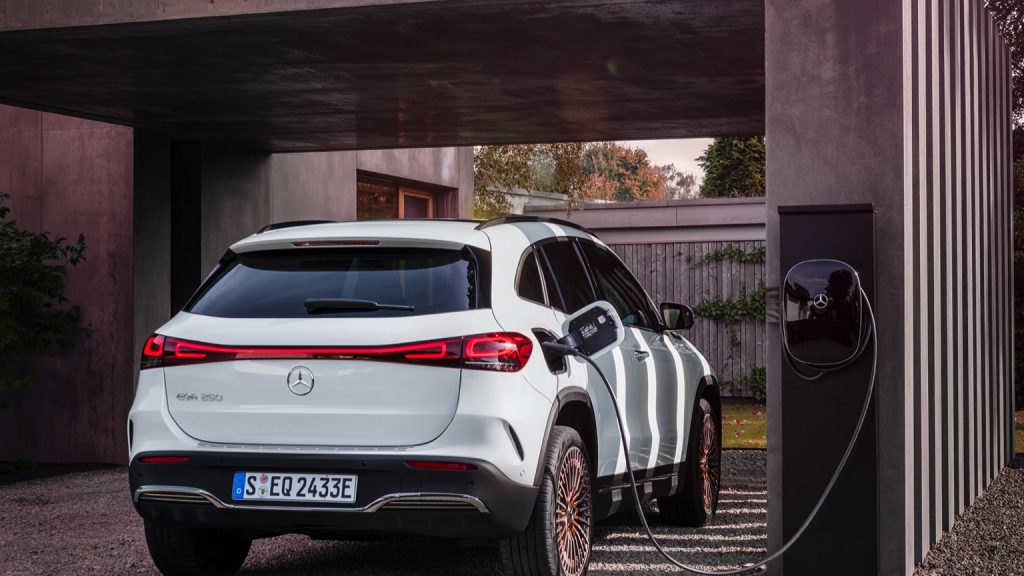
Comfort is a staple of the Mercedes-Benz ethos, and the EQA is no exception. The seats are high enough to provide a commanding SUV view, but are yet comfortable enough to support long journeys. In the AMG Line models, the sports seats have great side bolstering. The operation is good, but the multitude of buttons on the steering wheel and screen can confuse some users. The rear seat is adult-size, but there is a slight hump in the floor from the battery pack, which could potentially affect thigh support for taller passengers.
The XC40 shines when it comes to practical ergonomics. The seats are well-known in the industry for their comfort, providing orthopaedic support that helps prevent fatigue on long drives. The interior also features some smart storage options: a removable trash bin in the centre console, a hook for holdout bags in the glovebox and dedicated slots for cards and mobile phones. While its rear space matches the EQA, the XC40’s boxier roofline means rear-seat passengers have a little more room to breathe.
Safety & Reliability
When entering the electric premium SUV segment, performance and luxury are usually the first considerations on the minds of potential customers, but solid safety is a must-have for a large majority of consumers. Mercedes-Benz and Volvo have each established their reputation on occupant protection, although they have slightly different philosophies.
Safety Ratings and Structures: Five-Star Standards
The Mercedes-Benz EQA and Volvo XC40 Recharge Twin rack up top numbers in safety tests, which is not any kind of surprise. They have both been given the maximum rating of 5 stars by Euro NCAP, confirming the solidity of their structure and the extent of their safety features.
The robust body shell from the GLA lends a solid foundation to the Mercedes-Benz EQA 350 4MATIC, which is extensively tightened to shield the high-voltage battery. The battery is housed in a unique frame constructed from extruded aluminium sections that serve as a structural element. This frame dissipates energy, mass and forces of the impact in a side collision, protecting the passengers. A proprietary multi-stage high voltage safety system is integrated for electric vehicles at Daimler that shuts the electrical system off automatically in the event of a high-speed crash, among other safety features.
The Volvo XC40 Recharge Twin continues the legacy for a brand that has long been synonymous with safety. For the electric version, Volvo’s engineers redesigned the front part of the XC40 to compensate for the lack of an engine block, which has traditionally served as a crumple zone. This is achieved through designing a passenger safety structure and a separate battery safety cage. The XC40 has legendary crashworthiness: it scores off the charts in adult and child occupant protection.
Active Safety and Driver Assistance
Passive safety (crash structure) is important, but modern safety is defined by active systems that prevent accidents from occurring.
Mercedes-Benz EQA 350 4MATIC
- Active Lane Keeping Assist: Uses pulsed vibrations in the steering wheel to alert the driver when they unintentionally drift and can also apply one-sided braking to help the vehicle back into the lane.
- Active Brake Assist: Brakes autonomously to prevent collisions with stationary vehicles or pedestrians crossing in front.
- Blind Spot Assist: Employs visual and alert tone warnings to inform you of vehicles in your blind spot and even warns you if it detects a cyclist or car coming from behind when you open the door (Exit Warning Function).
- PRE-SAFE® System: A signature of Mercedes safety, this system anticipates an impact and prepares the vehicle’s occupants by pre-tensioning seatbelts, closing windows and shifting the front passenger seat to a more secure position.
Volvo XC40 Recharge Twin
- City Safety: This is a general term for Volvo’s collision mitigation technology that senses vehicles, pedestrians, cyclists, and large animals, applying the brakes if necessary.
- Oncoming Lane Mitigation: This system, developed to reduce head-on crashes, steers the vehicle back into its lane if it crosses over road markings and into the path of an oncoming vehicle.
- Run-off Road Mitigation: When detecting an unintended run-off road event, the car tightens the front safety belts to help keep the occupants in place and applies energy-absorbing functionality in the seats designed to mitigate spinal injuries in the event of a sudden stop.
- Connected Safety: Volvo cars can now ‘talk’ to each other and send alerts about slippery roads or flashing hazard lights via the cloud.
Reliability and Build Quality
Reliability in the electric age moves away from the moving parts in the engine to the software and the battery life. Mercedes-Benz normally holds a good build quality reputation. The EQA is solid and heavy, with high-quality materials used throughout the cabin that are resistant to ageing. Being a legacy manufacturer, Mercedes has an extensive service network, making it easy to get assistance. Compared to internal combustion engines, which require fairly regular maintenance, electric powertrains are relatively low-maintenance, but the complexity of the MBUX system means that you may occasionally need software updates to fix bugs.
Volvo is known for being tough. The XC40 feels exceptionally solid, literally “hewn from granite.” The transition to the Android Automotive OS has improved the software experience, tapping into Google’s expertise in stability. But like all new EVs, it’s heavily reliant on over-the-air (OTA) updates for keeping itself running at peak efficiency. The battery has a separate warranty from Volvo (usually 8 years or 160,000 km), which is in line with automotive industry standards for a comprehensive and reassuring long-term protection.
Key Safety Comparison
| Feature | Mercedes-Benz EQA 350 4MATIC | Volvo XC40 Recharge Twin |
|---|---|---|
| Euro NCAP Rating | 5 Stars | 5 Stars |
| Battery Protection | Extruded aluminium frame with protective shield | Safety cage with dedicated crumple zones |
| Standard Tech | Active Brake Assist, Lane Keeping Assist | City Safety (Pedestrian/Cyclist/Animal detection) |
| Unique Feature | PRE-SAFE® (Pre-collision occupant protection) | Run-off Road Protection |
| Warranty | Standard manufacturer warranty + Battery warranty | Standard manufacturer warranty + Battery warranty |
Both vehicles excel in safety and reliability, with Mercedes-Benz focusing on pre-collision preparation and Volvo emphasising post-collision protection and connected safety. The choice ultimately depends on which approach resonates more with the buyer’s priorities.
Which Premium Electric SUV is Right for You?
After a thorough comparison, both the Mercedes-Benz EQA 350 4MATIC and the Volvo XC40 Recharge Twin are fantastic electric SUVs that top their segment but for vastly different reasons. There isn’t a clear winner; rather, the “best” car is the one that best matches your personal priorities, lifestyle, and driving wants. Either way, both cars offer an enticing, if very different, image of what the future in high-end electric mobility looks like.
The EQA 350 4MATIC defines a new standard of comfort, digital luxury and relaxed driving, perfect for all whose heart beats stronger for a calm, elegant driving experience. The state-of-the-art MBUX system and immersive ambient lighting create a sense of personalisation and warmth on every journey, further accentuating the feeling of connectivity and ease of use. Mercedes-Benz benefits from superior engineering, which ensures that the ride is quiet and stable regardless of the environment, so that daily drives and road trips are equally enjoyable.
The Volvo XC40 Recharge Twin is an unapologetic performance vehicle that provides exhilarating acceleration along with the practicality and safety that Volvo is known for. Intelligent storage and simple, friendly technology make for a smart and stylish cabin, appealing to bustling city families as much as intrepid drivers. Its beefed-up safety and seamless Google integration also make the XC40 Recharge Twin an excellent pick for anyone who wants to feel exhilarated while having a backup plan.
At the end of the day, what you’re deciding on is what you want your EV to be. Do you want a refined, luxurious cruiser with all the latest digital tricks? Or are you after a practically quick, brilliantly rapid SUV that exudes a cool, understated Scandinavian vibe? Both cars are absolutely worth their price tags and deliver a rewarding ownership experience.
Experience the Future of Luxury Driving
If refined comfort, modern technology and the luxury Mercedes-Benz experience appeal to you, then there’s nothing standing between you and seeing it for yourself. Reading up on the EQA 350 4MATIC is one thing; taking the wheel is quite another.
Ready to experience the smooth power and unparalleled luxury yourself? The Mercedes-Benz EQA 350 4MATIC is now available for a private test drive. Book a private test drive now and discover how it brings the premium electric drive to the next level. You can visit our site at The.Car.