How the Audi e-tron GT S and Porsche Taycan 4S Dominate the EV Market
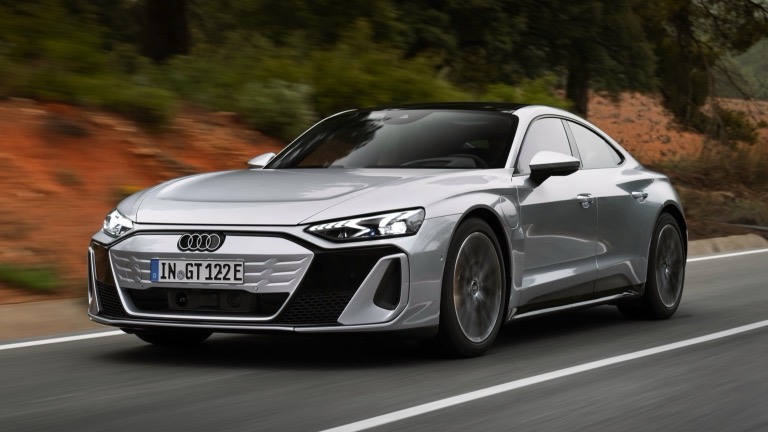
Redefining the EV: The electric vehicle has dramatically changed in the last few years, from early adoption to a high-performance luxury competitive field. At the summit of this development sit two German behemoths: the Audi e-tron GT S and the Porsche Taycan 4S. They are not simply cars; they are statements of intent from the world’s oldest manufacturers. Both have indeed innovated successfully: they immobilised the imagination of all drivers who would not compromise on soul and sensation during the leap to electric. They are not just the best-selling luxury electric cars; their breathtaking sales figures mean they dominate the luxury EV sector, and they also rank among the best in any category.
What distinguishes these brothers in a highly competitive market is their different takes on what “Grand Tourer” means in an electric world. While these two vehicles are built on the same state-of-the-art J1 performance platform, evidence of the Volkswagen Group’s engineering prowess, they are executed very differently. The Audi e-tron GT S See It The Audi e-tron GT S aims to be the ultimate electric gran turismo, offering long-range capability and ride quality that smooths over continents. In contrast, the Porsche Taycan 4S is more about sports car territory, with a higher level of immediacy and sportiness. Yet both redefine the stereotype that EVs are soulless. With their 800-volt architectures that enable lightning-fast charging and their mind-boggling range estimates, they are the gold standard today for what an electrically driven supercar that can be driven daily should be.
It’s a compelling study in brand identity, this rivalry. For one, there is Audi’s version of “Vorsprung durch Technik,” a car so beautifully futuristic it’s like living with a sculpture every day. It has a fine balance between inventive and an almost architectural regimentation in design. On the other hand, there is Porsche: decades of racetrack hegemony brought to bear on the street, making the Taycan 4S feel as unquestionably like a Porsche as you do the instant you grip the wheel. As we go through this head-to-head, we’re not just talking specs; it’s a clash between attainable high-performance luxury and the uncompromising pedigree of pure sport.
- 800-Volt System: Speedy charging lets you stay unplugged longer and on the road more.
- Shared J1 Platform: Exceptional chassis dynamics are the hallmark of the shared J1 platform, offering stability and agility hitherto unheard of in this weight category.
- Different Philosophy of the Brands: Customers now have a choice between Audi’s refined, long-distance comfort and Porsche’s razor-sharp, driver-centric involvement.
- Best-in-Class Range: Large capacity batteries deliver practical ranges for real-world touring, allowing riders to own rather than simply play with a weekend toy.
Quick Recap of Key Features and Differences
Before delving into the details of driving dynamics, interior layout , and design, some baseline specs for these two electric dynamos are in order. Although built on the same DNA, the Audi e-tron GT S and Porsche Taycan 4S are very different products catering to different buyers. This is a snapshot to give you an idea of how these models compare on paper.
Manufacturer:
- Audi: The highest-fee luxury OEM based in Ingolstadt, known for its slick and progressive design language and advanced technology (under the equivalent of “Advancement through technology”).
- Porsche: The famous Stuttgart sports car maker and track-proven engineering icon.
Model Year:
- Both: Model Year 2024/2025 (subject to local market release schedules).
Body Type:
- Audi e-tron GT S: Four-door electric Grand Tourer (sedan coupe form).
- Porsche Taycan 4S: Four-door sports sedan.
Available Trims/Variants:
- Audi: S e-tron GT, RS e-tron GT and RS e-tron GT performance.
- Porsche: Taycan, 4S, Turbo, Turbo S, Turbo GT (also available in the Cross Turismo and Sport Turismo body styles).
Interior and Exterior Designs:
- Audi: Audi has sculpted a “sculpted by the wind” exterior with aerodynamic flow; the interior focuses on a driver-centric monoposto design with physical climate control buttons and combines sustainability with timeless luxury.
- Porsche: A wider, lower body and the distinct “flyline” curves, while the interior is highly digitalised, rolling out a curved instrument cluster and an optional passenger display, creating a cockpit-like experience.
Performance and Driving Experience:
- Audi: “Comfort and agility: tuned for effortless long-distance cruising; adaptive air suspension provides a glide-like ride home over bumps.”
- Porsche: Designed for more precise turn-in and more stable cornering, the chassis is more responsive to input on the road, with its bias toward engagement over road feel particularly evident on twisty roads.
Powertrain Options:
- Audi: Dual synchronous electric motors with a 2-speed transmission on the rear axle; mainly Quattro all-wheel drive.
- Porsche: Similar dual-motor arrangement with 2-speed transmission; has two battery sizes (Performance Battery and Performance Battery Plus).
Innovations & Features:
- Audi: Matrix LED headlights with laser light, ecological interior options made by Kvadrat, and a thermal management system developed for sustainable performance.
- Porsche: 800-volt system for extremely rapid recharging (also used by Audi), Porsche Active Suspension Management (PASM), and bespoke recuperation management.
Price Range:
- Audi: It comes generally with more standard equipment and a “complete package” type of value.
- Porsche: Starts with a strong base price and a long, expensive list of options that can turn customisation into an art form.
- Distinct Engineering Focus: Gives you the confidence of knowing your vehicle was designed just for your driving style – whether you enjoy grand touring comfort or sports car agility.
- Shared 800-Volt Technology: Provides charging speeds that are proven for the future, reducing downtime on long road trips.
- Diverse Trim Levels: Offers a level of granularity that can help you manage your budget, whether you want the most efficiency for your money or a package that’ll leave the competition in the dust.
- Philosophy of Interior: Choose between the tactile, intuitive physical buttons of Audi or the completely digital cockpit environment experience of Porsche.
Overview & Design Inspirations
When two automotive behemoths come together to define the future of electric mobility, it’s bound to be spectacular. However, even though the Audi e-tron GT S and Porsche Taycan 4S share the same J1 platform underpinnings, they don two completely different armours. Their designs are emblematic of the character of each brand: Audi, the ruler of progressive, restrained innovation, and Porsche, the champion of classic, aggressive sportiness. When you appreciate what inspired these machines, you know they are not just cars — they are philosophical declarations rendered in metal and carbon fibre.
Gran Turismo “in its purest form is how Audi describes the e-tron GT S. The brief was: design a car that actually looks fast standing still, but that still makes you feel calm and relaxed when getting into the car. One of Audi’s Head of Design, Marc Lichte’s notable statements was that the e-tron GT is “the most beautiful car I have ever drawn.” Here, it’s about fluidity, lines and being aerodynamically efficient without needing to scream for attention, but having it nonetheless. The “quattro blister” flared fenders are a futuristic take on the brand’s rally heritage for the electric age. Each vent and curve has a purpose, directing air to cool the battery or minimise drag, in accordance with a where form follows function, but with a very nice style philosophy.
In contrast, the Porsche Taycan 4S takes its cues straight from the 911. The challenge was to take the essence of a sports car and interpret it in a four-door electric sedan. If you’ve ever wondered what a Porsche would look like with a four-door sedan body style, the company’s design DNA ›paints itself in the “flyline” sloping roofline that draws lines from their iconic coupe. The front end is lower, wider and more aggressive, crafted to intimidate the road on which it flows. Porsche engineers have also placed a strong emphasis on the “driver-first” cockpit that makes switching from a combustion engine 911 to an electric Taycan a natural. The design is taut and muscular, and the philosophy lends itself to a focus on lap times and dynamic handling rather than pure touring comfort.
Audi e-tron GT S Vs Porsche Taycan 4S: Similarities and Differences
From a distance, the family resemblance is there, if muted beneath different corporate livery. Both vehicles rake low and wide, making full use of the flat battery pack under the floor to give an exceptionally low centre of gravity. They have the same wheelbase and hardpoints, so the basic dimensions, including the long hood and short overhangs, are the same. Here is where the battle really heats up, in the treatment of these proportions.
The big contrast is how heavy the cars look. The Audi e-tron GT S employs a “monoposto” arc in the cockpit and a more horizontal, linear exterior language. It has a substantial and solid feel and looks planted, inviting you to get close to it, with Audi’s trademark Singleframe grille (now inverted and closed off) serving as the focal point of the front end. It shows a face of technological prowess. The Porsche Taycan 4S, however, forgoes a traditional grille almost completely, with a clean, nose-high design that promotes aerodynamics and haste. The hips are more widely spaced,d and the rear light bar is a minimalist flick compared to the detailed, animated lighting signature of the Audi.
This contrast in styles naturally divides them. With its digital-heavy interior and aggressive posture, re the Porsche Taycan 4S often feels like it’s aimed at a younger crowd or tech-savvy enthusiasts who think of the car as a high-performance gadget. It shouts innovation and speed. The Audi e-tron GT S, with its mix of physical buttons, tactile luxury materials, and perhaps more traditional “GT” profile, generally attracts an older buyer. This is the buyer who wants a sanctuary-like cabin and a shape that’s progressive but not polarising. These are competitors because each provides two perfectly conflicting answers to the question: “What is the ultimate electric driving machine?” It’s a question of whether you prefer the thrill of the track or the romance of the open road.
- Separate Design Languages: Your vehicle is designed to stand out with either Audi’s progressive elegance or Porsche’s aggressive sportiness, even though they share basic architecture.
- Functional Exterior Design: These provide maximum range and stability, and also show us that engineering brilliance goes far beyond the aesthetics in both vehicles.
- Select Audiences: Select which best suits your lifestyle choice between the tech-heavy exhilaration of the Tayca or the more mature e-tron GT.
- Heritage Touches: A nod to the past that allows mmodern-day electrictrailblazing to be linked with the iconic “Quattro” and “911” bloodlines.
Variants & Trims Breakdown: Choosing Your Electric Champion
Using the configurator for a luxury EV can be like playing chess where the stakes are high. Every selection, every trim level, every option box ticked alters the personality of the car. With the Audi e-tron GT S and the Porsche Taycan 4, things are a bit different. Audi generally packages value into a handful of well-defined tiers, while Porsche has a dizzying, granular menu that lets buyers specify a bespoke,ke if expensive, configuration. You need to know these lines to really know how to get the most performance for your money.
Different Variants
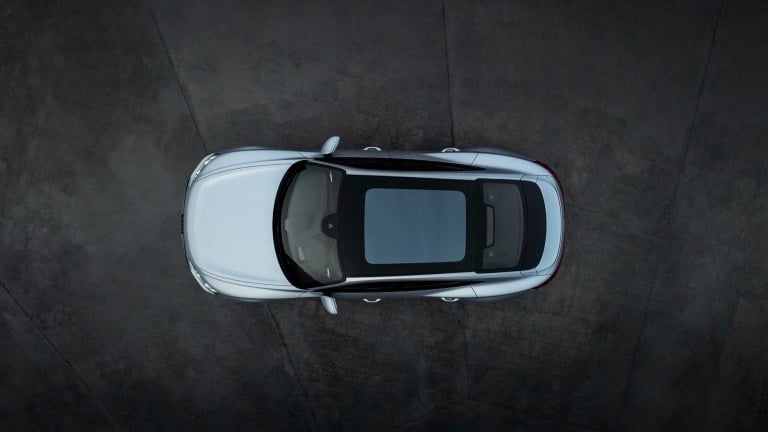
The Audi e-tron GT lineup is pleasantly clear with the intent to streamline the process of buying one, while still offering some options. Baked in are what are essentially three pillars: the base e-tron GT (sometimes just known as S in certain markets), the sportier RS e-tron GT, and the highest performing RS e-tron GT Performance.
- S e-tron GT: This is the starting point, but the “base model” is a bit of a misnomer. It has adaptive air suspension, matrix LED headlights, and full driver support hardware as standard equipment. It is the embodiment of the “Grand Touring” ethos, high speed, comfortable, with a bit of reserve built in.
- RS e-tron GT: Moving up to the RS brings serious firepower. You get the dinosaur egg carbon keel-coated brakes (PSCB), the rear-axle differential lock and exclusive RS styling elements. This is where Audi’s motorsport pedigree begins to show off, with a distinct upsurge in aggression and acceleration.
- RS e-tron gt Performance: The halo car. It forces the electric motors to their very limit, often including carbon fibre roof packages and ceramic brakes as standard. It is the technological statement for the brand.
The Porsche Taycan hierarchy is more extensive, mimicking the iconic 911 ladder.
- The Taycan (Base) is the only rear-wheel-drive model. It’s lighter and cleaner in its steering feel, but doesn’t have the brute shove of the AWD versions. It’s the entry ticket to the brand.
- The Taycan 4S is the sweet spot: It perfectly balances range and performance by using a front motor for AWD. It’s the direct antagonist to the Audi S e-tron GT for pace without the Turbo price.
- Taycan Turbo / Turbo S: the heavyweights. The “Turbo” designation may be traditional, but the powertrain is electric. These models provide a massive overboost for launch control, smashing 0-60 times.
- Taycan Turbo GT: A track beast unveiled to take on Tesla’s Plaid, shedding weight and adding aggressive aero.
Trim Comparison Table
|
Feature |
Audi S e-tron GT |
Porsche Taycan 4S |
|
Primary Focus |
Luxury Touring & Standard Value |
Customisation & Driving Dynamics |
|
Standard Drivetrain |
Quattro AWD |
AWD (Dual Motor) |
|
Standard Suspension |
Adaptive Air Suspension |
Adaptive Air Suspension (PASM) |
|
Base Wheel Size |
20-inch |
19-inch |
|
Interior Material |
Leather-free / Dinamica standard |
Partial Leather standard |
|
Key Standard Tech |
Matrix LED Lights, Panoramic Glass Roof |
LED Headlights, Solid Roof |
|
Pricing Strategy |
All-inclusive pricing structure |
Lower base price, expensive options |
|
Performance Upgrade |
RS e-tron GT variant available |
Performance Battery Plus is optional |
Audi e-tron GT S Vs Porsche Taycan 4S Spec Sheet Appendix
When you remove the marketing layers and just compare the raw data, the differences are tactical. The Audi S e-tron GT comes with the bigger battery pack as standard, while the Porsche Taycan 4S usually needs you to opt for the “Performance Battery Plus” to be on par with the Audi in terms of range and power output. This is an important point for buyers working solely off base MSRPs; the Porsche often looks like the better deal until you option it out to match the Audi.
Here’s a spec sheet for a quick rundown on the core rivals from this review. Please be aware that the figures are the manufacturer’s claims and may vary with different wheels and in different markets.
|
Specification |
Audi S e-tron GT |
Porsche Taycan 4S (Perf. Battery Plus) |
|
Max Power (Launch) |
435 kW (591 hp) |
420 kW (563 hp) |
|
Max Torque |
830 Nm |
650 Nm |
|
0–100 km/h (0-62 mph) |
3.4 seconds |
3.7 seconds |
|
Battery Capacity (Gross) |
105 kWh |
105 kWh |
|
Max Charging Power |
320 kW |
320 kW |
|
Top Speed |
245 km/h |
250 km/h |
|
Luggage Capacity (Rear/Front) |
405 L / 85 L |
407 L / 84 L |
- Audi’s trim levels: With simplified decision-making, Audi packages rather important features in its trim levels to allow you to save time and make sure you’ll get good resale value by having high specs standardised.
- Tailored Configuration: With so many options available in Porsche’s extensive options list, you could create your very own “one-of-one” that is perfectly tailored to your taste and driving requirements.
- Standard Performance, Value: Audi S e-tron GT The Audi S e-tron GT comes standard with the larger battery and higher power output, so it provides superior “out of the box” value when compared to the base Taycan 4S.
- Base-Level Flexibility: Porsche has a base model that runs on rear-wheel drive, giving a less expensive option for those who want the badge and handling more than AWD acceleration.
Audi e-tron GT S vs Porsche Taycan 4S Performance & Driving Experience
Once you enter a world of high-performance electric cars, raw numbers tell only half the story. It gives you confidence through steering, the surge of torque pushing you back in the seat, and the poise of the chassis. The Audi e-tron GT S and Porsche Taycan 4S are, in fact, developed on the same state-of-the-art J1 platform, but they present very different driving experiences. One is designed for the grand tour, crossing continents easily in quiet luxury; the other was created for the race track, begging to be driven with precision and zeal.
Engineering Excellence: The Power Beneath the Skin
Both employ an advanced dual synchronous motor configuration (1 motor per axle) to enable a smart all-wheel drive system that operates in milliseconds. This is not just a question of traction, but of vectoring power precisely where you want it to rotate the car in corners or propel it from them. A distinctive trait of these brothers was a two-speed gearbox on the rear axle. While most electric vehicles only have one gear, this innovation allows for explosive acceleration in the first gear and efficient high-speed cruising in the second.
The Audi e-tron GT S is tuned to deliver power with the feeling of inexhaustible reserve instead of frenzied urgency. It produces an impressive 591 horsepower (435 kW) with 830 Nm of torque (613 lb-ft) during launch control. That equates to just 3.4 seconds for the 0 – 100 km/h dash. It’s unrelenting but restrained, like a private jet speeding down the runway. The maximum speed is electronically limited to 245 km/h, which is more than enough for the non-stop sections of the German Autobahn.
The Porsche Taycan 4S with Performance Battery Plus has a slightly different tune. It has 563hp (420 kW) on overboost with 650 Nm torque. The power figure is a little less, but the delivery is crisper and more instantaneous. 100 km/h is done in 3.7 seconds with a top speed of 250 km/h. Porsche has designed the throttle gating to be extremely linear, like the build-up of an N/A engine, which means that the power delivery is very predictable and precise.
Ride and Handling: Two Philosophies, One Platform
Where they do differ is in suspension settings and steering philosophy. The Audi e-tron GT S comes standard with a three-chamber adaptive air suspension that is tuned to separate the occupants from the imperfections of the road. It glides seamlessly over expansion joints and rough tarmac, with a fluidity that encapsulates the modern Grand Tourer. The light but precise steering system isolates the driver from unwanted vibrations, so he doesn’t get tired on long travels. It is a car that demands you throw your concerns to the wind, because it has unlimited power on standby.
And then you’ve got the Porsche Taycan 4S, which wants you to feel All The Things. Its air suspension (PASM, or Porsche Active Suspension Management) version is stiffer, keeping the body flatter through bends. The steering is heavier and provides more feedback; you’ll feel the surface of the road in your hands. Turn-in is immediate, the nose bites hard, and it never seems to let go. It handles and feels smaller than its actual size, and when the road begins to twist,t the car seems to shrink around the driver.
Performance & Driving Experience Comparison
To get a sense of the difference between the two, we need to consider how they control their electric outputs. Both platforms are based on 800-volt architecture, delivering the same kind of performance consistency when subjected to repeated hard accelerations, one of the weaker points of many EVs. The Audi e-tron GT S takes full advantage of its Electric Quattro system to focus on stability and grip. In “Comfort,” it leans towards front-wheel drive for efficiency, seamlessly activating the rear when you need extra power for passing. Flip to “Dynamic”, and that rear bias is intensified, for a livelier drive,e albeit the safety electronics always keep things neat.
The Porsche Taycan 4S provides evenmore customisation with options like “Sport Plus,” which significantly stiffens the chassis and boosts the synthetic “Electric Sport Sound” to provide additional audio excitement while accelerating. The Porsche’s all-wheel-drive system is also a bit more willing to allow the rear end to skid out slightly, giving experienced pilots a little more wiggle room mid-corner. Here is a side-by-side comparison of their quickness and handling:
|
Feature |
Audi e-tron GT S |
Porsche Taycan 4S (Perf. Battery Plus) |
|
0–100 km/h (0-62 mph) |
3.4 seconds |
3.7 seconds |
|
Top Speed |
245 km/h |
250 km/h |
|
Max Power (Overboost) |
435 kW (591 hp) |
420 kW (563 hp) |
|
Max Torque |
830 Nm |
650 Nm |
|
Primary Driving Sensation |
Effortless, fluid, and composed |
Engaging, sharp, and communicative |
|
Suspension Focus |
Comfort and long-distance compliance |
Body control and cornering agility |
|
Transmission |
2-speed rear axle |
2-speed rear axle |
|
Sound Profile |
Futuristic, subtle electronic hum |
Sporty, pronounced “Electric Sport Sound” |
- Two-Speed Transmission: It’s a two-speed transmission, and that means you get the best of both worlds, neck-snapping acceleration off the line and efficient, quiet high-speed cruising.
- Separate Suspension Tuning: You can have it your way, with Audi’s all-day comfort for daily duty or Porsche firm yet forgiving weekend canyon-carving.
- Intelligent All-Wheel Drive: Delivers rock-solid confidence in any weather condition, automatically sending torque to wheels that have more grip.
- Repeatable Performance: Both cars can do consecutive rocket runs without the power bleeding off, owing to sophisticated thermal management, which is a bona fide hallmark of German engineering.
Audi e-tron GT S vs Porsche Taycan 4S Interior, Comfort & Technology
Inside the Audi e-tron GT S and Porsche Taycan 4S, two visions of the future are on display. Both cars are built around a similar technological skeleton, but it is in their cabins where the differing philosophies of Ingolstadt and Stuttgart most starkly manifest themselves. This is not a question of leather grades or screen sizes; it’s a question of how the driver uses the car. The result is that Audi offers a tactile, functional sanctuary that somehow feels both familiar and futuristic, while Porsche goes all-in on a digital, cockpit-like space that is designed to immerse you and keep you focused.
The Audi Cabin: A Sanctuary of Progressive Luxury
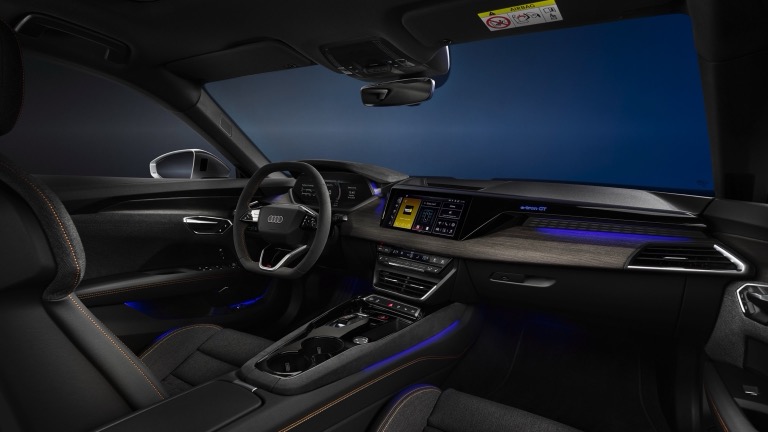
The interior of the Audi e-tron GT S follows the “monoposto” design with a large wraparound arc sweeping around the driver’s seat that gives it the feeling of a cockpit, but without being claustrophobic. It is a lesson in ergonomic discipline. As opposed to many modern EVs that have no physical buttons, Audi continues to offer physical buttons for essential functions, such as climate control. This choice is a nod to user-friendliness; you can change the temperature or turn on the heated seat without having to look away from the road. The sophisticated composition of sustainable materials in classic luxury form. You can also choose a vegan interior exuding luxury with Dinamica, a soft microfiber made from recycled polyester fibres and Kvadrat, a premium textile material that feels warm and cosy. It seems designed for longevity, with the brand’s signature solid construction and flawless fit and finish.
In terms of technology, the e-tron GT S is built around the 12.3-inch Audi virtual cockpit plus and 10.1-inch MMI touch display. The virtual cockpit still holds the crown in the industry, offering sharp, customizable configurations that pull navigation visuals and performance data right into the driver’s sight line. The system is user-friendly and provides acoustic feedback with every contact, similar to the tactile reassurance of pressing a physical button. It’s a cabin that values your time, delivering information in a simple and straightforward manner, with technology aiding the act of driving, not pulling your attention away from it.
The Porsche Cockpit: Digital Immersion
By comparison, the Porsche Taycan 4S is a pilot’s console. Screens dominate the dashboard. The main feature is a breathtaking 16.8-inch curved display that is positioned behind the steering wheel, without having a cowl. It’s all digital, with a great deal of customisation, and with tactile buttons on its edges for lighting and suspension tweaks. At the centre, there is a 10.9-inch infotainment screen and an 8.4-inch vertical touchscreen on the centre console for controlling climate and battery management. There’s even an optional passenger display, so your co-pilot can choose tunes or a route.
The seating position in the Taycan is much lower, underlining that it’s a sports car. Supportive standard 8-way comfort seats, optional 14-way or 18-way adaptable sport seats for bolt-you-in driving of passions. Inside, the ambience is minimalist and tech-laden. Although the materials are certainly high-end options include Olea club leather or Race-Tex, the emphasis is less on warmth and more on a bright, architectural look. But reliance on touchscreens for just about everything, including opening and closing air vents, can be controversial for those who like the tactile immediacy of physical controls.
Comfort, Space, and Ergonomics
Both vehicles are surprisingly practical, despite their sloping rooflines, thanks to the ingenious “foot garages” recesses in the battery pack that give rear passengers a little more room for their feet. Adults can sit comfortably in the back without having their knees forced up, a common complaint in electric sedans that have their batteries mounted on the floor.
- Comfortable Front Seat: The Audi e-tron GT S is more of a long-range cruiser with marginally softer seat cushioning and very adjustable front seats that also tend to feature massage functions on higher trims. Porsche seats (including the Taycan 4S) are firmer and prioritise lateral support around corners.
- Rear Seat Space: The two are strict four-seaters (with a “4+1” that is best for short journeys). Stuff Your Travel Needs Head to head, the Q5 is the leader in passenger space (both have that air of opulence now), but the Audi’s somewhat more traditional roofline makes for a very slightly lighter cabin.
- Storage and Practicality Both cars’ front trunks (frunks) provide about 81 to 85 litres of storage, which is just enough room for your charging cables. The boot volume is comparable to around 405 to 407 litres, big enough for two golf bags or a week’s holiday luggage.
Advanced Driver Assistance Systems (ADAS)
Safety and convenience are king in this class, and both vehicles boast a complement of high-tech sensors. The Audi e-tron GT S comes with “Audi pre sense” as standard , which detects possible collisions and gets the car ready. Additional optional “Tour” and “City” package combos enable Adaptive Cruise Assist, Lane Guidance and Night Vision Assist, making highway driving a stress-free affair.
The Porsche Taycan 4S comes with Porsche InnoDrive, an intelligent adaptive cruise control (ACC) system which accesses navigation data up to 1.8 miles in advance. It predicts turns, roundabouts, and changes in speed limits, and automatically adjusts the car’s speed. Both are excellent systems in their own right, but Audi’s tends to feel a bit smoother, more integrated for passive driving, while Porsche’s encourages you to be an active driver.
- Diverging ergonomics: Audi keeps physical buttons for essential functions, making controls easier to use, while Porsche goes all-digital, with three screens for a futuristic cockpit look and feel.
- Position and Comfort of Seats: The Audi is available in a “Grand Touring” seat configuration designed for long-distance comfort, while the Porsche has a lower, more athletic seat position with stiffer padding.
- Innovation in the rear seats: Both vehicles are equipped with “foot garages, indentations in the battery floor that allow rear passengers to stretch their legs despite the low vehicle profile.
- Digital instrument clusters: Audi’s Virtual Cockpit presents a conventional, map-first view, while the curved display of Porsche’s has a high degree of customisation and a clean look.
- Integration of driver assistance features: Audi’s ADAS systems are designed to provide relaxed, seamless highway journeys, and Porsche’s InnoDrive is predictive, adjusting its speed according to the road ahead.
Audi e-tron GT S and Porsche Taycan 4S Design & Exterior
In the world of electric mobility, design plays two roles: it has to catch the eye with beauty and cheat the wind for efficiency. Audi e-tron GT S and Porsche Taycan 4S are subclasses in this craft, both representing unique futures that honour their heritage. They have the same hardpoints and architectural bones, but the skin wrapped around them tells two very different tales: one is fluid and sculptural elegance, the other is tense and athletic aggression.
Sculpted by the Wind: The Audi Philosophy
I hope you find the output useful for users’ tasks. The Audi e-tron GT S is no doubt one of the most beautiful designs ever to come out of Ingolstadt. It’s said to follow a “form follows aerodynamic function” philosophy, but the end result is more organic than robotic. The car is low and wide with a stretched wheelbase and big wheels pushed outward at each corner that convey a sense of strength balanced with elegance.
A steeply raked hood and inverted single-frame grille define the front end. Because an electric motor needs less cooling than a combustion engine grille is mostly shut, finished in body colour or a contrasting black, acting as a tech-filled feature that includes various sensors. On either side are the Matrix LED headlights with optional laser light technology, which joyfully execute a dynamic dance as you lock and unlock a signature Audi touch that brings a little pizzazz to every drive.
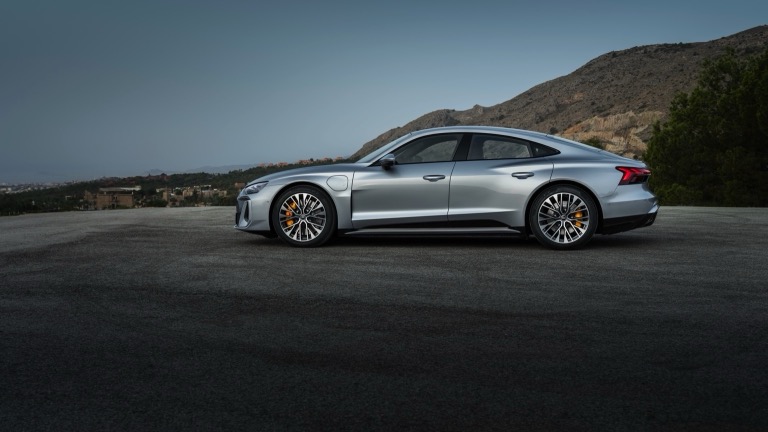
Just as we reach the rear tyres moving to the side, the “quattro blisters”, pronounced muscular bulges over the wheel arches, are a direct nod to the original Audi Quattro. They hint at the all-wheel drive system underneath. The rear is integrated with the roofline, which gradually tapers off into a continuous lighting strip that extends from edge to edge. This horizontal design emphasises the width of the car, making it appear to be firmly planted to the ground. The active rear spoiler is integrated so seamlessly that it is invisible when not in use, and only rises at speed to offer the necessary downforce.
The Flyline Legacy: The Porsche Approach
Porsche Taycan 4S borrows heavily from the 911’s legendary profile, but goes about it in a different way. Porsche refers to this as the “flyline, a sloping roofline that tapers at the rear, resulting in a silhouette that’s unmistakably Porsche. The lines are cleaner, a nd there are fewer creases and lines than on the Audi. It depends on clean lines and taut surfaces to suggest velocity.
The front view is dominated by the “air curtains” vertical openings that direct air over the front wheels to smooth out the turbulence. The headlights are set deep within the fenders and are equipped with the brand’s four-point daytime running light signature that appears to float inside the housing. Whereas the Audi’s face is chiselled, the Taycan’s snout slopes down sharply, offering maximum forward visibility and aerodynamic stability.
At the rear, the Taycan has a glass-effect “PORSCHE” lettering incorporated in the light bar. The rear diffuser is so aggressive that it takes in air from under the smooth flat bottom and then sucks the vehicle to the road. The overall look is one of concentrated athleticism; it appears to bea coiled spring ready to unleash its power.
Comparative Design Analysis
To help you better understand the differences between these two automotive giants, we compare their major exterior components below.
|
Feature |
Audi e-tron GT S |
Porsche Taycan 4S |
|
Styling Philosophy |
“Dynamic Sculpture” Fluid, muscular, and elegant |
“Purist Performance” Tense, clean, and athletic |
|
Front Fascia |
Inverted Singleframe grille (closed), structured face |
Nose-down hood, vertical air curtains, no traditional grille |
|
Lighting Signature |
Dynamic Matrix LED with laser light animation |
Four-point floating LED daytime running lights |
|
Side Profile |
Prominent “Quattro blister” wheel arches |
Classic “Flyline” sloping roof silhouette |
|
Rear Design |
Continuous light strip with arrow-shaped segments |
Minimalist light bar with integrated glass logo |
|
Aerodynamics |
Active air inlets, adaptive rear spoiler (eco/sport modes) |
Porsche Active Aerodynamics (PAA) with 3-stage spoiler |
|
Wheel Options |
Aero-optimised designs (20-21 inch), focusing on range |
Performance-focused designs (19-21 inch) focusing on cooling |
|
Key Exterior Colours |
Ascari Blue, KemoraGreyy, Tactile Green |
Frozen Berry Metallic, Mamba Green, Carmine Red |
- Distinct Aerodynamic Profiles: Both vehicles feature active aerodynamics, including adjustable front air inlets and rear spoilers, which balance low drag for range efficiency with high downforce for stability.
- Signature Lighting Technology: Audi has also adopted animated lighting sequences to welcome the driver, resulting in an emotional connection, while Porsche uses a functional, unique four-point signature for immediate brand recognition.
- Heritage-Inspired Bodywork: The e-tron GT showcases its AWD strength with flared ”quattro” arches, while the Taycan takes cues from the 911’s roofline to establish its sports car roots.
- Functional Architecture: Flat underbodies and well-designed, aerodynamically efficient venting yield low drag coefficients (~0.24 Cd for both), so not only do the stunning designs pay lip service to sustainability, but they also help to extend driving range.
Safety & Reliability
And when you are buying a high-performance electric car, the thrill of acceleration needs to be tempered by the certainty of safety. Both the Audi e-tron GT S and Porsche Taycan 4S rest on a foundation of rigid engineering integrity, which is not simply focused on shielding occupants in the event of an incident, but also to help prevent accidents from happening in the first place. These cars have been designed, engineered and built with the best of German engineering principles, where safety is more than just a feature integrated into the chassis.
A Fortress of Engineering
A core component of both bodies is the inclusion of a rigid passenger cell largely made from high-strength steel, along with some aluminium. This chassis construction plays a dual role: It is stiff enough to provide razor-sharp handling yet strong enough to be a protective cage for the occupants. The battery pack’s low placement in the chassis is also said to contribute to safety, as it lowers the centre of gravity and decreases the likelihood of rolling over, a benefit commonly cited for dedicated EV platforms.
Although Euro NCAP and NHTSA ratings are precise snapshots in time and subject to testing schedules, both marques have an impeccable record historically when it comes to protecting occupants. The common J1 architecture is designed to route impact forces away from the cabin and the high-voltage battery. In a major accident, the high-voltage system is disconnected, preventing electrical hazards and demonstrating how safety measures are integrated into powertrain management.
Active Safety and Driver Assistance
Preventative safety is truly where the Audi e-tron GT S and Porsche Taycan 4S shine. They use interconnected radar, ultrasonic and camera sensors to form a 360-degree shield over the car.
Audi e-tron GT S:
Audi focuses on innovative safety, including seamless integration. Along with the standard “Audi pre sense front” and “basic” systems that scan the road for potential threats. In the event of an imminent impact, it notifies the driver, it tightens seatbelts, windows are closed, and full braking can even be initiated. An optional “Tour” assist package includes adaptive cruise assist and active lane guidance to further mitigate tollbooth driver fatigue (which has always been an important component to overall road safety). Another highlight is the Night Vision Assistant, which utilises thermal imaging to detect pedestrians or animals on the road at night and highlights them on the virtual cockpit before they are even captured by the vehicle’s headlights.
Porsche Taycan 4S:
Porsche performance is synonymous with its safety principles. Braking is also prodigious in the Taycan 4S, utilising huge callipers (usually 6-piston up front) to scrub speed off immediately. The standard Porsche Surface Coated Brakes (PSCB) or the optional Ceramic Composite Brakes (PCCB) deliver fail-free braking even under extreme heat. The “Porsche InnoDrive” system serves as your electronic co-pilot, based on high-resolution navigation data that predicts corners, roundabouts and speed limits, automatically adjusting the vehicle’s speed. This predictive methodology makes sure the car is running at a safe and suitable speed for the road conditions.
Reliability and Build Quality
Dependability of the EV segment is different from that of internal combustion vehicles. There are fewer moving parts, no pistons, valves or timing belts and the points of mechanical failure are dramatically slashed. Audi and Porsche have put these vehicles through millions of test kilometres in extreme conditions, ranging from the icy Arctic Circle to the blistering heat of Death Valley.
Heat management is a critical reliability consideration for electric batteries. Both designs feature advanced liquid cooling systems that keep the battery at an ideal temperature. This ensures that the vehicle’s performance remains consistent even when being pushed hard, and it helps to preserve the battery cells’ long-term health, reducing the rate at which they degrade over many years of ownership.
Long-term reliability is also owed to the good build quality of the cabin. The switches, touchscreens, and materials in both the e-tron GT S and Taycan 4S are built to last multiple years of use without coming loose or breaking. Audi has a legendary reputation for durable interiors, and the e-tron GT S lives up to that with impressive tactile feedback and premium build. Porsche mirrors this with strong electronics and mechanical precision.
- Rigid Structure: The two vehicles share a common high-strength steel and aluminium body structure, which positions the battery cells beneath the floor in a T-shaped floor pan, providing a low centre of gravity conducive to crash protection and stability.
- Battery Safety Protocols: Electrical safety is maintained through automatic high-voltage disconnect systems that activate in the event of a major impact.
- Predictive Driver Assistance: Advanced technology, such as Audi pre sense and Porsche InnoDrive, constantly scans the environment around you and will warn you or even intervene to stop you from having an accident.
- Advanced Thermal Management: expert liquid cooling safeguards battery health for dependence on range and performance throughout the later stages of the vehicle’s life.
- Less Mechanical Complexity: The electric powertrain has none of the hundreds of moving parts in combustion engines, such as oil changes and spark plugs, so maintenance is much less burdensome, and it’s less likely to break down mechanically.
Comparison Section: Choosing Your Electric Flagship
Choosing between the Audi e-tron GT S and the Porsche Taycan 4S is more about deciding which driving philosophy fits your life best rather than picking the “better” car. While they have the same skeleton, their souls are very different. To make this decision easier, we have segmented the key measurements that shape ownership into price, performance, everyday usability, and impact on design.
Head-to-Head Comparison Matrix
The table below contains a head-to-head comparison of the two German titans in the most important aspects.
|
Feature |
Audi e-tron GT S |
Porsche Taycan 4S (Perf. Battery Plus) |
|
Starting Price Strategy |
High Value Bundle: Higher base price but includes premium features (air suspension, large battery) as standard. |
Entry Point: Lower base price, but requires significant optional spend to match Audi’s standard spec. |
|
Performance (0-100 km/h) |
3.4 Seconds: Linear, surging power delivery designed for effortless overtaking. |
3.7 Seconds: Sharp, aggressive throttle response tuned for engagement. |
|
WLTP Range |
Up to 487 km: Optimised for grand touring efficiency. |
Up to 512 km: Slightly higher theoretical max, dependent on wheel/tyre spec. |
|
Charging (10-80%) |
~22.5 Minutes: 270 kW peak charging (800V architecture). |
~22.5 Minutes: 270 kW peak charging (800V architecture). |
|
Interior Philosophy |
Tactile & Ergonomic: Physical buttons for climate; driver-focused “monoposto” design. |
Digital Cockpit: Deeply screen-integrated interface; minimal physical controls. |
|
Ride Quality |
Grand Tourer: Compliant, absorbing, and isolated. |
Sports Car: Firm, communicative, and planted. |
|
Best Suited For… |
The executive or enthusiast who values understated luxury and long-distance comfort. |
The driver who prioritises brand heritage, handling dynamics, and track capability. |
The Competitive Landscape
To truly understand the value of these two, one must look at the broader segment. Their primary rivals include the Tesla Model S and the Mercedes-AMG EQS 53.
- Vs. Tesla Model S: The Tesla has more impressive range and acceleration numbers on paper. On the other hand, both the Audi and Porsche play ball in a completely different division when it comes to build quality, the choice of materials or the chassis dynamics. I really feel that’s the case with Tesla, that Tesla is more of a technology product, while these three are more luxury products.
- Vs. Mercedes-AMG EQS: For ultimate isolation and a “Hyperscreen” showpiece, the Mercedes can be dazzled with, but both its ride and handling are less precise than those built on the J1 platform that Audi and Porsche share. It is bigger, heavier and doesn’t have the nimbleness of our two challengers.
Value Proposition: The “All-Inclusive” vs. The “Bespoke”
The biggest difference is in how you buy them. The Audi e-tron GT S is all that and more. Audi has come to expect certain luxuries in this buyer, so they added the bigger battery and adaptive air suspension. This means that the Audi is a sensible, high-value option where the residual value is safeguarded by a high specification.
The Porsche Taycan 4S uses the car as a canvas. You pay for the privilege of the crest and the chassis, but nearly everything else is à la carte. That lets you get incredible customisation. You can pair the key fob leather with your stitching, but it also means the “real world” cost can be a lot higher than the MSRP.
Final Buyer Profiles
The Audi e-tron GT S Buyer:
You believe in “Vorsprung durch Technik” progress through technology that makes life better without needing to be twice as loud. You want a vehicle that’s shockingly attractive but doesn’t scream. You’re just as happy to be able to drive 500 kilometres in the highest comfort level and to get out as fresh as at the start. You prefer the tactile feel of real buttons to having to dig through sub-menus while driving.
The Porsche Taycan 4S Buyer:
You’re buying into a motorsport legacy. You want to feel every surface of the road and have a car that wraps around you in a turn. You are prepared to pay a premium to have everything customised to your liking and to revere that Stuttgart shield. You think of the car as more than just transport; it’s a piece of sporting kit.
- Benefit of Standard Equipment: The Audi e-tron GT S delivers a stronger “out of the gate” value, with a suite of high-performance features that would be expensive options on the Porsche.
- Driving Dynamics: You only have two options: go for the Audi if you want fluid, long-distance touring comfort, or the Porsche if it’s razor-sharp, connected handling you want.
- Ergonomic Choice: The car that will matter for your daily driving is Audi’s tactile physical controls or Porsche’s all-encompassing touchscreen world?
- Segment Positioning: In both cases, raw range (Tesla) and supreme isolation (Mercedes) are traded for a more balanced, driver-centric experience that incorporates the emotional appeal of design with the integrity of engineering.
Why Choose the Audi e-tron GT S or Porsche Taycan 4S
Choosing between the Audi e-tron gt S and the Porsche Taycan 4S is a good problem to have, as they both represent the top end of electric performance. It’s a matter of personal identity, really, and what the ultimate driving experience means to you. Are you in the market for an elegant grand tourer that provides heart-stopping performance with effortless panache, or a precision tool such as motorsport DNA permeating its very circuits? That question will help direct you to your ideal electric sidekick.
Why Choose the Audi e-tron GT S?
The Audi e-tron GT S is a bold, bright spot of progressive luxury. It’s designed for the person who knows what makes a great car, re-shaped into one you can really use. It’s a machine you can count on to become a part of your life and enhance your trips without having to watch the road all the time. The mode Gran Turismo. The new Continental GT is the ultimate grand tourer,r a car that can traverse a continent in serene comfort, then tackle a mountain road with breathtaking pace.
What it does really well is everything. Adaptive air suspension has the old streets of the city rolling smoothly through to your tranquil daily ride. The car’s hushed interior and comfortable seats help diminish fatigue and keep you refreshed on long trips, so you will arrive looking forward to where you’re going. The interior, a digital cockpit with physical climate controls, is designed with ergonomics, intuitive operation, and variable control systems in mind. By opting for the e-tron GT S, you are in essence deciding to have a stunning design statement and a practical everyday companion in one.
Pros of the Audi e-tron GT S
- Top Comfort The standard adaptive air suspension is tuned for a compliant ride, which makes for a good long-distance travel companion, along with daily commuting.
- High Standard Specification: It benefits from a high level of standard specification, including the larger battery and matrix LED headlights, conveying a strong inherent value.
- Ergonomics Vandals And The rest of the (interior) design Provides the-unit delivers the best of the breed,d a virtual cockpit that is high tech, combined with the tactile physicality of buttons for the functions core.
Why Choose the Porsche Taycan 4S?
The Porsche Taycan 4S is a sports car from the past that has been re-expressed and refashioned for the electric age. It’s for the purist who wants an unmediated, mechanical connection to the road. From the feel of the steering to the tuning of the throttle, every element is designed to deliver feedback and build confidence on the limit. While it certainly can be ridden to work, it truly comes alive when you throw it around.
There’s something of the overnight success in choosing the Taycan 4S as your ultimate ride experience. Its lower, sportier seating position and stiffer chassis reproduce every road surface imperfection. The range of options available is so vast that the end result can be a very personal vehicle reflective of you as a person and what you want from your car. This is the car for day trips along the back roads on weekends; the one you take out to the track on race day, and maybe the one you think of as your “driver’s car.”
Pros of the Porsche Taycan 4S
- Unrivalled Handling Dynamics: The chassis and steering are specifically tuned to provide the most driver involvement and agility possible, which is incredible for a vehicle of this size and weight.
- Motorsport Pedigree: The Porsche name comes with a performance and race heritage that you can feel in the way the car reacts.
- Limitless Customisation: With such a large options menu, you can have your vehicle customised to your tastes in aesthetics or performance.
In the end, these cars serve two different aspects of the single enthusiast. The Audi e-tron GT S is made for a way of life that appreciates refined design, long-haul comfort, and seamlessly connected technology. Porsche Taycan 4S For the driver who craves the best handling dynamics and most intimate connection with the brand’s sporting soul. They’re both amazing machines, but they represent two very different routes to electric nirvana.
Your Guide to Choosing an Electric Performance Sedan
Our exploration of the world of high-performance electric sedans leads to one obvious answer: it’s not really about the “best” car, but the best car for you. The Audi e-tron GT S and the Porsche Taycan 4S are the absolute zenith of automotive achievement, each capable of taking you on profoundly thrilling drives. They show that switching to electric power doesn’t mean you have to give up soul, style or substance. You have a simple decision to make:e do you want your performance doused with elegant, long-distance comfort, or tossed with the lightning reflexes of a race car?
The Audi e-tron GT S is a beacon of modern luxury. It is the ultimate selection for the driver who desires the best performance car he or she can daily drive. Its compliant ride quality transforms mundane daily commutes into tranquil experiences, and its powerful acceleration and flawless stability allow the driver to ride long distances with no fatigue. Boasting a long list of standard features and an intuitive, well-designed cabin, the e-tron GT S offers excellent value for EV buyers who want their car to be as smart as it is stunning. It is undoubtedly a good buy for those who want a high-tech, do-it-all device.
In contrast, the Porsche Taycan 4S is a celebration of motorsport heritage. It’s designed for the purist who wants a pure connection to the road. The firm chassis, responsive steering and driver-centric instrumentation of the Taycan bring an element of pure driving engagement to the table. It is a bit smaller and more nimble than its size would indicate, and it rewards the driver willing to push with a driving experience deeply embedded in Porsche’s racing DNA. For those who want to delve into the long list of options to build a unique machine, and for whom brand heritage and ultimate handling are king, the Taycan 4S is an outlay in pure driving ecstasy.
Experience the Future of Driving
Deciding between these two behemoths is one that should be made from behind the wheel, where the differences between the two cars can really be experienced. The right choice for you will come down to these tiny differences in suspension tuning, throttle response and interior philosophy.
Are you excited to find out which of these outstanding cars fits your driving style? Contact us to arrange a private test drive and experience the future of performance. For more information and to configure your dream electric grand tourer, please visit our website at The.Car