Hyundai Kona Electric 48 kWh vs BYD Dolphin: Affordable EV in 2025?
The electric vehicle market is at a tipping point, and two 2025 models are at the forefront of the charge in the affordable category: the Hyundai Kona Electric 48 kWh and the BYD Dolphin. These vehicles have attracted consumers by offering an appealing combination of range, performance, and technology without the premium price tag frequently connected with electric driving. The best-selling model of each isn’t merely riding on a wave of rising popularity; it is a clear indication of how well both carmakers have met the most pressing wants and needs of today’s car buyer. In this comprehensive comparison, we’ll cover every aspect of these best-in-class EVs.
Hyundai’s small SUV, the Kona Electric, is the best-selling model in its segment, and it further expands the EV range with an assertive, futuristic look and rock-solid reputation for reliability. It is the established automaker’s answer to honing and perfecting its electric options. Meanwhile, the BYD Dolphin makes its debut as a compact hatchback, evidencing the pace of innovation and fierce pricing that have propelled its maker to the top of the global EV industry. This review will examine an interesting contest: Hyundai’s tried and true engineering against BYD’s disruptive methodology. We will take the full Hyundai Kona Electric 48 kWh review and a BYD Dolphin face-to-face for a direct comparison to see how they measure up. We’ll dive into their contrasting design approaches, the Kona’s tough SUV roots against the Dolphin’s ocean-inspired curves. We will also compare their performance, interior technology, and overall value. This isn’t simply a contest of figures; it’s a comparison between two competing conceptions of the motoring future, to make electric mobility accessible to all. If you’re hunting for an inexpensive EV in 2025, the decision will probably come down to these two extraordinary cars.
- Affordable by Electric Vehicle Standards: Both the Kona Electric and BYD Dolphin boast solid electric specs and features, and they are available at a cost that could appeal to more buyers.
- Distinct Vehicle Classes: Tyres have more space to grip. Since the Hyundai Kona Electric (left) is a compact SUV and the BYD Dolphin (right) a hatchback, the two body styles were notably different.
- Innovation versus Legacy: This review reveals the difference between BYD’s speedy game-changing innovation approach and Hyundai’s strategy of iterating an established, proven and successful EV recipe.
- Feature-Loaded: Both cars are notable for their advanced tech, good range and fun-to-drive nature in an affordable package, and aren’t necessarily easy to top in the segment.
Quick Recap: The Essentials at a Glance
Before getting too deep into specs and driving feel, this is a quick look at how the Hyundai Kona Electric 48 kWh and the BYD Dolphin compare. If you want to check detailed Hyundai Kona Electric 48 kWh specifications or just need a general breakdown of the BYD Dolphin, this summary will give you a brief understanding of what makes this duo stand out in the affordable EV battle of 2025.
- Manufacturer
With its “IONIQ” experience, Hyundai offers decades of automotive tradition and a solid history of dependable electric mobility. BYD (Build Your Dreams), the world’s largest producer of electrified vehicles at the moment, is a prime example of Chinese ingenuity and vertical integration in the new energy space, making nearly every part itself.
- Model Year
Each car in this comparison is a model year 2025. The Kona Electric is riding a recent full redesign wave, and the Dolphin is still travelling that path as the newest face in the world market, equipped with the newest software updates and efficiency modifications for the new year.
- Body Type
Here, the segments collide. The Hyundai Kona Electric. This model is a small SUV (B-SUV) with a higher driving position and some rugged styling details for this B-segment SUV.” The BYD Dolphin is a C-segment hatchback that leverages a dedicated electric platform to deliver ample interior space, but finds itself lower to the ground with an urban-tailored silhouette.
- Available Trims/Variants
Hyundai usually arranges its Kona range with standard denominations such as the Advance and Ultimate, providing the 48 kWh battery as the base standard range model. BYD streamlines options with editions commonly named Active, Boost, Comfort, and Design, providing straightforward decisions between battery sizes and motor power outputs.
- Interior and Exterior Designs
The Kona employs a futuristic “pixelated” exterior lighting signature and a driver-focused interior that blends physical buttons with two screens. The Dolphin adopts “Ocean Aesthetics” with its flowing exterior lines and a fun, minimalist interior anchored by a rotatable central touchscreen and natural forms.
- Performance and Driving Experience
The Kona Electric is a qualitative focus on a more polished and mature ride with predictable handling and excellent noise cancelling, making it seem like a bigger car. The Dolphin is a lively and nimble car, ideal for driving in urban areas; however, the soft suspension works best for a comfortable ride, rather than sporty cornering dynamics.
- Powertrain Options
Hyundai combines its 48 kWh battery with a 156 hp (114 kW) motor, which is focused on being efficient while still providing enough power for everyday use. The BYD Dolphin’s comparable entry-level variants come equipped with a 44.9 kWh “Blade Battery” coupled with either a 70 kW or 130 kW motor, based on which market trim of the specific model you choose.
- Innovations & Features
Hyundai leads the way in Vehicle-to-Load (V2L) functionality, a standard heat pump in many regions, and advanced driver-assist (ADAS) features sourced from luxury models. BYD responds with its own proprietary Blade Battery technology, claimed to be one of the safest in the world and an infotainment ecosystem that is highly connected and integrates with mobile lifestyles.
- Comparison
The Kona is the refined all-rounder: a ‘safe pair of hands’, with good build quality and a reassuring residual value. The Dolphin is the game changer, delivering comparable if not better technology and space figures to more conventional rivals, but at a price point so low it fundamentally challenges the idea of what an affordable EV can offer.
- Price Range
While ASDA prices change according to the market, the general perception is that BYD Dolphin is competing aggressively in the budget line, and more often than not, outselling Kona in pricing. But the Hyundai Kona Electric 48 kWh does earn its higher price by offering higher perceived quality, a more robust dealer network, and better resale value.
- Reliability vs market shakeup: The Hyundai Kona delivers peace of mind with a strong backroom team and well-established engineering, while the BYD Dolphin brings state-of-the-art battery tech and lofty specs for those early adopters who want the most for the least cost.
- #Cross-Segment Versatility: Those who prefer a more commanding view of the road will find the Kona’s SUV posture better for visibility and ingress/egress, but the Dolphin’s hatchback nature better suited for bustling urban parking and city driving.
- Battery Technology and Efficiency: Hyundai’s superior thermal management system enables a stable range in cold weather, while BYD’s Blade Battery focuses on the longest life possible, the greatest safety, the fastest charging and more in entry-level kWh trims.
- Cabin Experience and Interface: The Kona’s array of tactile controls makes sense for drivers who prefer natural ergonomics without distraction; the Dolphin’s rotating screen and app-based ecosystem will attract those who want their car to feel like an extension of their phone.
Engineering Philosophies: A Clash of Ideals
Every car has a story to tell through its design, including the Hyundai Kona Electric and BYD Dolphin. They look very different based on fundamentally different engineering and design principles. With a proven heritage automaker and a legacy automaker in Hyundai offering a truly global Kona Electric upgrade that clearly business considers focused on aerodynamic efficiency with a futuristic, tech-forward lens, Hyundai has brought in the Kona Electric. The maker’s tactics are those of refinement, evolving a proven formula to make one thing that feels both familiar and ahead of the curve. The sleek silhouettes and active aero details are not just for show; they are key to squeezing every mile out of the battery.
In contrast, BYD’s treatment of the Dolphin is a template remaking exercise, free from the conventions of ICE automobiles. As part of their “Ocean Series,” the BYD Dolphin design ethos is quite literally inspired by the sea. The lines of the car are smooth and soft; it is designed to maximise the interior space, and the overall feeling is playful and dynamic. BYD says this series is “built on top for maximum efficiency,” referring to its purpose-built e-Platform 3.0, which entails a long wheelbase, short overhangs, and a roomy cabin in a “green” body shape. This comprehensive, EV-first philosophy informs all the aspects of the car’s shape and function.
Hyundai Kona Electric vs BYD Dolphin: Similarities and Differences
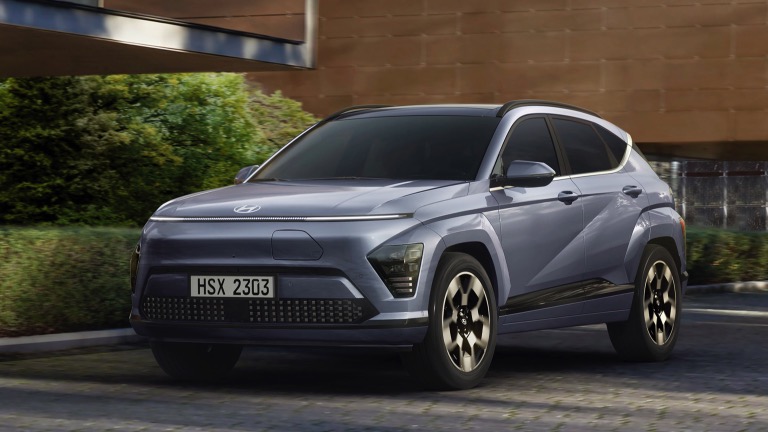
While both are sleek EVs with efficiency in mind, their designs cater to different tastes. The Hyundai Kona Electric 48 kWh looks to be more of a technically aggressive vehicle. Signature, continuous/Seamless horizon lamp (a thin LED line at the width of the panel of the front end) has pixelated designs to have a robotic, slightly cyberpunk style. This crisp, geometric language, combined with deep SUV-style body cladding, really resonates with those buyers who want a clean, contemporary, and technical look. It has a seasoned air that commands respect and that hints at a high level of know-how.
The BYD Dolphin has a gentler, more welcoming look. Its rounded forms, two-tone paints and marine-inspired motifs project youthfulness and positivity. The mentality is less about unhinged performance and more about clever, approachable city mobility. This makes it a compelling proposition for younger buyers or EV novices in general, who may find its lively personality and rather unconventional styling attractive. So the competition between these two models is now about more than price and range; it’s a battle for the soul of the new consumer, which sees Hyundai’s refined, tech-laden progression take on BYD’s bold, approachable revolution. There are two potent, if conflicting , visions of what people might drive for affordable electric motoring in the future.
- Aerodynamics: Sharp creases, active grille shutters and other design elements on the Kona Electric not only provide a sporty look but also enhance range by improving aerodynamics, which is something that customers excited about performance and efficiency will appreciate.
- Young and Playful: The “Ocean Aesthetics” of the Dolphin results in a welcoming and friendly vehicle that brings life to city driving and makes it more fun.
- Distinct Buyer Appeal: The Kona’s sleek, tech-savvy styling appeals to older buyers looking for a modern SUV, while the Dolphin’s upbeat aesthetic means it’s aimed at younger drivers looking for a car with personality.
- A Clash of Ideology: These two vehicles go head-to-head by proposing different responses to the same challenge, compelling buyers to opt either for Hyundai’s polished mechanics or BYD’s groundbreaking, space-saving chassis.
Decoding the Lineup: Variants and Trims
Selecting the right EV is often a matter of wading through the different versions, or trims, to see where you get the best mix of features, performance, and price. Hyundai and BYD have completely different model structures within their lineups, which reflect varying priorities of buyers in different target market segments. Probably the most important thing to know about the Hyundai Kona Electric 48 kWh versions and BYD Dolphin trims is to select the best value for your needs. Hyundai takes a more conventional approach with clear-cut trim levels, whereas BYD adopts a far less complicated structure that links features to battery and motor specs.
The 48 kWh battery pack is the standard range option for the Hyundai Kona Electric and is generally offered in one or two base trim levels that maximise value. As these trims are titled Advance or similar in other markets, they come with a lot of equipment from the start, with bundled comfort and essential technology. The Kona’s selling point is its extensive standard feature list, which includes sophisticated safety features and upscale amenities such as the two-screen cockpit, even in the base trim. Optional packages tend to be lean, with anything from a heat pump to improve cold-weather efficiency to some styling bits. BYD adopts a more simplified attitude with the Dolphin. The variants come with simple titles like Active, Boost, Comfort, and Design, and there is a real value addition in each step up in terms of performance, range or equipment. The base Active grade offers a relatively affordable way to get into electric vehicle (EV) ownership, with higher grades boasting more powerful motors, bigger batteries and such niceties as a panoramic sunroof and upgraded V2L (Vehicle-to-Load) capabilities. This arrangement also helps potential customers understand exactly what they’re going to get for the price, making the Dolphin a well-suited budget-conscious option.
Trim Comparison: Hyundai Kona Electric vs. BYD Dolphin
|
Feature Category |
Hyundai Kona Electric 48 kWh (Advance Trim) |
BYD Dolphin (Comfort/Design Trims) |
Value Proposition |
|
Powertrain |
48 kWh battery with a 114 kW (156 hp) motor. Front-wheel drive. |
44.9 kWh or 60.4 kWh ‘Blade Battery’ with motors ranging from 70 kW (94 hp) to 150 kW (201 hp). |
Hyundai offers a balanced, efficient powertrain as standard. BYD provides more choice, allowing buyers to prioritise either affordability (smaller motor) or performance (larger motor). |
|
Key Standard Features |
12.3-inch digital cluster & 12.3-inch touchscreen, V2L adapter, advanced driver-assistance, LED lighting, heat pump. |
12.8-inch rotating touchscreen, V2L capability, vegan leather interior, keyless entry, and comprehensive app connectivity. |
The Kona comes exceptionally well-equipped from the base model up, feeling premium. The Dolphin focuses on standout tech features like its large rotating screen and advanced battery safety. |
|
Notable Upgrades |
Higher trims (with a larger battery) add features like a head-up display, premium sound system, and full leather seats. |
The ‘Design’ trim adds a panoramic sunroof, two-tone paint, wireless phone charging, and upgraded lighting. |
Upgrades for the Kona are tied to the longer-range model, pushing it into a higher price bracket. BYD’s upgrades are more accessible and focused on enhancing style and convenience within the same model family. |
|
Pricing Strategy |
Positioned as a premium entry, it justifies its cost with high build quality, extensive features, and brand reputation. |
Aggressively priced to undercut competitors, offering a high feature-per-dollar ratio, especially in mid-to-high trims. |
Kona appeals to buyers willing to pay a slight premium for a polished, all-around package. Dolphin attracts value-conscious buyers who want the most technology and range for their money. |
- All-Inclusive Standard Equipment: The Kona Electric 48 kWh has a high level of standard equipment, so the base car feels up-to-date and well-equipped without the need to shell out for optional extras.
- Flexibility and Expandability: BYD’s trim design caters to different needs, allowing car owners to have the ideal amount of range and power, and choose the best Dolphin that suits their budget and driving needs.
- Luxury vs. Value: Hyundai’s approach to luxury is to offer a premium and feature-laden experience right out of the gate, whereas BYD takes the approach of offering bang for the technological buck and top-notch performance at a very affordable price.
- Simplified Upgrades: The Dolphin’s highest ‘Design’ variant includes enticing cosmetic and convenience enhancements such as a panoramic roof, bringing luxury touches to the range in a more reachable, if not easy, price point than many competitors.
Hyundai Kona Electric 48 kWh vs BYD Dolphin Spec Sheet Appendix
When it comes to the choice for the best electric car, it all boils down to the numbers. We appreciate that design and comfort are subjective, but specs bring the objective clarity needed to build a picture of how a vehicle will fit into your life. In order for you to take the right decision, here we have brought out a detailed comparison between the Hyundai Kona Electric 48 kWh vs BYD Dolphin specs.
BACKGROUND: This appendix describes the software of these two popular models. BYD Dolphin 44.9 kWh vs Kona 39 kWh. For the 44.9 kWh battery version of the BYD Dolphin (which is dubbed the “Active” or “Boost,” the name varies per market, in a few markets it is the “active”, in some the “boost”, the name changes), as the most direct technical rival to the standard range Kona.
Technical Comparison Table
|
Specification Category |
Hyundai Kona Electric (Standard Range) |
BYD Dolphin (Active / Boost) |
|
Battery Capacity (Nominal) |
48.4 kWh |
44.9 kWh |
|
Battery Technology |
Lithium-ion Polymer |
BYD Blade Battery (LFP) |
|
Drivetrain Layout |
Front-Wheel Drive (FWD) |
Front-Wheel Drive (FWD) |
|
Maximum Power Output |
114 kW (154 hp) |
70 kW (94 hp) – 130 kW (174 hp)* |
|
Maximum Torque |
255 Nm (188 lb-ft) |
180 Nm – 290 Nm* |
|
Acceleration (0-100 km/h) |
8.8 seconds |
12.3 sec (Active) / 7.5 sec (Boost) |
|
Top Speed |
162 km/h (100 mph) |
150 km/h (93 mph) – 160 km/h (99 mph) |
|
Range (WLTP Combined) |
Up to 377 km (234 miles) |
340 km (211 miles) – 310 km (192 miles) |
|
Efficiency (est.) |
14.6 kWh / 100 km |
15.2 kWh / 100 km |
|
Max DC Charging Speed |
74 kW |
60 kW |
|
DC Charging Time (10-80%) |
Approx. 41 minutes |
Approx. 28 minutes (due to smaller battery) |
|
AC Charging (On-board) |
11 kW |
7 kW (Active) / 11 kW (Boost) |
|
Vehicle Length |
4,355 mm |
4,290 mm |
|
Vehicle Width (excl. mirrors) |
1,825 mm |
1,770 mm |
|
Vehicle Height |
1,575 mm |
1,570 mm |
|
Wheelbase |
2,660 mm |
2,700 mm |
|
Cargo Capacity (Seats Up) |
466 Liters |
345 Liters |
|
Cargo Capacity (Seats Down) |
1,300 Liters |
1,310 Liters |
|
Frunk (Front Trunk) |
27 Liters |
None |
*Note: The BYD Dolphin 44.9 kWh model is available with two different motor outputs depending on the specific trim level chosen (Active vs. Boost).
Important Note: Please be aware that these figures are manufacturer-quoted and may vary depending on the specific market region, model year updates, and tyre configurations. Real-world range and charging times can be influenced by driving style, weather conditions, and electrical load. We recommend verifying specific local trim details with your dealership.
Key Takeaways
- Power and Choice: With the Hyundai Kona Electric 48 kWh specs, the standard output is well-rounded, and the BYD Dolphin delivers multiple power outputs, even with the smaller battery, allowing you to choose between efficiency or acceleration options.
- Charging Dynamics: The Kona does have a marginally higher peak DC charging power limit, but the Dolphin’s smaller battery means that the charging times are very competitive.
- Space Utilisation: The Kona has substantially more boot space with the seats in place, so it’s better for grocery runs, while the Dolphin’s longer wheelbase provides more interior passenger room.
- Efficiency: They’re both very efficient, but the Kona just beats the Dolphin on WLTP range estimates, extracting more miles from a similarly sized battery pack.
Hyundai Kona Electric 48 kWh vs BYD Dolphin Performance & Driving Experience
It’s when you look at the EV as a daily driver rather than just a car on a spec sheet that the conversation really starts to shift. In this chapter, we go in-depth on the performance of the Hyundai Kona Electric 48 kWh and compare it to that of the BYD Dolphin. Both vehicles are aimed at the budget-friendly EV market, but they differ in how they handle power delivery and comfort of ride, representing two distinct personalities: one refined and controlled, the other nimble and enthusiastic.
Power Delivery and Motor Specifications
Beneath the bodywork, which is intent on mimicking the form of a 4-door hatchback, the two adopters retain a front-wheel-drive system, which is standard practice for this segment, as it provides a sweet balance between efficiency and grip.
The Hyundai Kona Electric (Standard Range) is equipped with a permanent magnet synchronous motor with 114 kW (154 hp) and 255 Nm (188 lb-ft) of torque. This powertrain is just tuned better for quietude, rather like running water than absurd aggression in Hyundai’s opinion. The single-speed guide makes for smooth acceleration, thus making city travel easier. It doesn’t slam you back into your seat in the way a high-performance sports car does, but you do get that immediate EV torque that makes passing and getting on the interstate comfortable and effortless, especially after a significant driving break.
On the other side of the ring, the BYD Dolphin offers variety. For its entry-level variants (Active/Boot), the power of the motors ranges from 70 kW (94 hp) to 130 kW (174 hp) based on the specific market variant, with torque varying between 180 Nm and 290 Nm. The 130 kW model, often with the smaller battery in “Boost” trims, actually bests the Kona on sheer horsepower on paper, lending it a livelier feel right out of the gate. Like the Kona, it has a single-speed reduction gear transmission for smooth power delivery.
Acceleration and Top Speed
Rapid acceleration is two very different philosophies. The Kona Electric is the sensible one. It does the 0-100 km/h in 8.8 seconds. That’s so fast for a compact SUV and more than enough in daily situations. The power is controlled and predictable, not overwhelming the front tyres. Its top speed is limited to 162 km/h (100 mph) to ensure stability at motorway speeds.
The BYD Dolphin’s power output is highly dependent on the trim. The less powerful 70 kW unit is unhurried, needing more than 12 seconds to get to 100 km/h. The 130 kW option is, however, surprisingly sporty, completing the sprint in merely 7.5 seconds. This adds to the energetic flair of the Dolphin in the popular “races” at urban traffic lights. Its top speed is 150-160 km/h, depending on which variant you are looking at and is good enough for legal cruising speed, but a little lower than Kona’s max.
Behind the Wheel: Comfort and Handling
Hyundai Kona Electric: The Mature Cruiser
Driving the Kona Electric is surprisingly mature. Hyundai’s suspension tuning, which uses a MacPherson strut front and a multi-link (in most markets) rear setup, irons out road imperfections with a refinement normally associated with bigger cars. It is compliant, settling over bumps without any sense of float.
The steering is accurate and light; its priority is ease of use rather than being sporty. It’s a car that feels solid and planted. Road noise is minimal in the cabin, and the overall result is an unusually hushed driving experience. Several driving modes-Eco, Normal, Sport and Snow-are also provided to customise the throttle response and level of regeneration. The “i-Pedal” mode, which enables single-pedal driving, is a feature that makes city traffic a lot less tiring.
BYD Dolphin: The Agile City Slicker
Agility also defines the BYD Dolphin driving feel. Being lighter and placed on a dedicated EV platform with a shorter wheelbase than a handful of competitors, it handles well around tight bends. The steering is light, perhaps a little too light for enthusiasts, but ideal for weaving through busy city streets and parking garages.
But the suspension is much softer. This results in a comfortable ride on gentle ripples, but this can also lead to a bit of body roll when you take the curves too quickly. It doesn’t have the grounded, heavy-new-car feel of the Kona, but more like a regular hatchback. Driving modes are usually Eco, Normal and Sport, while the gap between them is not as much as in the Hyundai. Regenerative braking can be adjusted, but it does not have the aggressive amount of one-pedal braking seen in the Kona.
Performance & Driving Experience Comparison
To visualise the differences, here is a direct comparison of the key performance metrics and driving configurations.
|
Feature |
Hyundai Kona Electric (48 kWh) |
BYD Dolphin (Boost / Design*) |
|
Electric Motor Setup |
Single Motor (Front) |
Single Motor (Front) |
|
Max Power Output |
114 kW (154 hp) |
130 kW (174 hp) / 150 kW (201 hp) |
|
Max Torque |
255 Nm |
290 Nm / 310 Nm |
|
0–100 km/h (0-62 mph) |
8.8 seconds |
7.5 seconds / 7.0 seconds |
|
Top Speed |
162 km/h |
160 km/h |
|
Suspension (Rear) |
Multi-link (Market dependent) |
Torsion Beam (Entry) / Multi-link (High spec) |
|
Driving Modes |
Eco, Normal, Sport, Snow |
Eco, Normal, Sport |
|
Regenerative Braking |
Paddle shifters (Levels 0-3 + i-Pedal) |
Menu selectable (Standard/High) |
*Note: Performance specs for the Dolphin vary widely by trim. We have compared the higher-output versions here as they represent the performance ceiling of the model.
Key Takeaways
- Refined vs. Spirited: The Hyundai Kona Electric 48 kWh is powertrain-tuned for a smooth, refined, and quiet ride, and that makes it a great highway companion. The BYD Dolphin is sharper and livelier, particularly in the higher output variants, perfect for zipping through city traffic.
- Handling Dynamics: Hyundai has a more balanced feel, making you feel stable when you turn. The Dolphin focuses on softness and comfort, which is excellent for city bumps but also means more body roll on twisty roads.
- Braking Control: The Kona takes the crown when it comes to driver enjoyment, thanks to its paddle-activated regenerative braking, giving you genuine one-pedal driving. The Dolphin’s regeneration is not only less complex but also harder to adapt while on the run.
- Acceleration: The BYD Dolphin (in Boost/Design trim) offers better acceleration numbers, beating the Kona to 100 km/h by more than a second, for when traffic-light sprints are your thing.
Cabins Compared: Hyundai Kona Electric vs BYD Dolphin Interior, Comfort & Technology
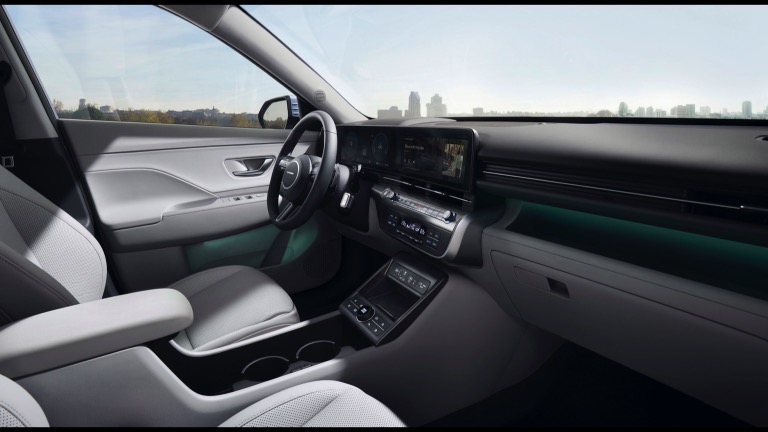
The two protagonists, the Hyundai Kona Electric and BYD Dolphin, are e-vehicles suitable for different needs and tastes, yet both beautifully demonstrate what tomorrow might feel like today. But the cabin is where you’ll be spending all your time. A car’s interior styling, the quality of its materials and how well it integrates technology can turn a mundane commute into a joy ride. So we will look through the Hyundai Kona Electric 48 kWh interior and innovative BYD Dolphin technology suite to analyse which one comes with the better in-car experience.
Hyundai Kona Electric: A Driver-Focused Digital Cockpit
Hyundai has treated the Kona Electric’s interior to a makeover that makes it feel more grown-up, sophisticated and surprisingly premium for its class. The design is driver-centric and appears futuristic while being automotive ergonomic. The highlight is a beautiful panoramic display, which combines a 12.3-inch digital instrument cluster and a 12.3-inch central infotainment touchscreen into one sleek panel. This “Connected Car Navigation Cockpit” generates a high-tech mood, but Hyundai smartly kept physical buttons and knobs for the most important functions, including climate and volume. This hybrid solution is brilliant because it allows the best of both worlds: a sleek and clean modern look while maintaining intuitive, eyes-off-the-road usability.
Material quality is one of the Kona’s better points. Yes, there are hard plastics; they’re textured nicely, and the critical touch points use soft-touch material and understated metallic touches. The gear selector, called the “shift-by-wire,” has been relocated to the steering column, opening up the centre console for a cavernous, adaptable storage space complete with retractable cup holders. This functional design increases space and utility. Comfort is excellent, and the well-supporting seats offer a good driving position. The cabin feels light and open, particularly in the front seats, providing a sense of looking out from a larger and more costly vehicle.
The Kona’s technology is extensive and well integrated. The infotainment system is responsive, with crisp graphics and menus that make sense. Apple CarPlay and Android Auto come as standard, so you can easily connect your smartphone. Hyundai’s SmartSense ADAS (advanced driver assistance systems) is comprehensive, with Highway Driving Assist, Blind-Spot Collision-Avoidance Assist and Smart Cruise Control with Stop & Go. Among the other innovations is the Vehicle-to-Load (V2L) feature, which enables you to use the car’s battery to power your laptop or camping equipment – making the Kona a mobile power source.
BYD Dolphin: A Playful, Tech-Forward Lounge
Design Ocean Aesthetics BYD Dolphin The interior of BYD Dolphin is refined by the “Ocean Aesthetics” design style. The interior is fun and minimal, and the focus on tech is unapologetic. Lines ripple on the surfaces, air vents are round and inspired by water vortices, and door handles look like dolphin flippers. The interior of the car has a youthful spirit thanks to the use of sustainable vegan leather and colourful accents, which contrasts with more traditional competitors. It is less like your traditional car cabin and more like a modern mobile living environment.
The BYD Dolphin technology extravaganza takes a Quantum leap forward with the rotating 12.8-inch central touchscreen. At the push of a finger, it rotates at a side-to-side, landscape-to-portrait position, so you can adjust the display to your needs, whether you use the device for navigation (portrait) or media (landscape). This is an absolute showstopper, and it’s a feature that buyers who know their tech will love. The OS is quick and tablet-like, and it features a highly customizable home screen and excellent voice control functionality.
Because of the purpose-built e-Platform 3.0, the Dolphin is ingeniously spacious inside. The extended wheelbase and flat floor result in an impressive amount of space for passengers, especially for those seated at the back, comparable to vehicles from the class above. There are plenty of storage options, including a big open space under the centre console bridge. The general build quality may not feel quite as luxurious as the Kona’s, but the emphasis is on durability and sustainability. The ADAS package is just as well-rounded, with the same features as the adaptive cruise control and lane-keeping assist package, so it fares well in the safety tech department.
- Ergonomic versus Techs-show: The Kona interior is designed around driver-centric ergonomics with a combination of screens and physical buttons that’s simple to use on the road. The Dolphin indulges in pure tech with its enormous rotating screen, targeting users who want their car to double as a smartphone on wheels.
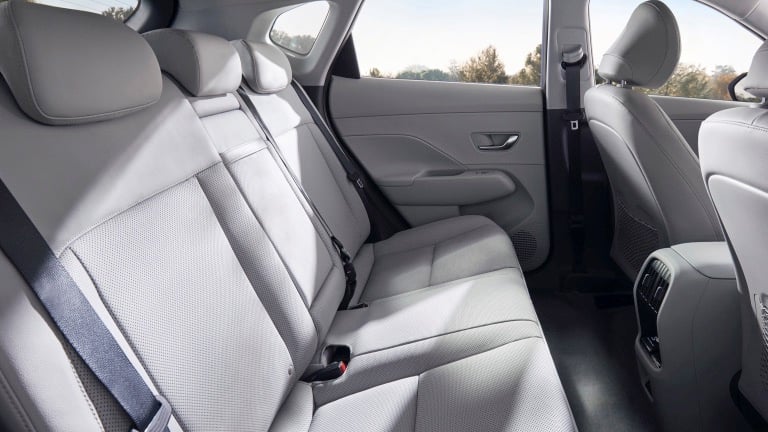
- Perceived Quality and Space: The driving position in the Hyundai Kona is more commanding, and all of the materials are superior, making it feel more premium. The BYD is playing its EV-native platform for the availability of excellent passenger room, particularly for rear passengers.
- Functional Innovation: The Kona’s column-mounted shifter and deep and adaptable centre console ensure ample sensible storage for day-to-day items.
- Smart Connectivity: They both have strong ADAS and connectivity, but the Kona’s V2L adds a practical dimension for powering external devices, and the Dolphin’s rotating screen delivers the ultimate media and navigation flexibility.
Hyundai Kona Electric 48 kWh and BYD Dolphin Design & Exterior
The exterior design of a vehicle is its first handshake-a visual invitation to what the space inside is like. Comparing the Hyundai Kona Electric 48 kWh vs BYD Dolphin exterior, it’s clear we have two very capable automakers, each taking a radically different approach to what comes next for electric mobility. Both cars are based on advanced, EV-tailored platforms that provide design flexibility, but each has resulted in a very different, striking look. Here, we look at the styling, architecture, and detailing that set these two show cars apart.
Architectural and Styling Philosophies
The Hyundai Kona Electric is based on the brand’s multi-powertrain K3 platform but has been extensively re-engineered for an EV-first purpose. This way, Hyundai could use manufacturing efficiencies while producing a design that is very futuristic. The angular and technical styling, which is what Hyundai calls its “EV-derived” design. This is most evident in the now-iconic Seamless Horizon Lamp, a single thin pixelated light bar that runs from left to right on the top of the vehicle’s nose. This, coupled with sharp diagonal character lines and parametric surfacing on the flanks, gives the Kona a kinetic and robotic look. The rugged black wheel arch cladding ties it back to its SUV heritage, adding a little toughness and an assurance of all-terrain ability.
Meanwhile, the BYD Dolphin is a complete manifestation of its dedicated EV chassis, the e-Platform 3.0. This “clean sheet” design direction, part of the brand’s “Ocean Aesthetics” design language, allows for a very long wheelbase in relation to the overall length of the car. The outcome is a riding profile with very short rear and front overhangs that optimise interior space and give the Dolphin a distinctive look that puts wheels to all four corners. The outer design is smooth and natural, reflecting the elegant gestures of the animal that lends this model its name - the jaguar. Gentle curves, soft lines, and an affable “face” establish a lehenik friendliness and joviality in the character. It has none of that scowling menace of your typical off-road beast, but it actually has a little bit of cheeky grin in its sleek and clean lines, as if to say, “Don’t take me too seriously.”
Exterior Details: Lighting, Colours, and Aerodynamics
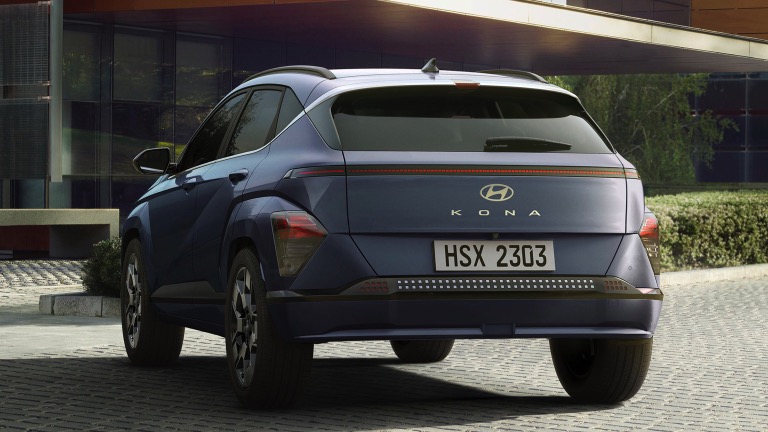
It’s in the details where the character of these vehicles really comes to life. The Kona Electric’s lighting is a highlight, thanks to its pixelated graphic pattern that wraps around from the front light bar to the rear taillights. This produces a balanced and symmetrical high-tech signature that can be easily identified both during the day and at night. Aerodynamics are ingeniously incorporated into the design (the sides include active air vents that open/close on command for better aerodynamics and cooling flow) and a sculpted rear spoiler that contributes to an incredible Df value, helping to increase efficiency. Colour combinations Skoda often includes in its recommendations for the Kona are composed of elegant neutrals and eye-catching bright colours that complement the futuristic theme very well.
BYD Dolphin’s exterior design features are just as conscious. Its LED lights bear a distinct marine-inspired signature, with the rear lights running in a single, unbroken line that’s designed to represent a dolphin jumping over the sea. The model’s cheeky character is enhanced thanks to its optional two-tone paint finishes, which allow customers to pair a lively body shade with two different roof colours. These are just a few examples of more lively combinations that help to rev up the youthful appeal. The car’s hard-edged, angular surfaces and the relatively low roofline for a hatchback are what control the aerodynamics, so it punches through the air with ease. Exterior accents like the C-pillar’s wave motif and flipper-shaped door handles reaffirm the marine theme.
Exterior Design and Feature Comparison
|
Feature |
Hyundai Kona Electric 48 kWh |
BYD Dolphin |
|
Styling Language |
“EV-derived” futuristic design; angular and technical. |
“Ocean Aesthetics”: fluid, organic, and playful. |
|
Architecture |
K3 platform (optimised for EV); multi-powertrain compatible. |
E-Platform 3.0; dedicated EV-native architecture. |
|
Lighting Signature |
Pixelated Seamless Horizon Lamp (front); Parametric Pixel lights (rear). |
Full-width LED front light bar; continuous “leaping dolphin” rear light. |
|
Aerodynamics |
Active air flaps, sculpted spoiler, optimised wheel designs. |
Smooth body surfacing, aerodynamic roofline, integrated rear spoiler. |
|
Body Detailing |
Rugged SUV cladding, sharp diagonal character lines, parametric surfaces. |
Fin-shaped door handles, water-ripple C-pillar graphic, short overhangs. |
|
Available Colors |
Mix of bold, futuristic hues and sophisticated neutrals. |
Often available in vibrant single colours and contrasting two-tone schemes. |
- Futuristic vs. Playful Aesthetics: The Kona’s sharp, pixelated design offers a vision of a high-tech, robotic future, giving you a car that looks sophisticated and modern. The Dolphin’s soft, oceanic curves provide a fun and friendly appearance, making every drive feel cheerful and lighthearted.
- Architectural Advantages: Built on a dedicated EV platform, the Dolphin provides exceptional interior space within a compact footprint. The Kona’s versatile architecture allows for a more traditional SUV stance with practical, rugged styling cues.
- Distinctive Lighting: The Kona’s pixelated light bars create an unmistakable and technical signature, enhancing visibility and style. The Dolphin’s continuous, flowing light signatures reinforce its unique, marine-inspired theme.
- Aero-Efficiency by Design: Both cars use smart aerodynamic features to maximise range. The Kona employs active aero tech for performance, while the Dolphin relies on its smooth, flowing shape to reduce drag efficiently.
Safety & Reliability: Peace of Mind on the Road
Performance and design aside, the foundational promise of a vehicle is to get you and your passengers from point A to point B safely. With electric vehicles, that promise also applies to the very tech that powers them. Both Hyundai and BYD have adapted to this need and focused on producing safe and reliable cars. Here, you get an insight into the safety of the Hyundai Kona Electric 48 kWh and the reliability of the BYD Dolphin, and whether or not they can be relied on to give you confidence and peace of mind every time you step behind the wheel.
Structural Integrity and Foundational Safety
Hyundai has always been known for making hardy, safe vehicles, and the Kona Electric lives up to that. The high-strength steel body of the car is rigid but designed to absorb and dissipate the energy of the impact in a crash to protect the occupants. Safety is broadly standard, with airbags (front, side, and curtain); active anti-lock brakes (ABS); and electronic stability control. This root approach guarantees a strong passive safety.
The BYD Dolphin rides on the company’s e-Platform 3.0 that weds the battery and vehicle structure. This “cell-to-body” process has the added benefits of greater space and efficiency as well as enhanced structural rigidity. One of the best Dolphin’s selling points in terms of safety is its exclusive Blade Battery. This LFP (Lithium Iron Phosphate) battery has been put to extreme test, including a test with nails, and yet it didn’t produce smoke or fire. And this innate stability translates to a level of confidence that completely addresses a big worry for a lot of first-time EV buyers.
Advanced Driver-Assistance Systems (ADAS)
Today’s safety is as much crash avoidance as crash protection. The Kona Electric is also equipped with the brand’s advanced active safety system, the SmartSense package. Even in standard range varieties, it typically comes with Forward Collision-Avoidance Assist, Lane Keeping Assist, and Driver Attention Warning. Higher-end models or optional packages may include such high-tech features as Highway Driving Assist, which comes on the heels of Tesla’s lead in introducing semi-autonomous driving on highways through adaptive cruise control and lane centring, as well as Blind-Spot Collision-Avoidance Assist, which can take evasive action to prevent a hazardous lane change.
The BYD Dolphin also has an all-around intelligent driving suite. It features core systems including automatic emergency braking, lane departure warning and adaptive cruise control. While the system may not be as seamless as Hyundai’s more mature Highway Driving Assist in some driving conditions, it is nonetheless extremely beneficial for daily driving. The 360 camera feature, even on more affordable trims, is a huge safety win for BYD, particularly for parking and low-speed manoeuvres in tight city spaces.
Reliability and Manufacturer Reputation
Hyundai has earned a worldwide reputation for reliability and stands behind it with one of the best warranty programs in the industry. The Kona Electric draws on decades of automotive experience and a large, well-established dealer and service network. This means owners can relax knowing that assistance and know-how are close at hand. The powertrain and battery systems have evolved through multiple generations of EVs, resulting in a strong, proven track record of reliability.
Still, BYD’s long-term reliability in many global markets is yet to be fully established as a consequence of being a recent entrant to many global markets, and that goes for the BYD Dolphin, too. But BYD, the world’s largest producer of plug-in vehicles, has broad experience in battery technology and electric powertrain engineering. The Blade Battery’s LFP chemistry lends durability and a long lifetime to the battery, as it loses less capacity over more cycles of charging compared to other kinds of batteries. The company’s vertical integration, which makes everything from the battery to the microchips, also gives it tight control over quality, a factor that can help boost confidence in its long-term reliability.
Safety & Reliability Highlights
- Enhanced Battery Safety: With BYD’s proprietary Blade Battery technology, the BYD Dolphin’s Blade Battery possesses exceptional thermal stability, which serves as a fundamental safety enhancement that lowers the risk of fire, even if damaged.
- Extensive ADAS Suite: The Hyundai Kona Electric’s SmartSense system delivers a refined, all-encompassing suite of active safety features, with sophisticated highway assistance making your driving less stressful.
- Established Manufacturer Track Record: Hyundai’s history of manufacturing dependable vehicles and its widespread service network also help reassure Kona owners.
- Structural and Passive Safety: Both vehicles use high-strength steel and intelligent engineering to create a rigid safety cell, but the proven Kona platform and the Dolphin’s integrated battery structure give two different patterns for occupant protection efficacy.
Market Standings: How They Compare
“It’s not so much a question anymore, that EV is really good and you should buy it, you should check out,” said Patrick. There are a lot of great cars you can get, and every one is some combination of stylish, high-tech and good value. To get a better idea of the Hyundai Kona Electric and BYD Dolphin’s position in the market, we also need to look at how they compare to the competition and other players in the budget EV space. This Hyundai Kona Electric 48 kWh vs Competitor review will analyse how these two models stack up in the market.
The space for affordable electric cars is a hotly contested battleground of established brands and new challengers, after all. Other significant contenders include the MG4 EV and the recently updated Peugeot e-208, in addition to our two main candidates. They all have something to offer, from rock bottom prices to unique European styling. Knowing this competitive terrain is important if you want to determine which car truly represents the best deal for your needs and your budget.
This head-to-head battle will be based on the five core considerations of today’s car-buying decision: cost, performance, range, design, and overall value. By comparing the specifications and ethos of these two cars, we will be able to ascertain the strengths of both models and the type of person that each caters to. Whether you’re after a premium feel, the latest technology or the longest range for your buck, this comparison should point you in the right direction.
Head-to-Head: Kona vs. Dolphin vs. The Rivals
|
Feature |
Hyundai Kona Electric (48 kWh) |
BYD Dolphin (44.9 kWh) |
MG4 EV (Standard Range) |
Peugeot e-208 |
|
Price |
Premium end of the segment; justified by features and brand reputation. |
Aggressively priced to undercut rivals, offering high-tech features for less. |
Value leader, often the most affordable entry point with strong specs. |
Mid-to-premium pricing, reflecting its stylish design and European brand cachet. |
|
Performance (0-100 km/h) |
Balanced (approx. 8.8s). Tuned for smooth, confident acceleration. |
Varies by trim (7.5s – 12.3s). Higher trims are surprisingly quick. |
Solid performance (approx. 7.7s). Offers a sporty, rear-wheel-drive feel. |
Respectable (approx. 8.1s). Feels nimble and responsive in city driving. |
|
Range (WLTP est.) |
Strong (up to 377 km). Excellent efficiency and thermal management. |
Good (up to 340 km). Blade Battery is known for longevity. |
Competitive (up to 350 km). A great balance of range and price. |
Good (up to 362 km). Benefits from recent efficiency improvements. |
|
Design |
Futuristic and technical SUV. Assertive, with unique pixelated lighting. |
Playful and organic hatchback. Friendly, with “Ocean Aesthetics.” |
Sharp and aggressive hatchback. A sporty look with angular lines. |
Chic and sophisticated supermini. Distinctive “claw” lighting and premium feel. |
|
Value |
High residual value, extensive standard features, and strong brand reliability. |
Unbeatable tech for the price. The rotating screen and Blade Battery are key draws. |
The ultimate budget champion. Offers RWD dynamics and a good range at a low cost. |
High style and brand appeal. Feels like a premium product in a small package. |
Which Buyer Does Each Car Suit Best?
After analysing the specifications, it becomes clear that each of these vehicles is tailored for a different type of buyer.
- The Hyundai Kona Electric is aimed at the buyer who demands a refined, comprehensive package and is willing to pay a small premium for it. This driver seeks a mature, comfortable ride, good quality interior, and the comfort of a well-known marque with generous warranty coverage. It’s the secure, prudent pick for the person who wants a compact SUV with a wealth of features and no trade-offs.
- The BYD Dolphin is the ultimate solution for the tech-savvy, value-focused buyer. This buyer is attracted to innovations like the rotating screen and the safety of the Blade Battery. They are shopping for a more modern feeling car that is spacious and fun to drive in the city. With a slightly lower price tag and almost the same number of features, the Dolphin makes for a very attractive choice for movers on a budget.
- The MG4 EV is for the no-nonsense driver who wants to get the most value for money. Its rear-wheel-drive configuration results in a more engaging driving experience than its competitors, and its prices are often the most aggressive in the segment. It’s the pick for a performance and range focus knuckle-dragger on a budget.
- The Peugeot e-208 is designed for the style-conscious city dweller. This shopper is more concerned with looks and feeling high-end. Its stylish French design, both inside and out, distinguishes the e-208. It’s more of a statement car that happens to have a little more room or be a little more affordable, and makes you feel good when you drive it.
- A Market Divided by Priorities: The comparison does have a clear dichotomy with Hyundai representing premium, BYD representing tech value, MG representing budget performance and Peugeot representing style.
- The Value Equation: While the MG4 is often the most affordable, the BYD Dolphin is providing stellar tech value, and the Kona is worth the money for a more premium experience and better resale values.
- Design Is a Make or Break: Borrowing the Kona’s space-age SUV vibes to the Peugeot’s stylish supermini, this section offers executives style that’s tailored for all tastes.
- Performance Doesn’t Just Mean Speed: Smooth power from the Kona, zippy acceleration in higher trims for the Dolphin, and an engaging rear-wheel-drive feel from the MG4 show that performance can be interpreted in different ways.
Why Choose the Hyundai Kona Electric 48 kWh or BYD Dolphin?
The choice between two best-in-class electric cars usually comes down to which one better suits your personal needs and lifestyle. The Hyundai Kona Electric and the BYD Dolphin both have proven themselves as great options at the top of the market, but with very different experiences of ownership. Choosing one model over the other isn’t about choosing a “better” car; it’s about the “best” car for your needs. This gives you a very good idea of what makes each be best-in-class and who each of these cars is most suited to.
The Hyundai Kona Electric 48 kWh is a proof-of-concept vehicle that embodies much of what makes Hyundai trustworthy: polished, dependable, and well-equipped cars. It is the refined version of the electric compact SUV for those who want a feeling of completion. Meanwhile, the BYD Dolphin signals a disruptive innovation that realigns the brand’s promise to democratise the best EV technology to the world. It’s a big statement on value, space, and a digitally integrated future. Here we consider the essence of those strengths to help you find your perfect match.
Why Choose the Hyundai Kona Electric 48 kWh?
The Kona Electric is the car for the driver who appreciates the undisputed glory of a well-rounded vehicle that exudes confidence from the moment you get in. It’s perfectly tailored to those upgrading from a luxury ICE car, as it has the familiar quality and intuitive ergonomics of a premium vehicle, and it’s as silent and serene as they come. One of the best Kona Electric 48 kWh advantages is without a doubt the way it can be used in everyday life, a long daily commute or weekend chores. Its spacious boot and practical SUV shape also make it ideal for couples or small families who enjoy an active lifestyle and want to take along extra equipment.
Hyundai’s approach with the Kona Electric is simple: corner the mainstream market with a premium experience, without the premium price tag. In addition, the car features a number of technology and safety features from Hyundai’s pricier models, making it a high-value, reliable choice. It’s designed for the shopper who values a solid track record, a strong dealer network, and the likelihood of good resale value.
Pros of the Hyundai Kona Electric
- A Refined and Poised Ride: In terms of ride quality, the Kona Electric delivers a solid and comfortable ride that seems to soak up road imperfections and makes an effort to minimise road noise, making it a great pick if you plan to be on the road for extended periods.
- Premium Interior and Ergonomics: Its driver-centric cockpit with high-quality materials and an intelligent mix of physical buttons and a couple of large digital screens creates a comfortable and user-friendly driving environment.
- Practicality and Versatility: The Kona Electric also doubles as a practical day-to-day companion , whether you’re doing the groceries or packing up for a weekend away, thanks to a capacious 466-litre boot and, for added convenience, a 27-litre frunk.
Why Choose the BYD Dolphin?
The BYD Dolphin is tailored for today’s tech-savvy city dweller who seeks innovation, value, and space within. It’s the ideal car for city driving because its size and cornering ability simplify the process of weaving through traffic and parking between buildings. A dedicated EV platform also means one highlight of the BYD Dolphin is how exceptionally roomy it is inside. This is why it should be your go-to vehicle if you often take passengers for a ride, really, the amount of leg room in the back seat can rival that of cars two sizes up.
The BYD approach is one of frantic disruption of the status quo. The brand uses its vertical integration and world-leading battery technology to provide features and performance that challenge the establishment, and do so at a very competitive price point. The Dolphin is for the customer who wants their car to be an extension of their digital life, bringing that emphasis to the screen that spins around a large rotating touchscreen and smart connectivity. The natural protection and durability of the Blade Battery impart an unparalleled sense of security, fulfilling a distinct need for practical consumers who think ahead.
Pros of the BYD Dolphin
- Unparalleled Interior Space: Thanks to its EV-native platform, the Dolphin delivers an extremely bright and spacious cabin with a flat floor that allows for superior comfort for all passengers, particularly for those at the rear.
- Innovative value: The signature 12.8-inch rotating touchscreen and advanced Blade Battery technology provide a futuristic experience and essential safety edge that is unmatched at its price point.
- Nimble and Fun Urban Driving: The Dolphin’s light steering and zippy acceleration (in higher trims) make it a blast and easy to drive on city streets, transforming everyday commutes into fun outings.
- Refined All-rounder vs Tech Value Champion: The Kona Electric is for those who want a more refined, well-rounded, reliable experience, ideal for both city and long-distance commutes.
- City Agility vs Highway Comfort: As a city car, the Dolphin excels with good space and its light and agile body, but best on motorways are without doubt the Kona, whose settled ride and superb noise isolation make it the most comfortable at high speed.
- Lifestyle Match: The Kona’s SUV practicality makes it a good choice for active singles and small families, while the Dolphin’s roomy cabin and tech-centric amenities cater to city dwellers and social commuters.
- Strong Market Placement: Hyundai solidifies its brand reputation with a premium-feeling, reliable model, while BYD shakes the market with innovative tech space and pricing that is within reach.
Choosing Your Ideal EV: Kona Electric vs Dolphin
Comparing affordable electric cars can be daunting, but a comprehensive Hyundai Kona Electric 48 kWh vs BYD Dolphin comparison makes your choice easier. We have nothing but praise for the Jetta in terms of design, performance, technology, and value, but it’s clear there’s no single “best” car; we all have different needs. Both vehicles are the ultimate expression of their respective brand philosophies and provide compelling options in this highly competitive segment. What it comes down to is what you want to prioritise in your daily driver.
The Hyundai Kona Electric 48 kWh VS BYD Dolphin duel represents an interesting turn of events. The 2020 Hyundai Tucson is a polished, competent compact SUV that feels upmarket from front to back. It’s been fine-tuned from years of car-making, ideal for the electric age. Yet BYD also brings a groundbreaking, high-energy hatchback whose industry-leading battery technology and innovative packaging deliver world-beating space and tech-centric features at a truly disruptive price. This Affordable EV Comparison features two great options, each geared to a different type of driver.
If a great all-rounder that offers a quiet and comfortable ride with a feeling of safety is what you need, the Hyundai Kona Electric is one to consider. Its strengths are its excellent ride comfort, upscale interior, and the easy integration of physical controls and digital screens. It’s as if you’ve just stepped up to the next class of vehicle, really, with the quiet, smooth ride being equally impressive on city streets as it is on long motorway runs. The practical SUV design, with its sizable boot plus an extra frunk, proves to be a flexible partner for small families or do-it-all types. Opting for the Kona entails paying for proven reliability, a powerful brand, and a refined product that will likely hold its value well.
For the driver interested in innovation, value and intelligent design, the BYD Dolphin comes close to being an unbeatable offer. It is a vehicle that speaks.” The bright, airy interior and outstanding rear legroom make it much more practical than its small size on the outside would lead you to believe, ideal for anyone who often has passengers on the road. The Dolphin’s most visible features, the rotating central screen and the ultra-safe Blade Batter, are more than just gimmicks; they’re truly meaningful innovations that improve the ownership experience. Its zippy acceleration and nimble handling also make it fun to drive in the city. Opting for the Dolphin is a vote for the future, and you will get an astonishing amount of technology and room for your money.
In the end, both cars are great options. Hyundai’s Kona Electric is the classy all-rounder, offering a premium level of refinement that makes you feel at ease. The BYD Dolphin is the pragmatic disruptor, restyling a fun, spacious and tech-packed EV package that redefines what buyers can expect for their money. We suggest driving them both to see which personality better suits yours.
- For The Discerning Driver: Go with the Hyundai Kona Electric if you want a more upscale experience, a smooth and quiet ride, and the assurance of a well-established brand known for reliability.
- For The Tech-Savvy Urbanite: Get the BYD Dolphin if you love cutting-edge technology and want to maximise the passenger interior space in an enjoyable, sprightly city car, while keeping the price tag low.
- A Clash of Cultures: Your choice is really between Hyundai’s refined interpretation of the traditional car and BYD’s revolutionary reinvention of e-mobility.
- Rightchoice: The Kona Electric and the Dolphin are both frontrunners in the affordable EV market, with different strengths to suit different drivers and priorities.
Take the Next Step: Experience the Future Today
Reading about specifications and design philosophies is a good first step, but nothing compares to the experience of actually sitting in the driver’s seat. Whether the sleek maturity of the Hyundai Kona Electric or the fresh dynamism of the BYD Dolphin appeals to you more, there is only one way to find out: take a test drive.
Come see these incredible vehicles for yourself. We invite you to come in and see them. Our EV experts are standing by to guide you through the features, answer any questions you might have about charging and range, and assist you in finding the model that best complements your lifestyle.
Ready to make the switch?
- Schedule Test Drive: Book Your Appointment. Feel the refined comfort on the road with the Hyundai Kona Electric.
- Discover Value: Browse through BYD Dolphin Offers and finance schemes that will make your switch to electric driving easy and cost-effective.
- Experts You Can Trust: Talk to our specialised consultants who can give you a tailored comparison based on your everyday driving requirements.
Don’t just dream about the future of driving-drive it. Call us to begin your electric journey. Visit The.Car now.