Megane E-Tech EV60 2025 vs. Tesla Model Y: EV Giants Clash
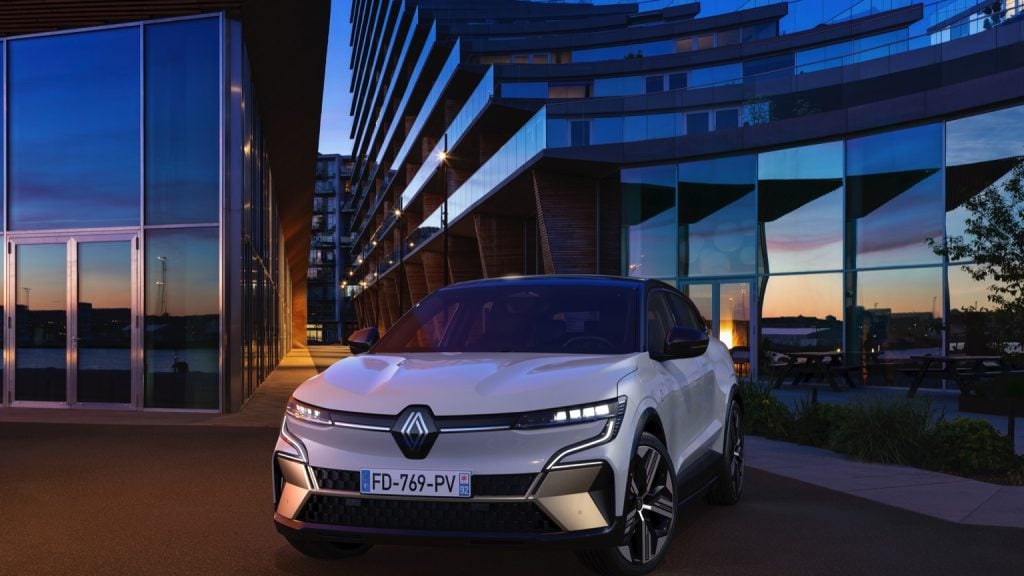
The information technology (IT) vehicle market is very competitive nowadays, yet two types have always caught buyers’ attention and were the most sold: Renault Megane E-Tech and Tesla Model Y. These are not just cars; they are two very different electric mobility worldviews. They differentiate themselves from the pack by providing such an extraordinary combination of range, performance and state-of-the-art technology that the entire industry feels the effect. This is a battle where we will go in-depth on what makes each car worth looking at.
Renault Megane E-Tech EV60 220hp 2025 Model EV
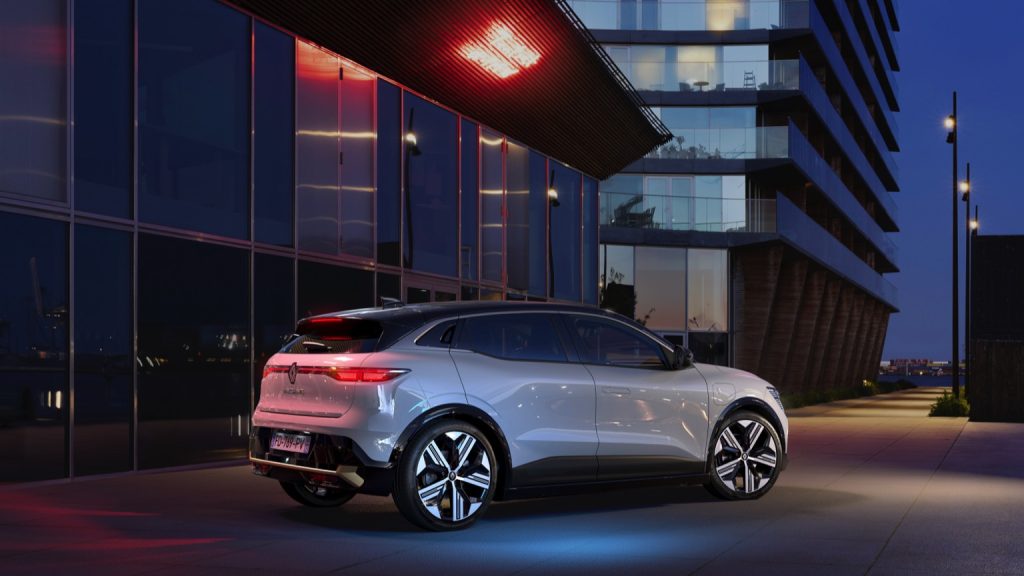
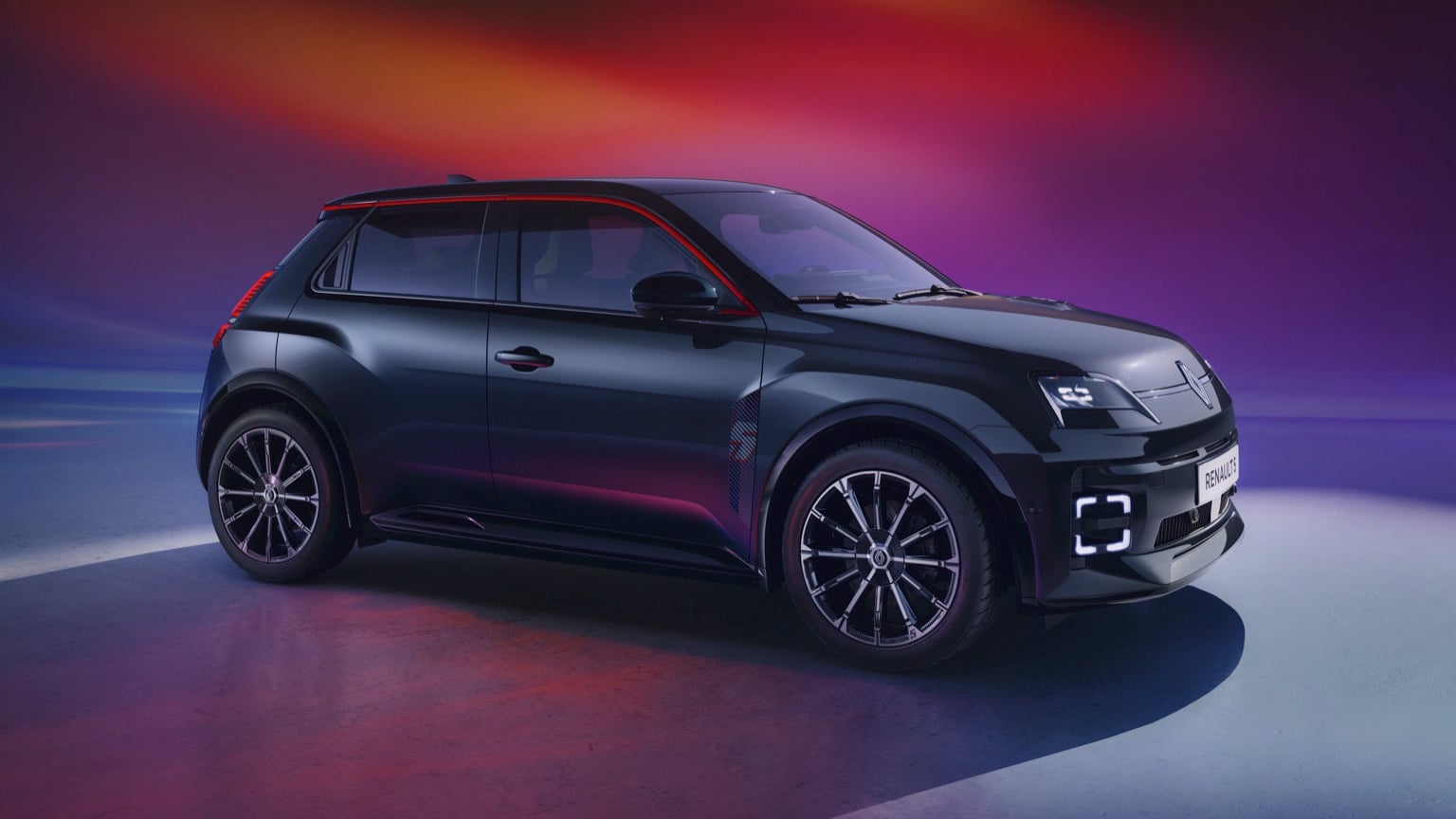
On the one hand, we have the 2025 Renault Megane E-Tech EV60 220hp, a car that fuses European design nuances and a tradition of automotive ingenuity. Introduced as an attractive and agile electric hatchback, the Megane E-Tech builds on decades of expertise to address the needs of contemporary motorists. It stands for Renault’s endeavour to provide state-of-the-art EV technology to all without sacrificing style and driving pleasure. Boasting a new design language, sensuous surfaces, driver-focused interior and many other new features, the Megane E-Tech ushers in a new era for the venerable French marque.
And then there is the Tesla Model Y, the powerhouse for the brand that led the mainstream EV revolution. The compact electric SUV has become the standard for what many expect from an electric vehicle: stark design, shocking acceleration, and an ecosystem that revolves around seamless technology. It taps into Tesla’s well-known long-range battery and vast charging network.
In brief: This article prepares the ground for an intriguing duel: the established innovator versus the disruptive giant. It is the saga of cost versus heritage, and radical innovation versus market dominance. Everything from design and performance to practicality, in a full Megane E-Tech EV60 220hp 2025 review, we’ll see it all.
Quick Recap: Megane E-Tech vs. Model Y at a Glance
Before delving into the in-depth review of this series of hatchback EV face-off, here is a brief intro of what the 2025 Renault Megane E-Tech EV60 and the Tesla Model Y offer. This is a summary snapshot of their main characteristics, from design ethos to performance credentials.
Renault Megane E-Tech EV60 220hp (2025)
- Maker: Renault
- Model Year: 2025
- Body Type: Small electric hatchback
- Trims/Variants: Based on the EV60 220hp powertrain, trims include Equilibre, Techno and Iconic with different feature sets.
- Interior & Exterior Designs: There’s Renault’s ‘sensual tech’ design with a premium driver-centric cockpit, OpenR Link connectivity offering a unique, flowing open plan solution for enhanced driver focus and an exterior that is unique and thoughtfully sculpted with a futuristic light signature.
- Performance and Driving Experience: The 220hp, instant torque, and nimble-handling car that finds the right balance between city streets and open highways delivers a spirited and captivating experience. The ride is tuned for comfort and dynamic responses.
- Powertrain Choices: A 60 kWh battery with a 220hp electric motor driving the front wheels.
- News & Features: Known for its ultra-slim battery pack design, Google-powered infotainment platform, and adoption of sustainable materials inside.
- Competition: It competes in style, driving dynamics and premium interior feel with players in the compact EV segment.
- Price Category: The vehicle is competing in the space for affordable luxury EVs and is a good value for its technology and design.
Tesla Model Y
- Manufacturer: Tesla
- Model Year: Model year 2025 represents the latest version of the model, which is updated on an ongoing basis.
- Body Type: Compact Electric SUV
- Trims/Variants Available: (RWD Standard Range) Long Range, Performance options are usually available.
- Interior and Exterior Styling: Minimalist, nearly button-free interior dominated by a large central touchscreen. The exterior is sleek and aerodynamic, in line with Tesla’s efficient-first mentality.
- Performance: The strong track record for straight-line brio in the Tesla range extends to this car in all trims. The Performance model offers supercar-like acceleration, one-pedal driving and a firm, sporty ride that defines the driving experience.
- Powertrain Options: RWD or Dual Motor AWD, with multiple battery options at different levels of range and performance.
- Innovations and Features: Stands out with its Autopilot driver-assistance system, massive Supercharger network, OTA updates, and tightly integrated tech ecosystem.
- Comparison: Best in class for range, charging options and 0-60mph performance in the electric SUV segment.
- Pricing: Usually falls at the higher end of the spectrum, but it’s justified by its bigger size, higher range options and performance.
Design Philosophy: Two Visions of the Electric Future
When you stack the Renault Megane E-Tech EV60 220hp vs the Tesla Model Y, you’re not just comparing two cars; you are actually comparing two completely different design and engineering philosophies on the road. Each has bespoke takes on what an electric car should be, creating two very different types of vehicles which are suited to different types of drivers. Their contrasting personas are a key reason they make for such a glorious rivalry in the electric arena.
“Sensual Tech” design philosophy in the Megane E-Tech: Renault’s design strategy with the Megane E-Tech embodies its “Sensual Tech” design philosophy. This philosophy fuses the brand’s historic automotive legacy with leading-edge technology. It’s built on the CMF-EV platform, a modular architecture purpose-built for electric vehicles that maximises interior passenger space despite a small footprint on the outside. Renault had claimed it was striving for the “perfect balance between beauty and driving pleasure and reward,” with the Megane E-Tech. The exterior is a combination of sculpted lines, a high waistline and a unique gold chrome detail that runs seamlessly into the C-pillar, culminating in a dynamic coupe-like look. This is about more than aesthetics; it’s about building an emotional connection with the driver through good design.
In stark contrast, Tesla engineering and design are based on a first-principles approach that focuses on efficiency, simplicity and ease of manufacturing. The Model Y shares a platform with the Model 3, which emphasises interior space and aerodynamic performance. Tesla’s motto is function before form. Smooth and virtually blind, designed to glide through the air with the least impedance possible to maximise range, the outside. The minimalism extends inside, where a single 15-inch touchscreen appears to operate almost every function of the car, resulting in a cabin that is either delightfully clean or painfully empty, depending on your point of view.
Megane E-Tech EV60 vs. Tesla Model Y: Design Similarities and Differences
Visually, the two vehicles don’t immediately look like they belong to the same family. The Megane E-Tech is a crisply detailed, highly sculpted hatchback with real character, while the Model Y is a rounded, slippery crossover SUV. That said, they’re both EV era vehicles after all, and do have a few basic similarities. Both have a small front overhang, which is an effect of having no large diesel engine. They also both have flush door handles and sleek, aerodynamic designs that help increase efficiency and range.
The contrasts, on the other hand, are quite rare. The design of the Megane E-Tech is more classic and closer to car enthusiast design. Its full-width LED light signature, honeycomb grille pattern and range of vibrant, deep paint colours are designed to appeal to those who want an expressive look. This sensibility is always popular among a wide audience, but appeals to a demographic that sees their car as an extension of who they are, ranging from younger buyers looking for a stylish, contemporary hatchback to senior drivers seeking a premium and thoughtfully architected product.
It is a different mindset that the Model Y’s styling caters to. Its stark minimalism and tech-centric identity lure buyers who are fans of the Silicon Valley ethos that prizes disruption and efficiency. The standardisation almost industrial design applied to cars may be more appealing for a younger, tech-savvy crowd that cares more about the ecosystem and performance metrics than automotive styling. It would rather be a piece of technology first and a car second. That philosophical divide explains why those two models go head-to-head so fiercely. Both are going after the same EV purchasers, but with diametrically opposed pitches: emotional design versus rational minimalism.
- Renault Megane E-Tech EV60 220hp: Highlights expressive “sensual tech” design, blending heritage with advanced EV architecture for a visually striking and inviting hatchback.
- Tesla Model Y: Focuses on efficiency and minimalism, delivering a functional yet understated design that maximises interior space and aerodynamic performance.
- Megane E-Tech: Sculpted lines and rich colour palette attract style-conscious buyers and those valuing personal expression.
- Model Y: Technology-oriented aesthetics and seamless integration appeal strongly to younger, tech-savvy drivers.
- Both models embrace streamlined body details and EV-focused features for improved efficiency and driving range.
- The design philosophies clearly distinguish the target audiences, with Renault offering emotional appeal and Tesla prioritising rational, technology-first choices.
Variants & Trims Breakdown: Finding the Right Fit for You
Ultimately, electric vehicle selection is about finding the right variants for your lifestyle and your budget. Renault and Tesla have obvious but very different philosophies in their model lineups. Renault embraces a traditional automotive structure with multiple trim levels with increasing levels of luxury, Tesla streamlines the process, having fewer variants defined mainly by powertrain and range. Here is a closer look at the Megane E-Tech EV60 220hp variants to compare them against the Tesla Model Y variants.
Understanding the Lineups
The Megane E-Tech EV60 220hp is the best choice of the range for the 2025 model year. The Megane E-Tech EV60 220hp is a perfect balance between performance and range. Renault generally designs its trims to provide a clear technology and comfort step-up. You begin with a nicely equipped base that has a focus on core technology, then move up through luxury tiers that add cutting-edge driver assists, high-end audio systems and unique design features such as gold chrome accents or larger wheels. The point here is customisation; you can usually pick a trim that sounds custom-tailored without shelling out for options you’re never going to use.
By comparison, the Tesla Model Y philosophy is minimalist. You’re basically selecting your number of batteries and motors. The “trims” are really just the Rear-Wheel Drive (RWD), Long Range All-Wheel Drive (AWD), and Performance AWD. Options that are optional on some European models – heated seats, a glass roof and the equivalent of rudimentary autopilot at no extra charge – are almost always standard on the Model Y. That “all-in strategy” makes the buying decision simpler, but it means that the starting price is higher and that there are fewer ways to tailor the car to a less expensive budget.
Trim Level Comparison Table
| Feature / Spec | Renault Megane E-Tech EV60 (Techno) | Renault Megane E-Tech EV60 (Iconic) | Tesla Model Y (RWD) | Tesla Model Y (Long Range AWD) |
|---|---|---|---|---|
| Approx. Price (GBP) | £39,000 | £41,000 | £44,000 | £52,000 |
| Powertrain | 220hp FWD | 220hp FWD | 295hp RWD | 514hp AWD |
| Range (WLTP) | ~280 miles | ~280 miles | ~283 miles | ~331 miles |
| Key Features | 20″ alloy wheels, Adaptive LED headlights, 12″ OpenR Link screen with Google built-in. | Harman Kardon sound, Around View 3D camera, Gold F1 blade design, Heat pump. | 15″ Touchscreen, Glass roof, Basic Autopilot, Heated front/rear seats. | Dual Motor AWD, Faster charging capacity, Premium audio, Fog lamps. |
| Value Proposition | High-tech daily driver with excellent Google integration and stylish design. | Premium luxury feel with top-tier audio and safety tech for a competitive price. | Entry-level access to the Supercharger network and massive interior space. | The “do-it-all” EV with class-leading range and rapid acceleration. |
| Notable Options | Heat Pump (often standard on higher trims), Augmented Vision Pack. | Advanced Driving Assist Pack. | Enhanced Autopilot, Full Self-Driving Capability (Software unlock). | Acceleration Boost (Software unlock), Tow Hitch. |
Different Variants & Innovations
The Megane E-Tech EV60 220hp model showcases Renault’s packaging ingenuity. The Megane E-Tech EV60 with 220hp is the top of the range. The “Techno” version is, in general, the volume seller (it includes everything in the “OpenR” digital cockpit, one of the best infotainment implementations in the market, powered by Google Automotive Services). Upgrading to the “Iconic” variant introduces material luxury in the form of real wood accents and leather upholstery, which lifts the cabin mood well above that of Tesla’s minimalist, plastic-laden interior.
Tesla’s innovation lies in its software-defined variants. Tesla is proving that with how it sells its cars in different configurations. The distinction between a Long Range and a Performance car is hardware-based (motors), but feel differences are routinely adjusted by over-the-air releases. Among the distinctive features of the Model Y version is the optional “Enhanced Autopilot” or “Full Self-Driving” packages. These aren’t trim levels; rather, they’re software upgrades that can be bought after delivery, radically altering what a car can do without changing one physical component.
Megane E-Tech EV60 220hp 2025 Vs Tesla Model Y Spec Sheet Appendix
For those who want the raw numbers, here is a direct comparison of the key specifications provided by the manufacturers for these specific configurations.
| Specification | Megane E-Tech EV60 220hp | Tesla Model Y RWD |
|---|---|---|
| Battery Capacity | 60 kWh (usable) | ~57.5 kWh (usable) |
| 0-62 mph (0-100 km/h) | 7.4 seconds | 6.9 seconds |
| Top Speed | 100 mph | 135 mph |
| Max Charging (DC) | 130 kW | 170 kW |
| Cargo Space (Rear) | 440 Litres | 854 Litres |
| Kerb Weight | ~1,636 kg | ~1,909 kg |
Customisation: The Megane offers distinct trim levels (Techno, Iconic), allowing precise feature selection versus Tesla’s “one-spec-fits-all” approach.
Value: The Megane E-Tech Iconic trim provides a luxury interior feel that rivals more expensive cars.
Simplicity: Tesla’s model structure is simpler, reducing decision fatigue but limiting flexibility.
Efficiency: Both base variants offer very similar range figures, making the choice a matter of preference rather than necessity.
Renault Performance & Driving Experience: Agility Meets Comfort
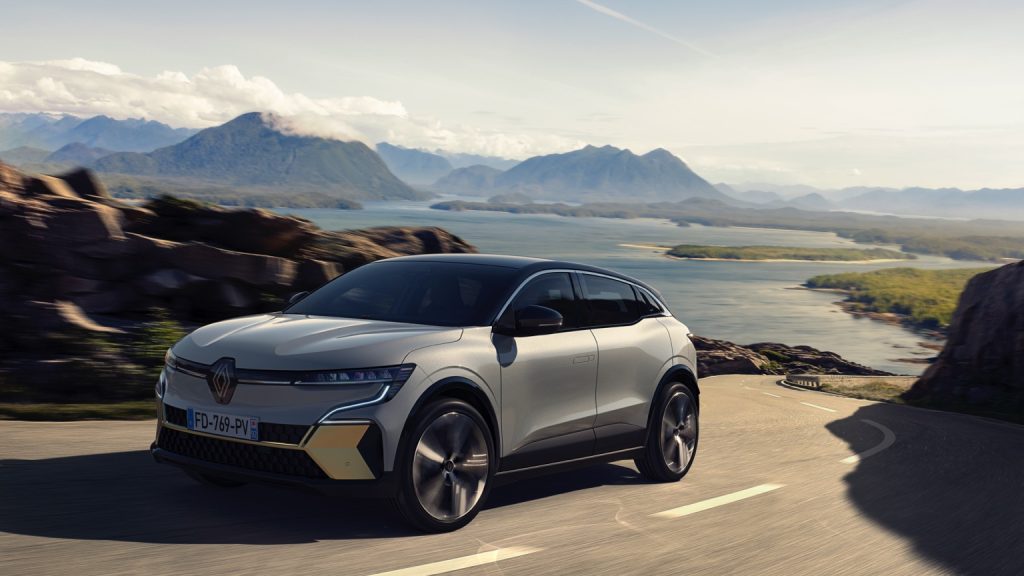
Renault has obviously placed more emphasis on the driving fun and refinement aspects in the Megane E-Tech EV60 220hp rather than on raw output. While a number of electric vehicles are competing to get the biggest headline horsepower numbers, the Megane E-Tech instead concentrates on the feel of the car on the road. Under the hood, it has a small, electrically excited synchronous motor (EESM) of 145 kg. This engineering solution avoids rare earth metals and aligns with a more sustainable manufacturing philosophy while providing punch and responsive power.
The data sheet discloses a driveline that is tailored for practicality. The 2 motor setup gives it 220 hp (160 kW) and 300 Nm of torque, available to the front wheels through a single-speed reduction gear. This combination accelerates the hatchback from 0 to 62 mph (0 to 100 km/h) in just 7.4 seconds, with a top speed of 160 km/h (approx 100 mph). All of this is fine and good, but it’s not the whole story. The instantaneous torque is calibrated to be smooth and pleasant, unlike the jerky “head-snap” acceleration you can experience in some underrefined EVs, and it’s the perfect car for snapping around town or confidently blasting past people on the motorway. At the wheel, the driving feel is genuinely European.
The steering ratio is very quick (12:1), making the car feel really nimble and reactive to tiny inputs. Due to its “Cocoon Effect,” a layer of sound-absorbing foam that is sandwiched between the battery pack and the floor, the cabin remains surprisingly quiet, even while driving at high speed. The ride is a refined compromise; it settles down enough to keep body roll in corners in check, evoking a “hot hatch” heritage, but is plush enough to soak up the irregularities of city street tarmac. Multi-Sense, a feature that enables drivers to select Eco, Comfort, Sport, and Perso modes, changes steering weight and throttle response based on the mood.
Performance & Driving Experience Comparison
A comparison between the Megane E-Tech EV60 220hp and the Tesla Model Y reveals a schism in engineering philosophy: featherweight nimbleness versus heavyweight might. The base Tesla Model Y Rear-Wheel Drive is outfitted with a single motor placed on the rear axle that generates about 295 hp and 420 Nm of torque (numbers differ slightly per update). That Rear-Wheel Drive configuration gives you better traction off the line, so the heavier Tesla gets to 62 mph a bit faster than the Renault.
With a weight of just 1,636 kg, the Megane is a good deal lighter than the Model Y (about 1,900 kg). This difference in weight means you can get that nimble, tossable feeling in corners that you just cannot get with the larger, heavier Tesla. The ride comfort is much better in the Renault, and Tesla’s suspension is often slammed for being too stiff and nervous on rough roads. In contrast, the Tesla displays a commanding road view and a “planted” feel characteristic of heavier automobiles, with power available to All-Wheel Drive in certain trims for enhanced capability in all weather conditions.
| Feature | Renault Megane E-Tech EV60 220hp | Tesla Model Y (RWD Base) |
|---|---|---|
| Drivetrain Layout | Front-Wheel Drive (FWD) | Rear-Wheel Drive (RWD) |
| Motor Technology | Electrically Excited Synchronous Motor | Permanent Magnet Synchronous Motor |
| Power Output | 220 hp (160 kW) | ~295 hp (220 kW) |
| Torque | 300 Nm | ~420 Nm |
| 0–100 km/h (0–62 mph) | 7.4 seconds | 6.9 seconds |
| Top Speed | 160 km/h (100 mph) | 217 km/h (135 mph) |
| Driving Modes | Eco, Comfort, Sport, Perso (Custom) | Chill, Standard / Sport (varies by region) |
| Regenerative Braking | 4 Levels (Paddle shifter controlled) | Standard / Low (Menu controlled, no paddles) |
Key Takeaways:
- Lightweight Architecture: The Megane’s lower weight improves agility and efficiency, making it feel more dynamic in corners than the heavier Model Y.
- Steering Precision: A quick steering ratio gives the Renault a sporty, direct feel that enthusiasts will appreciate on twisting roads.
- Sound Insulation: The patented “Cocoon Effect” technology ensures the Renault offers a quieter, more serene highway cruising experience.
- Customisable Regeneration: Paddle shifters allow Renault drivers to instantly adjust braking force, offering more engagement than Tesla’s one-pedal menu setting.
Interior, Comfort & Technology: A Digital Sanctuary
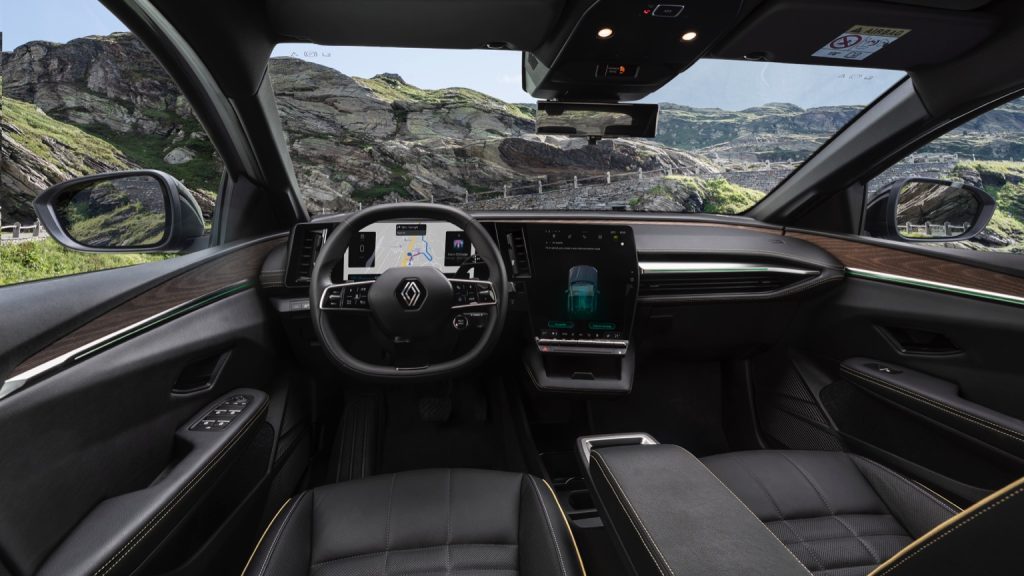
Entering the Renault Megane E-Tech EV60 220hp is less about getting into a car and more about getting comfortable in a futuristic digital salon. Renault has completely reinvented the interior experience, breaking free from the cluttered layouts of yesteryear by designing a space characterised by “Living Tech.” At the centre of this is the OpenR Link screen, a unified L-shaped screen that combines the 12.3-inch digital instrument cluster with a 12-inch vertical infotainment display. Unlike many rivals who cling a tablet to their dashboard, this screen is seamlessly baked into the cabin with stunning clarity, crisp graphics and fluidity that can be compared to the best premium smartphones.
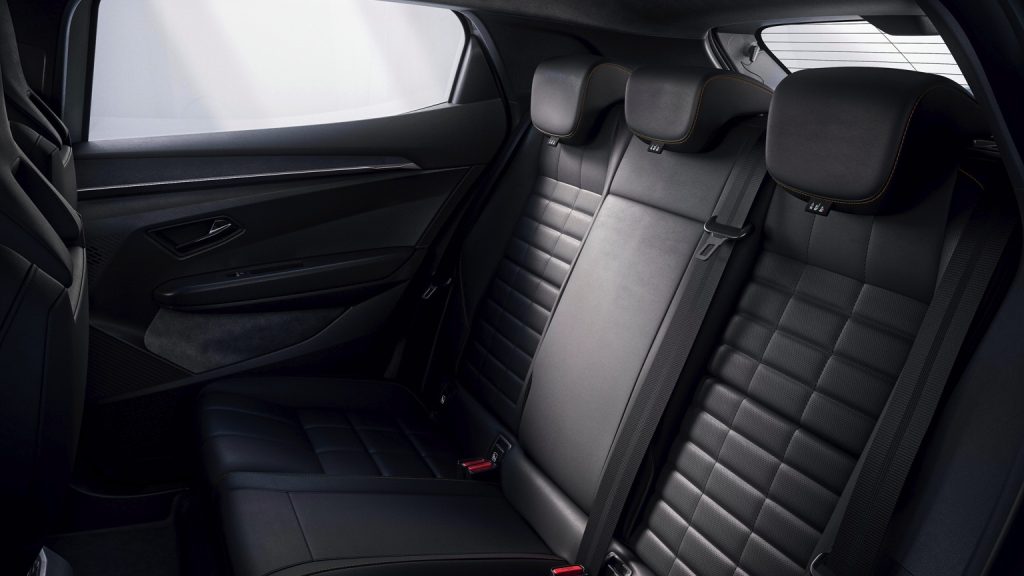
The quality of materials in the Megane E-Tech EV60 220hp’s cabin is a big improvement for the marque. Renault has made extensive use of recycled materials while achieving a high-quality feel. Depending on trim, you’ll find dashboard inserts of Nuo wood, a laser-cut real wood veneer or warm titanium accents that catch the light. They’re ergonomically shaped, making for a comfortable ride over long distances although the rear legroom is more cramped than the spacious Tesla Model Y. Storage is smart, not huge; the centre console has adjustable cup holders and a wireless charging pad, but the absence of a “frunk” (front trunk) means overall cargo space is smaller than that of its American competitor.
That’s not where the technology ends in the Renault Megane. Renault has teamed up with Google to bring Google Automotive Services directly into the car. So now Google Maps, Google Assistant and the Play Store are native to the vehicle; a phone connection is not necessary. The voice control is authentically conversational: when turning up the heat or diverting to a different destination, you never need to take your hands off the wheel. The ADAS (Advanced Driver Assistance Systems) package is all-encompassing, including a natural and non-intrusive adaptive cruise control with lane centring that feels like it’s working with the driver, not against them.
Renault Design & Exterior: Sculpted vs. Smooth
While the interior is all about digital immersion, the exterior design language narrates two very distinct architectural philosophies. The Megane E-Tech EV60 220hp is a masterclass in “Sensual Tech.” It is lower than a regular SUV, but higher than an ordinary hatchback, resulting in a distinct crossover shape. The wheels are pushed out to the extreme corners, compressing the overhangs and making the car look planted and athletic. Features like the flush door handles and the intricate LED lighting signatures, which do a welcoming animation as you get closer, bring a little theatre to owning one.
In comparison, the Tesla Model Y adopts a design of sheer minimalism and aerodynamic efficiency. Its “jelly bean”-like design is mainly for streamlining the wind, giving it a drag coefficient that improves range but may be a little soul-dampening. The Megane serves this up with character; sculpted lines on the bonnet and flanks catch the light, and the optional contrasting roof colours on higher trims provide a degree of customisation that Tesla just doesn’t have.
| Feature | Renault Megane E-Tech EV60 220hp | Tesla Model Y |
|---|---|---|
| Design Philosophy | “Sensual Tech” emphasising emotion, sculpting, and detail. | “Aero-Minimalism” focuses on efficiency and simplicity. |
| Lighting Signature | Intricate full LED lights with 3D shimmering effect at the rear. | Standard LED headlights and taillights; functional but basic. |
| Aerodynamics | Active air shutters and air curtains; optimised but retain styling flair. | Extremely low drag coefficient (0.23 Cd) achieved through smooth surfacing. |
| Body Detailing | Gold F1 blade (trim dependent), flush handles, contrasting roof colours. | Black trim (chrome delete), flush handles, uniform body colour. |
| Colour Palette | Vibrant options like Flame Red, Midnight Blue, and Rafale Grey. | An extremely low drag coefficient (0.23 Cd) was achieved through smooth surfacing. |
Key Takeaways:
- Google Integration: The OpenR Link system offers one of the best user interfaces on the market, far superior to proprietary systems.
- Premium Materials: The use of recycled textiles and real wood creates a warm, inviting atmosphere distinct from Tesla’s clinical minimalism.
- Exterior Character: The Megane offers a more expressive, personalised design compared to the ubiquitous shape of the Model Y.
- Ergonomics: While the Renault offers a driver-focused cockpit, the Tesla wins on sheer passenger space and cargo volume.
Head-to-Head: Megane E-Tech vs. The Competition
Selecting an electric vehicle these days is not always straightforward, as there are good ones to be had at a range of different prices. “They are two very different approaches.” The Model Y and Megane E-Tech are locked in a cagey contest between two competing ideologies. To get a better idea of where they stand, we need to add some other major players to the mix. This comparison takes the Megane E-Tech not just against the Model Y but also other popular challengers such as the Volkswagen ID.3 and the Kia Niro EV, and assesses which one is the best on key aspects including price, performance, design and value for money.
The electric hatchback and small SUV market is tight. Each manufacturer has its own advantage. Renault’s high point was a sophisticated design approach with a premium tech-forward interior architecture. Tesla reigns supreme with its miles-long charging network and mind-boggling performance numbers. Volkswagen has developed a well-rounded, sensible vehicle with an intuitive layout, while Kia offers an outstanding warranty and has a history of dependability. Knowing these distinctions is important to help you decide which one deserves a place in your life.
| Feature | Renault Megane E-Tech EV60 | Tesla Model Y RWD | Volkswagen ID.3 Pro S | Kia Niro EV |
|---|---|---|---|---|
| Approx. Price | ~£39,000 | ~£44,000 | ~£42,000 | ~£37,000 |
| WLTP Range | ~280 miles | ~283 miles | ~340 miles | ~285 miles |
| 0-62 mph | 7.4 seconds | 6.9 seconds | 7.9 seconds | 7.8 seconds |
| Powertrain | 220hp FWD | ~295hp RWD | 204hp RWD | 201hp FWD |
| Design | Expressive, crossover-hatch | Minimalist, aero-focused SUV | Clean, futuristic hatchback | Quirky, modern crossover |
| Value | Strong value for its premium interior, Google infotainment, and dynamic handling. | Strong value for its standard tech, massive cargo space, and access to the Supercharger network. | Excellent range for the price, spacious interior, and user-friendly experience. | Great value for its long warranty, practical features, and efficiency. |
Which Buyer Does Each Car Suit Best?
Renault Megane E-Tech EV60 220hp: The car for those drivers who want to drive with the style and technology of the current generation Megane and have fun at the wheel. If you like a solid interior, a best-in-class infotainment system (courtesy of Google) and a car that actually feels nimble and fun to drive, the Megane E-Tech is a no-brainer. It’s ideal for the discerning consumer who demands that their EV be more than just a functional appliance, that it has character, and feels premium without the premium price tag.
Tesla Model Y RWD: The Model Y is designed for the geeky pragmatist. If you want the most interior space, the best fast-charging network, and straight-line acceleration class leadership, it’s hard for anything to beat the Model Y. It’s also great for families or couples who are looking for a tool for day-to-day errands and road trips alike. The stripped-down design and software-first mentality appeal to those who consider their vehicle a work-in-progress.
Volkswagen ID.3 Pro S: The ID.3 is the practical, all-rounder. It’s for the practical, no-nonsense electric hatchback buyer who is getting one of the best range numbers in class. It may lack the style of the Renault or the brute force of the Tesla, but it has a smooth ride, a surprisingly large cabin for its size, and a time-tested, stalwart electric powertrain. It’s a great step up for people coming from a conventional hatchback, such as a VW Golf, to an EV.
Kia Niro EV: The Niro EV is the intelligent, frugal choice that doesn’t feel like one. It’s for the buyer who values reliability, a long warranty, and bargain-basement maintenance costs. With functional styling, a good amount of standard gear, and remarkable economy, the Niro EV is a steal. It’s a good choice for families or daily drivers in need of a reliable, no-nonsense electric vehicle that performs the task very well.
- Design vs. Function: The Megane E-Tech wins on design flair and interior quality, while the Model Y excels in practicality and cargo space.
- Range Champion: For those prioritising maximum range on a single charge in a hatchback form factor, the VW ID.3 Pro S is a top contender.
- Driving Dynamics: The Megane E-Tech offers the most engaging and agile handling, appealing to driving enthusiasts.
- Value and Reliability: The Kia Niro EV presents a compelling package with its industry-leading warranty and efficient performance, making it a sound long-term investment.
Why Choose Megane E-Tech or Tesla Model Y?
Choosing between the 2025 Renault Megane E-Tech EV60 220hp and the Tesla Model Y really depends on what you care most about in a car. They are both great electric cars that lead their classes, but target different priorities, lifestyles and philosophies. This is not a matter of which car is undisputedly “better” but which car is best for you. Both vehicles are a perfect representation of their brand’s philosophy and are a vision for the future of mobility.
The Renault Megane E-Tech is a symbol of Renault’s transformation and the outcome of years of manufacturing automobiles with advanced technology, and is crafted with wholly European sensibilities. The 4A’s answer to a Tesla, this is a strong choice if you think an electric car should be an attractive and fun thing to drive. It’s right at home in a life that includes spirited drives on twisty roads, darting through tight city blocks and arriving in style. For longer runs, its smooth ride and quiet cabin create a tranquil atmosphere, and its Google-based infotainment system makes it easy to get directions and find entertainment. The Megane E-Tech reflects Renault’s approach of democratising high-end technology, making it available in a shape and form that puts the driver first and aims to establish an emotional connection.
The Tesla Model Y, by contrast, is the distillation of a tech-first mentality when it comes to transportation. It’s for people who want their machinery, so to speak, in everyday life, not just tucked under a roof but integrated into the mobile, digital world. It is the best cosy blanket to have when you are young or old. Its enormous cargo room also makes it perfect for weekend trips, and its industry-leading driving range and availability of access to the Supercharger network mean you won’t be left high and dry on long roads. In urban areas, one-pedal driving makes stop-and-go easier, and its intense acceleration offers thrills like no other. The Model Y perfectly aligns with Tesla’s mission to accelerate the world’s transition to sustainable energy by demonstrating that electric vehicles can be better, not only as an alternative but also in terms of performance and utility.
- Renault Megane E-Tech EV60 220hp: Pros
- Superior Interior Quality: The cabin features premium materials, including available real wood trim and high-quality recycled fabrics, creating a warm and sophisticated atmosphere that feels more luxurious than its price suggests.
- Engaging Driving Dynamics: A quick steering ratio, lightweight construction, and well-tuned suspension make the Megane feel agile and fun, offering a more connected driving experience.
- Best-in-Class Infotainment: The native Google Automotive Services integration provides an intuitive, fast, and feature-rich user interface that sets the standard for in-car technology.
- Distinctive Design: Its “sensual tech” styling, with sculpted lines and intricate lighting, gives it a unique character and strong road presence.
- Tesla Model Y: Pros
- Unmatched Practicality: Boasts an enormous rear cargo area plus a sizable front trunk (“frunk”), providing unrivalled storage capacity in its class.
- Exceptional Performance and Range: Offers blistering acceleration even in its base model and a driving range that remains a benchmark for long-distance travel.
- Dominant Charging Network: Unrestricted access to Tesla’s global Supercharger network provides the most reliable and widespread fast-charging experience available.
- Continuous Improvement: Over-the-air software updates regularly add new features and improve existing ones, meaning the car gets better over time.
Choosing Your Perfect Electric Companion: Megane E-Tech EV60 220hp vs Tesla Model Y
After reviewing the details, it’s obvious that the 2025 Renault Megane E-Tech EV60 220hp and Tesla Model Y are exceptional electric vehicles, just with different focuses. Which one is best for you will depend on your lifestyle, driving style and what you want most from an EV.
The Renault Megane E-Tech EV60 220hp stands out with its smart design, high-quality interior, and spirited driving. If you’re looking for the finest craftsmanship, an elegant cabin with the cleanest Google-based infotainment, and a car that is fun and friendly to drive at every turn, the Megane E-Tech should be your choice. It is particularly intended for city traffic and commuters seeking a high-tech, stylish and characterful EV that makes an impression on the road.
On the other hand, the Tesla Model Y is best in practicality, range, and performance. Roomy interior, instant acceleration, and Tesla’s Supercharger network make it a family-friendly, long-haul traveller’s dream toy for those who really care about utility and cutting-edge tech. To car buyers who view their car as a high-functioning technological platform, the Model Y is truly unmatched. At the end of the day, you’re deciding between what you want most: a car with soul that gives you pure driving pleasure, or an industrial-strength workhorse that your utility office needs. Both are great electric future vehicles; it just depends on which future suits your lifestyle better.
Key Takeaways
Renault Megane E-Tech EV60 220hp:
- Exceptional interior quality and design with premium materials and Google-powered infotainment.
- Agile, engaging driving dynamics for style-conscious drivers.
- Ideal for commuters, urban drivers, and anyone seeking a refined, characterful EV.
Tesla Model Y:
- Unrivalled practicality, range, and access to Tesla’s Supercharger network.
- Impressive acceleration and innovative tech ecosystem with regular updates.
- Perfect for families, tech-focused buyers, and those needing maximum versatility.
For detailed EV comparisons and expert reviews, visit The.Car, your trusted source for electric vehicle insights.
Ready to Take the Next Step?
Explore test drives, compare financing options, and experience firsthand which electric star fits your lifestyle. Book your test drive today and step into the future of driving!