Scandinavian Serenity vs. German Precision: Volvo ES90 Twin Motor or Mercedes EQE?
The executive saloon segment is being disrupted with two strong players emerging at the centre: the upcoming Volvo ES90 and the established Mercedes EQE. These are the two best electric luxury models, which so far have dominated sales and captured the minds of elite buyers. They are remarkable not just for their outstanding range and high performance, but because they embody two polar opposite beliefs regarding what defines a ‘premium’ EV. Featuring strong lines and a traditional long wheelbase, the ES90 replaces the S90, and both models are products of Scandinavian engineering. The EQE, on the other hand, is a different proposition, carrying a hundred years of German engineering heritage.
This isn’t just a specs war; it’s a cultural clash. The Volvo ES90 takes a clean-slate approach, focusing on sustainable materials, seamless technology and a peaceful driving environment. It’s indicative of a new type of luxury that no longer requires overt displays of wealth to demonstrate itself. In comparison, the Mercedes EQE expresses a more formidable, futuristic idea of the brand in its ‘One-Bow’ design language and is generated by innovative elements such as the optional Hyperscreen. It’s a battle of Volvo’s futuristic price-consciousness versus Mercedes’ traditional, hi-tech gaudiness. While we take a look at this in-depth Volvo ES90 Twin Motor or Mercedes EQE review, you can virtually expect us to go through every aspect of these two electric saloons. From design and powertrain options to interior comfort and cutting-edge safety features, this guide will help you decide which vehicle best suits your needs. Is it the calm, meticulously engineered beauty of the Volvo, or the elegant, finely honed dynamo of Mercedes? Let’s find out.
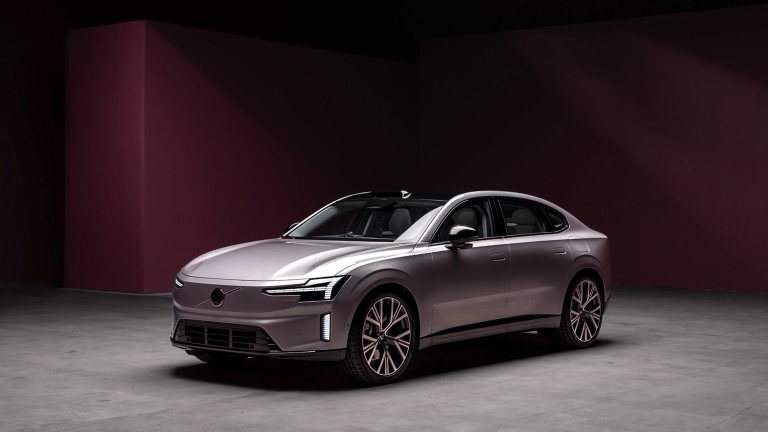
- Different Philosophies: The Volvo ES90 embodies sustainable, minimalist luxury, and the Mercedes EQE exudes technology superiority and traditional prestige.
- Segment Leaders: Both are premium electric executive saloons and come top of the range in performance, range, and technology.
- Central Conflict: This review puts Volvo’s groundbreaking, people-friendly design against Mercedes’ tradition of high-performance German engineering.
Quick Recap
Here’s a brief overview of what sets the Volvo ES90 and Mercedes EQE apart.
- Manufacturer: Volvo (Swedish) vs. Mercedes-Benz (German)
- Model Year: Volvo ES90 (expected 2025/2026) vs. Mercedes EQE (2022+)
- Body Type: Four-door executive electric saloon
- Available Trims/Variants: The ES90 will come in Core, Plus, and Ultimate trims with the Single and Twin Motor options. The EQE comes in trims such as the EQE 300 and EQE 350 4MATIC, as well as the high-performance AMG EQE 53.
- Interior and Exterior Designs: Minimalist and calm design with sustainable materials from Volvo. Mercedes chose a futuristic and aero-efficient ‘One-Bow’ shape, centred around digitalisation.
- Performance and Drive: Volvo focuses on a smooth, comfortable and safe ride. Mercedes provides a bit of tranquil ease and a hearty punch of spirited fun, particularly in AMG variants.
- Powertrain Options: Both have positions for rear-wheel drive (Single Motor) and all-wheel drive (Twin Motor), with different power ratings and battery masses.
- Technological improvements & features: Volvo secures a place as the safest and Google-based infotainment integrated vehicle. The MBUX Hyperscreen and sophisticated driver assistance systems are also iconic for Mercedes.
- Comparison: A showdown of Scandinavian minimalism and German technological prowess; sustainable luxury vs high-tech opulence. Price Range: Volvo ES90 is expected to be competitively priced, likely priced below the Mercedes EQE, which is set at a higher premium price bracket.
ES90 Twin Motor Overview & Design Inspirations
Volvo and Mercedes-Benz are completely apples-to-oranges when it comes to design and engineering philosophy, and the ES90/ EQE are perfect manifestations of their brand ethos. Volvo’s perspective is based on Lagom, the Swedish notion of “just the right amount.” That results in a clean, functional design without any unnecessary complexity. Design The ES90 is anticipated to adopt the design language showcased by the EX90 SUV, which Volvo states is “form follows function.” Upbeat Focus is on achieving calm, secure and uncluttered occupants’ space and an exterior that is elegant and aerodynamically efficient.
Volvo’s engineering is based on its proprietary SPA2 (Scalable Product Architecture) platform, which is tailored specifically for electric vehicles. This design enables a flat floor, creating a spacious interior and a low centre of gravity for predictable handling. The ultimate is safety-cum-sustainability for the maker; the ES90 is tipped to come with advanced LiDAR sensors as standard and sheathe a high degree of recycled and bio-based materials, firming up Volvo’s dedication to a circular economy.
“Without comparison, Mercedes-Benz’s design approach for the EQE is ‘Sensual Purity’ with an element of technological aspiration.” The EQE rides on the EVA2 (Electric Vehicle Architecture) platform, and its headline feature is the ‘One-Bow’ exterior design, a continuous, smooth arc line running from front to rear. And it’s not only a stylistic choice, it is functional, providing an unbelievably low drag coefficient for optimal efficiency. Mercedes says its aim was to blend aesthetic and aerodynamic principles to produce a futuristic-looking vehicle that also “glides through the air.” The EQE is meant to be both eye and mind candy.
Similarities and Differences
The Volvo ES90 and Mercedes EQE are essentially competitors at the highest levels as they are trying to win over the same particular buyer: a premium long-range electric sedan shopper. They each have a roomy cabin, sophisticated driver aids, and prestige that comes with their badges. Both are designed from the ground up on all-electric platforms, meaning they don’t have the compromises of petrol-powered car conversions to electric. That common denominator creates an apples-to-apples competition in the segment for electric executive car superiority.
It is their differences, however, that truly define them. Clean lines, an upright stance, and a focus on natural light and sustainable materials should help the Volvo ES90 appeal to a younger, more forward-thinking buyer. This group prizes quiet confidence, awareness of the environment and snappy enough technology that makes life simpler. The ES90 is for the buyer who wants the luxury, minus the loudness.
On the other hand, the swooping, space-age styling and glowing optional MBUX Hyperscreen on the Mercedes EQE’s exterior cater to the buyer who rails against subtlety and wants to make a statement with technology. That may be more applicable to older buyers who have long associated the Mercedes-Benz name with the best automotive engineering and luxury. The EQE is for a driver who wants to be at the forefront of automotive innovation and display all they’ve achieved with a stunning, futuristic car.
- Intentional Design: The ES90’s SPA2 platform optimises interior space and stability, which relates to Volvo’s human-centric design philosophy.
- Aerodynamic emphasis: The EQE features a ‘One-Bow’ design on the EVA2 platform that significantly lowers the drag, allowing it to have an extended range and better efficiency.
- Buyer appeal: The minimalist, eco-friendly design of the Volvo attracts more progressive buyers, while the Mercedes technology-laden and opulent design will continue to appeal to the traditional luxury customer.
ES90 Twin Motor Variants & Trims Breakdown
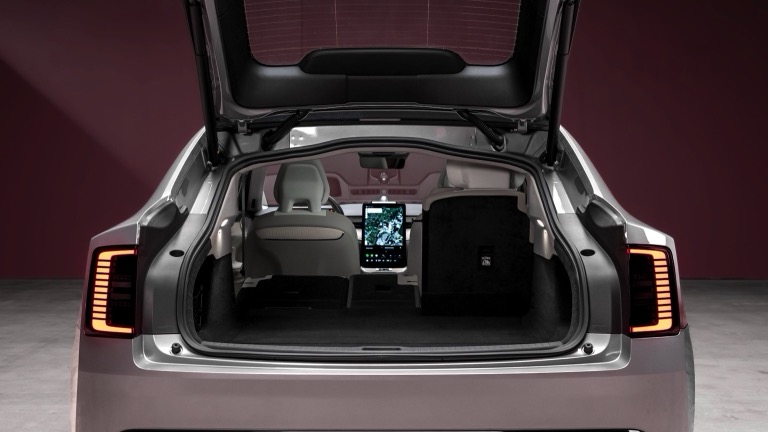
When are the Volvo ES90 Twin Motor or Mercedes EQE? Versions to keep an eye on. If you are shopping, you will see very different philosophies around customisation and value. Volvo is also likely to offer the ES90 in Core, Plus and Ultimate trim levels, which is its usual simple format for trims. The base Core model is expected to come well-equipped with the Google-driven infotainment system, a full complement of safety features, and high-quality non-leather upholstery. The Plus will bring added comfort and convenience features such as a 360-degree camera, premium audio, and ambient interior lighting. The top-of-the-line Ultimate trim will represent the height of Scandinavian luxury with the likes of a Bowers & Wilkins high-fidelity sound system, massaging front seats and an advanced air suspension.
The availability of powertrains will probably be equally straightforward: a single-motor, rear-wheel-drive Model 2 focusing on range and a dual-motor all-wheel-drive Model 2, enabling additional performance and all-weather traction. Optional features and packages will likely be limited and include a Climate pack for colder climates and upgraded wheels. This format offers a unique value at each level step, and helps simplify the purchasing decision.
Mercedes-Benz, meanwhile, has a rather complicated and nuanced EQE trim structure. The range generally begins with the EQE 300 and EQE 350+ in rear-wheel drive, followed by the EQE 350 4MATIC and EQE 500 4MATIC in all-wheel drive. In addition to these two, the AMG EQE 43 and AMG EQE 53 4MATIC+ models bring a whole new level of power and driving dynamics. Each of them also has the ability to be customised with a number of trim levels, such as Premium and Premium Plus, which add features such as a panoramic sunroof, Burmester® surround sound system, and advanced driver assistance packages. The top option is the MBUX Hyperscreen, a single 56-inch glass sheet that houses three separate displays, dramatically altering the feel and function of the cabin. That means there’s plenty of room for personalisation, but it can also add a lot to the Volvo ES90 Twin Motor or Mercedes EQE. Price.
Different Variants
The Volvo ES90 versions would be strong thanks to their well-rounded approach. The Single Motor option will be our efficiency champion, targeting those long-distance commuters and fleet buyers. The Twin Motor model will offer the effortless, silent acceleration that defines premium EVs, with confident performance for everyday driving and invigorating runs on B-roads. The big difference with Volvo’s versions is that core technologies, particularly safety, are now standardised. I’d expect the LiDAR sensor in particular and the more advanced ADAS features in general to trickle down throughout the range, bringing safety to the masses as very few other manufacturers do.
All Mercedes EQE models are in the range. The EQE 350+ is the long-distance traveller in the series, whereas the 4MATIC variants add grip and stability. It’s the real stronghold, though, with the AMG. The AMG EQE 53 is an electric super saloon, featuring AMG-specific motors, suspension tuning and a driving experience that is stonkingly dynamic for a large EV. The innovation here is how Mercedes has taken the AMG performance DNA and translated it into the electric era, with the AMG Sound Experience featuring as part of the package an artificial, but thrilling soundtrack to go along with the blistering acceleration.
Spec Sheet Appendix
Note: Volvo ES90 specifications are estimated based on the EX90 and market positioning. All specs are manufacturer-quoted and may vary by market and optional equipment.
Specification | Volvo ES90 Twin Motor (Est.) | Mercedes-Benz EQE 350 4MATIC |
Powertrain | Dual Motor, All-Wheel Drive | Dual Motor, All-Wheel Drive |
Battery (usable) | ~107 kWh | 90.6 kWh |
Power Output | ~408 bhp | 292 bhp |
Torque | ~770 Nm | 765 Nm |
0-100 km/h | ~5.0 seconds | 6.3 seconds |
Top Speed | 180 km/h (limited) | 210 km/h |
Quoted Range (WLTP) | ~580 km | ~597 km |
Charging (AC/DC) | 11 kW / 250 kW | 11 kW (22 kW opt.) / 170 kW |
- Simplified Choices: Volvo’s Core, Plus, and Ultimate trims offer a clear, value-oriented progression.
- Granular Customisation: Mercedes provides a wide array of models and packages, allowing for extensive personalisation at a higher cost.
- Standard Safety: The ES90 is expected to include its cutting-edge LiDAR safety system as standard, a major innovation for the segment.
ES90 Twin Motor Performance & Driving Experience
The on-road manners of both these saloon cars will also be different. The Volvo ES90 is built for calm, assured and solid driving, especially in the Twin Motor set-up. When to expect around 408 horsepower and a huge 770 Nm of torque to achieve a 5.0-second 0-100 km/h timing. It’s quick, but Volvo’s tune leans more towards smoothness than ‘shotgun’ launches. It’s supposed to be a relaxing drive. The steering will be light but precise, while the standard suspension setup is tuned toward comfort and will absorb bumps in the road with ease. A conventional active air suspension system may also enhance this, yielding a ride quality that embitters the outside world for the passengers. Driving modes will be easy to use, focusing perhaps on maximising range or a balanced default of sorts, indicating that the car is a calm haven rather than anything else.
The Mercedes EQE, by comparison, is a more upbeat and involving drive, even in its non-AMG iterations. The EQE 350 4MATIC (292 hp/765 Nm) is quick and agile. Power delivery is instantaneous, and the car feels nimble, especially with the optional rear-axle steering, which swivels the rear wheels as much as 10 degrees and allows the large saloon to feel as agile as a small hatchback in urban traffic. Ride quality is excellent, the Airmatic air suspension expertly negotiating the ride comfort expected on motorways and the handling required on country roads. The different drive modes from Eco to Sport make a tangible difference to the character of the car, moderating throttle response, steering weight and suspension stiffness. It’s a car that can be a mellower cruiser one minute, and a spirited sports saloon the next.
But if what is known in the lexicon as the ultimate in electric vehicle performance is what you seek, think AMG EQE 53. It sprints with up to 677 hp with overboost and the AMG Dynamic Plus Package from 0-100 km/h in 3.3 seconds. This is not just straight-line speed; the entire suspension, braking and all-wheel-drive system has been tuned by AMG to produce a truly exhilarating and communicative driving experience. And this is what the Mercedes engineering legacy best exemplifies: the day of driver enjoyment is not over in the wake of electrification.
Performance & Driving Experience Comparison
Feature | Volvo ES90 Twin Motor (Est.) | Mercedes-AMG EQE 53 4MATIC+ |
Electric Motor Setup | Dual permanent magnet synchronous motors | Dual AMG-specific permanent magnet synchronous motors |
Drivetrain | All-Wheel Drive | AMG Performance 4MATIC+ variable All-Wheel Drive |
Total Output | ~408 bhp / 770 Nm | Up to 677 bhp / 1000 Nm (w/ AMG Dynamic Plus) |
0-100 km/h | ~5.0 seconds | 3.3 seconds (w/ AMG Dynamic Plus) |
Driving Modes | Calm, Balanced, Performance | Slippery, Comfort, Sport, Sport+, Individual |
- Effortless Cruising: The ES90 Twin Motor provides smooth, abundant power for a relaxing and secure drive.
- Dynamic Agility: The EQE’s optional rear-axle steering gives it remarkable nimbleness for its size.
- Ultimate Performance: The AMG EQE 53 delivers supercar-level acceleration and handling, setting the performance benchmark in the class.
ES90 Twin Motor: Interior, Comfort & Technology
Step inside the Volvo ES90 and it’s Scandinavian minimalism at its finest in the cabin. The design is clean and minimal, focused on a large, portrait-oriented touchscreen running Google’s Android Automotive OS. This system is noteworthy, providing world-class navigation through Google Maps and full integration of Google Assistant as well. The finishes are part of the experience; Volvo will also provide high-end textile choices like Nordico, an eco-friendly textile made from recycled PET bottles and pine resin, and responsibly sourced wool blends. Yet this dedication to sustainability doesn’t come at the expense of luxury, as the cabin is spacious, bright, and immaculately detailed. A comfortable ride is the most important aspect, and the car-hardened seats are well worth sitting in for miles and miles. There is likely to be ample storage space due to the flat floor of the SPA2 platform.
When equipped with the optional MBUX Hyperscreen, the Mercedes EQE’s interior is a breathtaking expression of digital dominance. The huge, wall-to-wall glass screen integrates the driver’s display, the central infotainment and a passenger display into one cohesive unit. It looks amazing and runs on the intuitive MBUX software, which incorporates artificial intelligence to learn your habits and proactively suggest features. High-quality leather, wood trim and metal accents adorn the cabin and bring a classic richness to the environment. Ambient light with 64 colour modes for inspiration. Comfort is excellent, but the sweeping roofline of the ‘One-Bow’ layout does leave slightly less rear seat headroom than more conventional four-doors.
The technology gap is stark. Volvo tech is tongue-in-cheek, designed to be useful without being intrusive, to the point where it wants to disappear and calm you down while driving. The central screen handles nearly everything, which not everyone will love, but the Google voice assistant is good enough that you hardly ever need to use your fingers. But at Mercedes, technology is everything, and the company’s vehicles have always been loaded with the very latest gadgets, whether or not the public really wanted them. The Hyperscreen is the star of the show, a purposeful statement piece designed to wow occupants. Both vehicles come with sophisticated driver-assistance systems (ADAS), but Volvo’s integration of LiDAR heralds a next-generation sensing capability that will allow for enhanced safety and future autonomous driving functions.
Design & Exterior
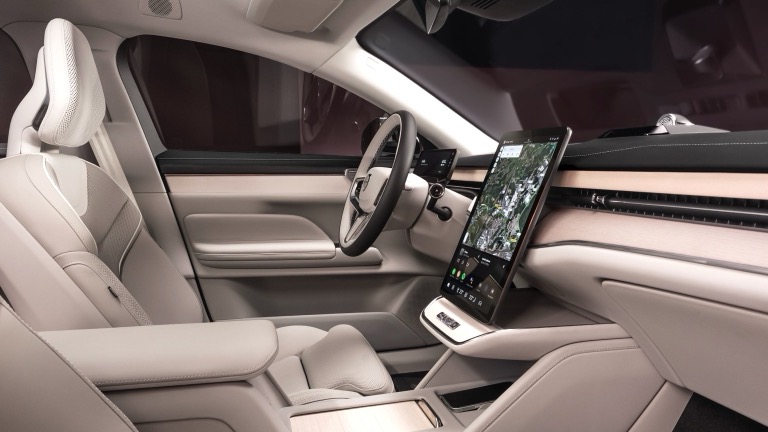
The two vehicles have very different exterior design languages. Confidence and clean surfaces, sharp, crisp lines and a proud, upright stance in combination with a close link to Volvo’s new design language are what the new Volvo ES90 is expected to portray. The new “Thor’s Hammer” headlight signature, now with a segmented, digital look, is joined by a strong, sculpted shoulder line that travels the entire length of the vehicle. It’s a design of understated power and grace, not shouting for head-turns or knock-hers-off-again chairs , but rather compelling you to feel nostalgic for a future gone by. It is based on the SPA2 platform, which supports a long wheelbase, short overhangs and a roomy, well-balanced outline.
With its streamlined ‘One-Bow’ shape, the Mercedes EQE embodies the essence of modern aerodynamic design. This cab-forward styling allows for a short hood, a steeply raked windshield that extends into the roof and a distant, smooth, narrowing tail. The surfaces are so smooth, the panel gaps so small, and things like flush door handles are just a few of the features that add to its industry-leading aerodynamics. The signature lighting features a full-width LED light bar on the front and rear, providing the EQE a distinctive and futuristic appearance on the road, especially at night. To me, it’s a car that looks like it was made by the wind.
Feature | Volvo ES90 | Mercedes EQE |
Colours | Subtle, nature-inspired metallic paints (e.g., Vapour Grey, Crystal White) | Wide range of classic and bold metallic paints (e.g., Obsidian Black, Spectral Blue) |
Lighting Signature | Segmented “Thor’s Hammer” DRLs, vertical rear lights | Digital Light headlamps, full-width front and 3D helix rear light bars |
Aerodynamics | Clean surfaces, active grille shutters (Cd ~0.23 est.) | ‘One-Bow’ design, flush door handles, smooth underbody (Cd from 0.22) |
Body Detailing | Sharp shoulder lines, minimalist chrome accents, upright grille | Smooth, seamless surfaces, “Black Panel” front grille, AMG body styling options |
- Minimalist Sanctuary: The ES90’s interior uses sustainable materials and integrated Google tech to create a calm, uncluttered environment.
- Digital Showcase: The EQE’s cabin, especially with the Hyperscreen, is a dazzling display of technological opulence and customisation.
- Contrasting Silhouettes: The Volvo’s strong, traditional saloon shape contrasts sharply with the Mercedes’ futuristic, ultra-aerodynamic ‘One-Bow’ profile.
Safety & Reliability
Volvo has made safety its whole brand promise, and the all-new ES90 is set to be its most capable saloon ever. Official crash test results from Euro NCAP are yet to come, but it is likely to gain a maximum five-star rating without any difficulty. The major innovation is the inclusion of a roof-mounted LiDAR sensor as standard, which supplements cameras and radar to provide a rich, 360-degree view around the vehicle. The system can identify pedestrians at a distance of 250 meters even during day or night, thereby increasing the efficiency of its automatic emergency braking and collision prevention system. This enhanced sensor suite also prepares the vehicle for higher levels of autonomous driving. A comprehensive range of standard safety equipment includes front seat side and curtain airbags, whiplash protection systems (WHIPS), and a high-strength steel safety cage.
Safety extraordinaire Mercedes-Benz also excels in safety, and the EQE is no different, having been awarded five stars so far by Euro NCAP. It was rated very highly for protecting adults and children inside the car. The EQE comes with an extensive range of driver assistance systems, which are packaged as the Driving Assistance Package. It includes Active Distance Assist DISTRONIC (adaptive cruise control), Active Steering Assist and a complex city traffic automatic emergency braking system that can react to pedestrians and traffic passing in front of the car. Exceptional passive safety is ensured by the car’s stiff bodyshell and advanced airbags, including a centre airbag for the front passengers.
New electric vehicles are always a question of reliability. Volvo’s track record is good, and SPA2, as a second-generation EV architecture, should be solid. The simplified powertrain and Google-based software should be reliable. Mercedes has poured its resources into the EQ line and, although early models had a few software teething pains, the MBUX system is refined and dependable. Each brand provides a full battery warranty, usually good for 8 years or 160,000 km, giving owners peace of mind in the long run. Ultimate reliability will be a function of real-world ownership, but both cars are based on solid engineering foundations from manufacturers with decades of experience.
- Next-Generation Sensing: The ES90’s standard LiDAR system provides an unparalleled level of environmental awareness for proactive safety.
- Proven Protection: The EQE has a five-star Euro NCAP rating, with excellent scores for its driver assistance and occupant protection systems.
- Long-Term Assurance: Both brands back their high-voltage batteries with extensive warranties, ensuring confidence in the longevity of the electric powertrain.
Comparison Section: Volvo ES90 vs Competitors
The executive electric saloon market is fiercely competitive. Besides the EQE, the Volvo ES90 will have potent competitors such as the BMW i5 and Porsche Taycan. This table will give you a clear breakdown of how they compare in this Volvo ES90 Twin Motor or Mercedes EQE vs Competitors showdown.
Feature | Volvo ES90 Twin Motor (Est.) | Mercedes EQE 350 4MATIC | BMW i5 eDrive40 | Porsche Taycan 4S |
Price (est. starting) | £75,000 | £78,000 | £74,105 | £95,900 |
Power Output | ~408 bhp | 292 bhp | 340 bhp | 523 bhp (on overboost) |
Drivetrain | AWD | AWD | RWD | AWD |
Range (WLTP) | ~580 km | ~597 km | ~582 km | ~512 km |
Design Ethos | Minimalist, Sustainable Luxury | Aerodynamic, Tech-Forward | Sporty, Traditional Executive | Performance-Focused, Athletic |
Value Proposition | High standard spec, leading safety | Tech leadership, brand prestige | Driving dynamics, familiar design | Unmatched performance, driver focus |
BMW i5: an attractive all-rounder. The BMW i5 is an appealing proposition, marrying BMW’s excellent driving dynamics with a design that’s much more conventional than the EQE’s. This one will likely attract buyers hoping for an electric saloon that drives like a traditional BMW sports saloon. It’s a high-tech interior, thanks to the Curved Display, but it’s still focused on the driver.
The Porsche Taycan remains king for the driver in this segment. That kind of handling, feel, and performance is second to none. However, this is at a big price premium and with some compromises in rear passenger space and maximum range compared to the other two.
Conclusion:
- The Volvo ES90 buyer seeks a calm, comfortable, and incredibly safe vehicle. They value sustainable luxury and intuitive, helpful technology over flashy features. It’s for the quietly confident professional.
- The Mercedes EQE buyer is drawn to cutting-edge technology and the prestige of the three-pointed star. They want a car that makes a statement and offers a blend of serene comfort and dynamic capability.
- The BMW i5 buyer: prioritises the driving experience. They are likely a long-time BMW enthusiast who wants electrification without losing the sporty feel the brand is famous for.
- The Porsche Taycan buyer is a driving purist who demands the absolute best performance and handling, and is willing to pay a premium for it.
Why Choose the Volvo ES90 Twin Motor or Mercedes EQE?
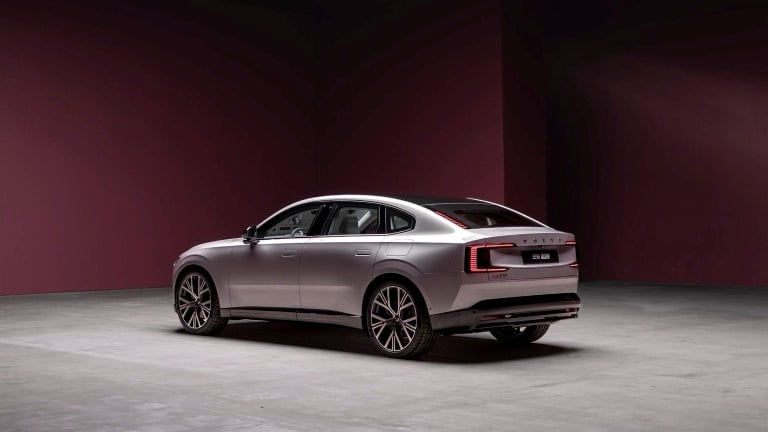
Deciding between these two great cars is a matter of personal philosophy and what you want from a luxury vehicle. The Volvo ES90 is, in all probability, one of the best options for those who have safety, comfort and a feeling of well-being as priorities. Its defining quality is the comprehensive understanding of luxury. «It’s not just about speed or gadgets, it’s about making a peaceful sanctuary that makes your life simpler and keeps you safe.»
The Mercedes EQE makes for the tech leader. If you want all the bells and whistles, the most jaw-dropping displays, and a car that looks like a peek into the future, the EQE is difficult to top. With a unique blend of efficient aerodynamics, powerful AMG variants, and the jaw-dropping Hyperscreen, this is a must for the tech-savvy boss.
The Volvo ES90 has the flexibility to meet all manner of needs. The roomy interior and smooth ride make it a great family car and an excellent long-distance tourer. Twin Motor’s instant torque makes city driving effortless and quiet; „Going around corners is a pleasant surprise. It is in keeping with Volvo’s strategy to be number one in the premium family EV market, and to do that by making practical, safe and desirable cars that integrate effortlessly into today’s life.
The Mercedes EQE is also a very utilitarian vehicle. Its quiet interior and supple ride help make the daily grind enjoyable, and its ample range and rapid charging capabilities allow it to double as a cross-country machine. The handling, particularly with the rear-axle steering, is also surprisingly agile on curving roads. It fits with Mercedes’ play to have a full EV range that resembles its traditional combustion-engine range, and offers an electric version for every type of luxury buyer.
Pros and Cons
Volvo ES90 Twin Motor
- Pros:
- Potentially class-leading standard safety with LiDAR.
- Beautifully minimalist interior with sustainable materials.
- Intuitive Google-based infotainment system.
- Exceptional comfort and ride quality.
- Cons:
- Performance is focused on comfort, not sportiness.
- Design may be too understated for some.
- Reliance on a single touchscreen for most controls.
Mercedes EQE
- Pros:
- Stunning, futuristic interior with optional Hyperscreen.
- Excellent blend of ride comfort and dynamic handling.
- Wide range of variants, including high-performance AMG models.
- Exceptional aerodynamic efficiency.
- Cons:
- It can become very expensive with options.
- ‘One-Bow’ design compromises rear headroom.
- The interior may feel overly complex for some.
Volvo ES90 Twin Motor vs. Mercedes EQE: Which Luxury EV Defines the Future?
So, with all this comparative analysis of the Volvo ES90 Twin Motor and the Mercedes EQE, can anyone be termed the winner? The answer is a resounding yes, but which one depends on what kind of driver you are.
The Volvo ES90 Twin Motor is the better choice for the contemporary driver who prioritises safety, serenity and substance over spectacle. It really is not a car which demands your attention; rather, its quiet brilliance succeeds through its intelligent engineering, clean Scandinavian design and steadfast attention to sustainability. If luxury to you means comfort, calm and easy confidence, the ES90 is your soulmate. It’s a rolling retreat, created for those whose driving purpose is not pride but pragmatics.
The Mercedes EQE, on the other hand, is the technologist’s choice and the trend-forward option. It’s a piece of engineering that stuns with digital panache and boasts a driving experience as fun as it is futuristic. From its immersive Hyperscreen cabin and AMG-refined handling to its impeccable efficiency, the EQE redefines contemporary performance luxury. It’s a sign of status and a sign of forward thinking, the right pick for those who want their car to signify innovation, sophistication and brand heritage. So really, you can’t go wrong here; there are just two different routes to electric luxury. The Volvo ES90 Twin Motor provides an example of Scandinavian tranquillity, while the Mercedes EQE presents German efficiency. In the end, it comes down to whether you want your heart to race for ‘Zen’ or ‘Z-Tech’!
Don’t just read about innovation, drive it. Experience the ES90 Twin Motor at The.Car and feel the future at your fingertips.