Taycan Turbo S vs Audi RS e-tron GT: The Ultimate German EV Duel
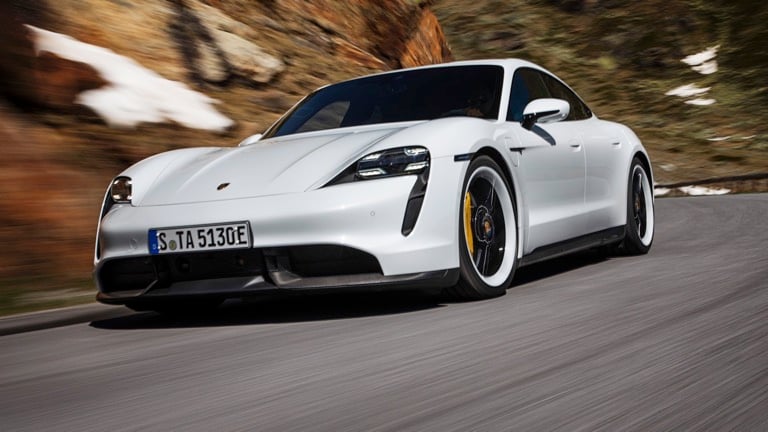
In the realm of fast EVs, two models constantly come out on top, showcasing the best in German engineering and design. The Porsche Taycan Turbo S and the Audi RS e-tron GT have reimagined what a luxury EV can be, winning over the market with their breathtaking performance, cutting-edge technology and signature road manners. These are not just electric cars; they are four-door super sedans that happen to be powered by batteries, each with an extensive heritage of motorsport and innovation. They are a measure of what is possible when legacy automakers go all in on an electric future.
Much of the commentary on these models revolves around capabilities that are mind-boggling. Both provide thrilling acceleration that will pin you to your seat, while a sophisticated chassis gives you remarkable handling and agility. They have a credible, anxiety-relieving, real-world range that turns long-haul touring into a real holiday pleasure. They are technically impressive marvels, with all the latest infotainment systems, very intelligent driver aids, and charging systems that are setting the pace for the rest of the world. This broad-based strategy explains why they receive such focus and sales numbers in the premium EV category. The Taycan Turbo S and RS e-tron GT are, at the most basic level, the highest expression of each brand’s electric performance capability.
This article will offer a comprehensive review of the Taycan Turbo S as well as that of its nearest cousin and competitor, the Audi RS e-tron GT. We will delve into the even if at times very subtle contrasts in philosophy, from Porsche’s motorsports-derived DNA to Audi’s outrée progressive luxury. This is not just a comparison between two cars; it is also a contrast between electricity-based performance as interpreted by a manufacturer with the legendary status of a sports car company and a manufacturer using electric powertrains as a means and a statement of technological superiority. Come with us as we tear apart these giants of the EV industry and see which one really prevails.
Quick Recap: Taycan Turbo S vs. RS e-tron GT at a Glance
Before we get into the weeds of this German EV battle, here is a quick rundown on what the Porsche Taycan Turbo S and Audi RS e-tron GT are. This overview provides a high-level understanding of the vehicle and serves as a preamble to the detailed analysis and full Taycan Turbo S review.
- Manufacturer: The Taycan is crafted by Porsche AG, a label that is well-known for its motorsport prowess. The RS e-tron GT is part of Audi AG within the Volkswagen Group, known for cutting-edge technology and luxury.
- Model Year: Both vehicles are at the forefront of their 2025 model year lineups and incorporate the latest in performance and technology.
- Body Type: Both are four-door performance sedans, or grand tourers, that offer supercar-level prowess married to everyday practicality.
- Trims/Variants: The Taycan range is wide, stretching from the base model to the high-performance Turbo S. The e-tron GT is available in two main variants: high-performance e-tron GT quattro and the more thrilling, top RS e-tron GT.
- Interior and Exterior Designs: Porsche’s design is a transparent evolution of the 911 with a low and wide stance and a cockpit focused on the driver. Audi has a more masculine, futuristic exterior paired with a luxurious and technology-forward interior, while placing a great deal of emphasis on space and comfort.
- Performance and Driving Experience: The Taycan Turbo S has sharp handling and explosive, consistently available power that is inspired by motorsports. The RS e-tron GT relaxes its stance a bit; this is, after all, a second-generation Audi sport sedan running gear. It presents itself as a 1000 hp+ grand tourer in every disguise.
- Powertrain Options: Both vehicles are equipped with dual-motor, all-wheel-drive electric powertrains. The main differentiator is Porsche’s revolutionary two-speed transmission at the rear axle that is optimised for both swift acceleration and efficient high-speed driving.
- Technology & Features: Both come with sophisticated 800-volt technology enabling ultra-fast charging. Porsche differentiates itself with features like Porsche Active Ride, while Audi leads with its signature Matrix-design LED headlights and ultra-immersion in Bang & Olufsen sound.
- Comparison: The rivalry is a classic two-cousins-for-a-title bout. They are built on the same basic J1 platform, but they feel completely different. The Taycan is the full-blooded driver’s car, while the RS e-tron GT is the polished, high-speed touring car.
- Sales Price: Both models are positioned at the upper tier of the market. The Audi RS e-tron GT generally comes in at a slightly lower asking price than the Taycan Turbo S, the top dog of Porsche’s electric performance range.
Engineering Soul: A Tale of Two Design Philosophies
When two vehicles are built on the same underlying platform, they find their own identities through distinct design and engineering approaches. This is exactly what happens with the Porsche Taycan Turbo S and the Audi RS e-tron GT. Both capitalise on the cutting-edge J1 platform, a purpose-built electric vehicle platform from Volkswagen Group. This common ground gives them access to the revolutionary 800-volt electrical system to deliver ultra-fast charging and superior performance. Nevertheless, from this common ground, Porsche and Audi have created two dramatically distinct versions of the electric grand tourer.
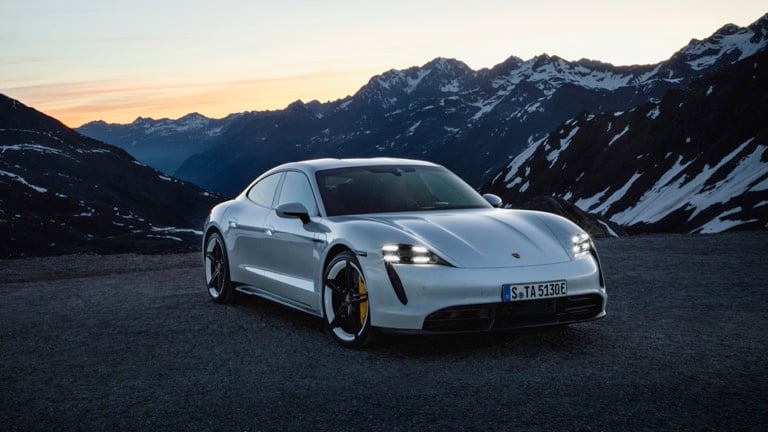
There is only one thing that guides Porsche’s handling of the Taycan Turbo S: First and foremost, this has to feel like a true Porsche, electric car or no electric car. The engineering goal was to give the vehicle the soul of the 911. This is reflected in its “flyline”, the smooth, slanting roof contour that is one of the Porsche design staples. The emphasis is on a low centre of gravity and a uniquely shaped driver-focused cockpit that envelops the driver and makes one feel intimately connected to the car. Every line and curve has been sculpted for the tuned wind in order to maximise aerodynamic performance whilst maintaining the brand’s rearward-leaning stance. As Porsche says, the Taycan was developed to provide the repeatable, circuit-capable performance its customers desire, a fundamental principle that influences every area of its design.
In contrast, the Audi RS e-tron GT lives up to the brand’s motto “Vorsprung durch Technik”, translating to “Progress through Technology”. Its design is futuristic, a powerful and refined take on the traditional Gran Turismo. Like the Taycan, the RS e-tron GT features low and wide proportions, but the electrified Audi takes a more angular, sculpted approach. The quattro blisters over the wheel arches are a reference to Audi’s rallying history, demonstrating prowess with all-wheel drive.
The cockpit, the interior, is less a cockpit, more a cosy tech-laced lounge focused on digital immersion and comfort. Audi’s design ethos is based on a progressive luxury experience where powerful beauty and pioneering technology combine to create a car that is as exciting to look at as it is to drive.
A Rivalry Forged in Shared DNA
The Taycan Turbo S vs. RS e-tron GT rivalry is all the more enticing for being an apples-and-oranges comparison as far as design is concerned. Two-litre, turbocharged J1-platform vehicles that run this close on price and specs are virtually the same car technically, but different in execution, which attracts different sensibilities. The Porsche, with its design originating in the 911 and emphasis firmly on driving dynamics pure and simple, tends to attract a slightly older and more purist buyer, someone who appreciates heritage and the uncompromised connection to the road that the brand offers. Its shape is standard, yet the timeless shapes of a sports car are applied. This entire section on the Taycan Turbo S review would not be complete if we did not mention how it speaks to any lifelong driving enthusiast.
Yet the Audi RS e-tron GT’s aggressive, space-age aesthetics and techno-centric presentations may be more appealing to a younger, technology-minded crowd. It has a more dynamic and, some might say, more aggressive front, signalling forward-thinking performance and luxury in the luxury segment. It is a break from the norm, with a digital-first personality designed for a generation that is fluent in evolving technology. That just goes to show how these two have become such perfect rivals; one is the maturation of an iconic sporting history, and the other is a powerful pronouncement of what is next.
- Shared J1 Platform: Provides both cars with a world-class 800-volt architecture for superior charging speed and performance potential.
- Porsche’s Driver-First Focus: Delivers an intimate, connected driving experience reminiscent of the 911, with a design that prioritises handling and aerodynamic efficiency.
- Audi’s Progressive Luxury: Offers a futuristic and muscular design, combined with a tech-rich cabin that emphasises comfort and digital integration.
- Distinct Buyer Appeal: The Taycan’s classic sports car ethos attracts driving purists, while the RS e-tron GT’s bold, tech-forward design resonates with modern, progressive buyers.
Decoding the Lineup: Variants and Trims Breakdown
When deciding between the Porsche Taycan and Audi e-tron GT families, you are not just picking a model; you are choosing from a carefully designed performance and luxury hierarchy. Both automakers provide different trims tailored towards different driving styles and priorities, ranging from highly capable baselines to the expression of electric power at the top of the range. Knowing these differences is the key to unlocking everything they provide. Porsche offers such a wide range of Taycan models that there will be one that fits almost anyone’s performance needs. The lineup starts with the competent rear-wheel-drive Taycan and climbs up through all-wheel-drive models such as the 4S, GTS, Turbo, and the summit, the Turbo S. Each level offers a meaningful jump in power, performance-oriented options and standard equipment.
For example, upgrading from a 4S to a Turbo not only increases acceleration, but also includes features such as Porsche Surface Coated Brakes (PSCB), and additional amenities for the interior of a more luxurious kind as standard. This in-depth Taycan Turbo S review needs to make clear right at the beginning that the Turbo S is the ultimate expression of the model line, with basically every performance option available bundled into one package that makes it a cohesive, track-ready car, including Porsche Ceramic Composite Brakes (PCCB) and rear-axle steering. Audi chooses a more orderly approach with the e-tron GT. There are two main variants in the range: the e-tron GT Quattro and the high-performance RS e-tron GT. In its own right, the e-tron GT quattro is a grand performer, and not only does it have quick acceleration, but it also has grand touring comfort. The RS version is further refined and powerful, and developed by Audi Sport, of course. Key options to upgrade the RS include a standard carbon fibre roof, plus packages that incorporate carbon-ceramic brakes and rear-wheel steering, nudging its specification towards that of its Porsche cousin.
| Trim/Variant | Key Features | Performance Highlights (est.) | Starting Price (est.) | Value Proposition |
|---|---|---|---|---|
| Porsche Taycan 4S | AWD, Adaptive Air Suspension, 19-inch Aero wheels, Partial leather interior | 562 hp (w/ Overboost), 0-60 mph in 3.8s | ~£118,500 | The balanced entry into all-wheel-drive Taycan performance blends daily usability with impressive dynamics. |
| Audi e-tron GT quattro | AWD, Adaptive Air Suspension, 20-inch wheels, Matrix-design LED headlights | 522 hp (w/ Boost), 0-60 mph in 3.9s | ~£108,000 | A compelling blend of futuristic design, strong performance, and grand touring comfort at an accessible price point. |
| Porsche Taycan Turbo | Porsche Surface Coated Brakes (PSCB), 20-inch wheels, Leather interior, Bose® Surround Sound | 670 hp (w/ Overboost), 0-60 mph in 3.0s | ~£170,000 | A significant leap in straight-line speed, bridging the gap to the flagship with enhanced braking and luxury features. |
| Audi RS e-tron GT | Carbon fibre roof, 5-layer carbon fibre inlays, E-torque vectoring plus, upgraded brakes | 637 hp (w/ Boost), 0-60 mph in 3.1s | ~£148,500 | The Audi Sport pinnacle, offering near-supercar acceleration with a focus on aggressive styling and technological prowess. |
| Porsche Taycan Turbo S | Porsche Ceramic Composite Brakes (PCCB), Rear-Axle Steering, 21-inch wheels, 18-way Sport Seats | 750 hp (w/ Overboost), 0-60 mph in 2.6s | ~£209,000 | The ultimate expression of Porsche’s electric capability, delivering uncompromising performance and handling for the driving purist. |
- Broad Taycan Range: A wide selection of models allows for precise tailoring of performance and luxury to meet individual desires.
- Focused e-tron GT Lineup: A simplified two-trim strategy offers a clear choice between a potent grand tourer and an even more powerful RS model.
- Clear Performance Tiers: Each step up in trim level provides a measurable and significant increase in horsepower, acceleration, and standard performance hardware.
- Value Through Features: Higher trims bundle essential performance and luxury options like advanced braking systems and premium interiors, offering consolidated value for discerning buyers.
The Soul of Performance: Driving the Taycan and RS e-tron GT
At the end of the day, it is all about the driving experience; that is what makes a car great or legendary. Porsche Taycan Turbo S vs Audi RS e-tron GT: Both the Porsche Taycan Turbo S and the Audi RS e-tron GT redefine what an electric performance car can be. Instead, they are designed to be engaging, rewarding drives on whatever roads you happen to take them. Here, the common platform diverges into brand-specific philosophies, which creates two distinct yet equally stunning characters to drive.
The Porsche Taycan Turbo S is a lesson in precision and exhilarating power. It has two permanent magnet synchronous motors with one placed on each axle and producing a combined power output of 560 kW (750 hp) and 1,050 Nm of torque with Overboost Power for Launch Control. That works out to a blazing 0-60 mph time of just 2.6 seconds. What really makes the Taycan different is the two-speed transmission on the rear axle. This Porsche breakthrough allows powerful acceleration from a standing start in first gear and increases efficiency and the delivery of power at higher speeds in second. The upshot is this car is an animal that pulls like crazy and can hit the same tyre-smoking numbers on repeat runs. It has a maximum speed of 161 mph, track-ready.
The Audi RS e-tron GT follows a similar dual-motor, all-wheel drive setup, cranking out a staggering 475 kW (637 hp) and 830 Nm of torque in boost mode. It goes from 0-60 mph in a mere 3.1 seconds and has a maximum speed of 155 mph. Although it does have a front motor and a single-speed transmission for the front motor, it also has the Taycan’s groundbreaking two-speed rear transmission, which gives you strong acceleration as well as composure at high speed. What really struck me was the “feel” of the drive, huge, available power. The RS e-tron GT has been designed to be a seamless blend of performance and luxury as a grand tourer vehicle. It is smooth power delivery and still very strong power, so effortless that it could be a high-speed cruise without any issues, in which to eat continental.
Feel and Feedback: A Tale of Two Tarmac Titans
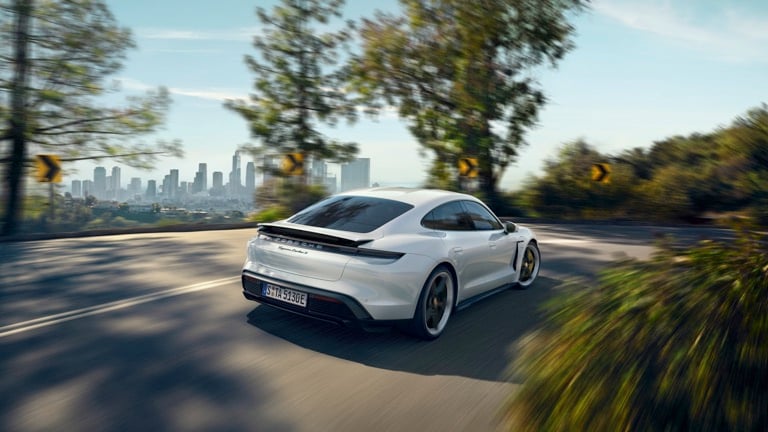
Driving the Taycan Turbo S is the art of precision driving. The driving is well-weighted and informative, giving an ever-constant amount of road surface information through the steering wheel. With standard rear-axle steering and Porsche Active Ride suspension, the car feels amazingly nimble, rotating with the immediacy of a much smaller sports car. It ploughs through corners and has nearly zero body roll, which inspires the driver with a boatload of confidence to go as fast as they can. The ride is firm, which is to be expected in a performance-oriented car, but the adaptive dampers excel at softening impacts, making it more than a little bit livable for everyday use. It is excellent because of its dual personality, its dual nature: a comfortable GT that can be turned into a track weapon at the flick of a switch.
The Audi RS e-tron GT has a different, but no less remarkable character. Its adaptive air suspension has been modified for more grand touring comfort. It is still remarkably tight and athletic through corners, but the ride is also more comfortable, shielding passengers from road bumps more so than its Porsche counterpart. The steering is fast and precise, but feels a bit lighter and less detailed than the Taycan’s, which seems to have been tuned more towards “ease of use” rather than “ultimate feedback.” The RS e-tron GT’s combination of relaxation and high-speed thrill makes it the perfect long-distance companion, a sanctuary that lets you carve canyons and zigzag through mountain roads, while providing peace and calm in every sense of the word. The drive mode combinations can stiffen the suspension and make the responses more crisp, but at heart, it is a refined and powerful GT.
| Feature | Porsche Taycan Turbo S | Audi RS e-tron GT |
|---|---|---|
| 0-60 mph (mfr. est.) | 2.6 seconds (with Launch Control) | 3.1 seconds (with Boost Mode) |
| Top Speed (mfr. est.) | 161 mph | 155 mph |
| Drive Modes | Range, Normal, Sport, Sport Plus, Individual | Efficiency, Comfort, Dynamic, Individual |
| Sport Mode Feel | Dramatically sharpens throttle, firms suspension, enhances steering weight, and activates sport sound. | Increases power availability, stiffens dampers, adds weight to steering, and opens exhaust flaps for sound. |
| Comfort/Normal Mode | Balances performance with ride comfort for daily driving, optimising suspension for compliance. | Prioritises a smooth, quiet ride, ideal for long-distance cruising and city driving. |
- Porsche’s Two-Speed Transmission: Delivers an unmatched combination of explosive low-end acceleration and high-speed efficiency, a key performance differentiator.
- Precision Handling: The Taycan Turbo S provides a direct, communicative driving experience with minimal body roll, rewarding the enthusiast driver with surgical control.
- Grand Touring Excellence: The Audi RS e-tron GT offers a supremely comfortable yet powerful ride, making it an ideal vehicle for effortless, high-speed, long-distance travel.
- Versatile Drive Modes: Both cars can instantly transform from compliant daily drivers to aggressive performance machines, offering a wide spectrum of dynamic capabilities.
A Cabin for a New Era: Interior, Comfort, and Technology
Entering the Porsche Taycan Turbo S and Audi RS e-tron GT, two very different takes on the modern luxury cabin become immediately apparent. Both are technological and material pin-ups, but when it comes to ergonomics and atmosphere, they have their own unique identity. It is at this point that the driver and passengers have their closest interaction with the automobile, and both vehicles meet expectations.
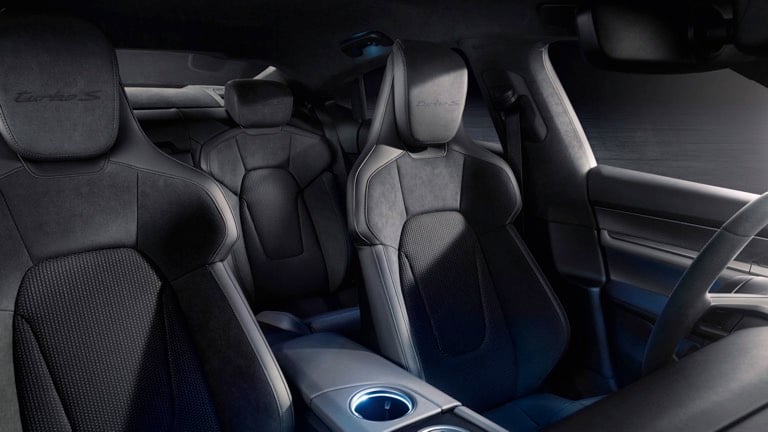
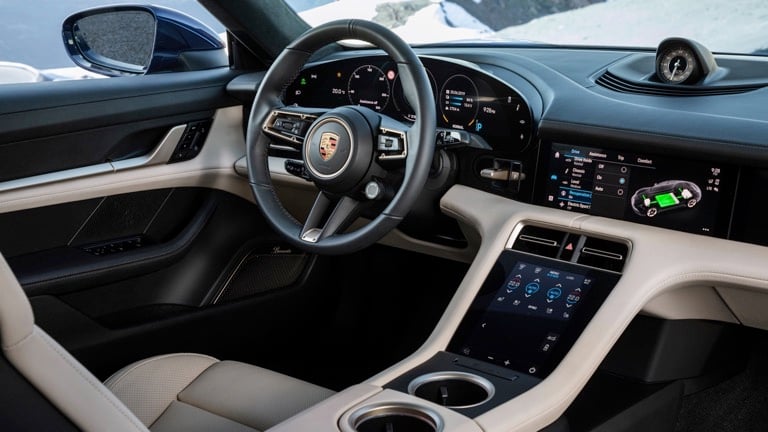
The interior of the Taycan Turbo S is a revelation in driver-oriented design, and that philosophy is developed through years of racing heritage. The low and aggressive seating position also gives you a different perspective of the road. The driver is welcomed by a beautiful, free-standing 16.8-inch curved digital instrument cluster that can be personalised to display traditional Porsche-style round dials to even a full-map presentation. The cabin design extends from the dashboard, wrapping the driver in a neat and elegant cockpit. High-quality, sustainable materials, such as the optional Race-Tex upholstery, are used throughout, pairing sustainability with a sporty, tactile sensibility. All the important controls are within easy reach, and the car feels purposeful and sporty.
By comparison, the Audi RS e-tron GT makes the cabin feel more open and boxy, with progressive luxury being its hallmark. Though it is still driver-centric, the cockpit design is more open. The options are superbly selected, and standard is a leather-free cabin outfitted with Dinamica and other recycled materials, highlighting Audi’s sustainability ethos. The crisp, customisable Audi Virtual Cockpit Plus is augmented by a central MMI touch response screen that blends in with the gloss-black finish of the dashboard. It is ultimately about producing a calm, tech-forward environment that is as visually engaging and physically comfortable for all occupants as can be.
Both cars make great grand touring cars, as far as cosy hospitality and practicality are concerned. The 18-way adaptive sport seats in the Taycan Turbo S are standard, and they offer a unique combination of comfort for long-distance travel and support for enthusiastic driving. The RS e-tron GT’s deeply bolstered sport seats have a sublime combination of comfort and lateral support. In the way of storage, both vehicles have a front trunk (also known as a “frunk”) and a traditional rear boot. The Taycan has a slightly larger frunk, while the RS e-tron GT has a roomier rear luggage area, giving it a small advantage when hauling larger items.
The Digital Heart: Infotainment and Innovation
Technology is at the heart of the experience in both these electric behemoths. The PCM system in the Taycan is a multi-screen affair. An optional passenger-side monitor enables the co-pilot to manage navigation and media without causing any driver distractions, a novelty that amplifies the high-tech vibe of the cabin. The system is fast, easy to use, and deeply integrated with Apple CarPlay. This part of our Taycan Turbo S review must also sing the praises of the sophisticated driver-assistance technologies (ADAS), including Porsche InnoDrive, which functions as a smart co-pilot for adaptive cruise control.
Audi’s MMI is equally well regarded for its easy-to-use interface and haptic feedback that generates a comforting “click” when you make your choices. The system uses natural language voice control and can be operated by speaking as if in a normal conversation, allowing you to make changes on the road. It is also fitted with a host of ADAS capabilities to serve as a safety net for everything from city driving to motorway speeds. The optional Bang & Olufsen 3D Surround Sound System delivers an audio adventure, transforming the interior into a private concert hall. Both vehicles are trailblazers when it comes to automotive technology, bringing digital innovation seamlessly into the driving experience.
- Driver-Focused Cockpit: The Taycan’s interior wraps around the driver, providing a low, sporty seating position and an ergonomic layout that prioritises control and connection.
- Progressive Luxury Lounge: The RS e-tron GT offers a more open and architectural cabin, creating a tech-forward and serene environment with a focus on sustainable luxury materials.
- Advanced Digital Displays: Both cars feature brilliant, customisable digital instrument clusters and central touchscreens that provide intuitive access to all vehicle functions.
- Intelligent Assistance: Comprehensive suites of advanced driver-assistance systems (ADAS) in both models enhance safety and reduce driver fatigue on long journeys.
Engineered for Peace of Mind: Safety and Reliability
When sportiness reaches stratospheric levels, as on the Porsche Taycan Turbo S and Audi RS e-tron GT, engineering safety and reliability become top priorities. Yet these vehicles are much more than simple speed demons; they are built like fortresses, featuring advanced safety equipment and the kind of solid, reliable build quality that German luxury manufacturers are known for. It is a promise that allows drivers to confidently push the unparalleled performance, knowing they are protected by a comprehensive set of advanced safety features.
The e-tron GT and the Taycan have both received positive assessments in independent safety evaluations, including a five-star rating from Euro NCAP. This level of excellence is attributable to their sophisticated body structures, which employ a multi-material combination of aluminium and hot-formed steel to form an extremely rigid and safe passenger cell. This solid core is complemented by an abundance of airbags front, knee, side and curtain, which help ensure that every occupant has protection in a crash.
The brake systems on these cars are technological wonders, too. The powerful tungsten-carbide-coated cast-iron discs of the Audi RS e-tron GT are standard. For even greater stopping power, carbon-ceramic brakes can be had as an option. However, in this Taycan Turbo S review, we have to mention that the Porsche sets the bar by making Porsche Ceramic Composite Brakes (PCCB) a mandatory option. This huge, track-proven brake package provides exceptional, fade-free stopping power at any speed, to the surprise of many high-performance drivers who test it.
Advanced Assistance and Long-Term Assurance
Progressing from passive safety, both models feature state-of-the-art Advanced Driver-Assistance Systems (ADAS) that help avoid accidents. Both vehicles also come standard with automatic emergency braking with pedestrian detection, lane-keeping assist and traffic sign recognition. More sophisticated options are available, such as InnoDrive from Porsche and Audi’s Adaptive Cruise Assist with lane guidance. These Level 2 semi-autonomous technologies can also take care of steering, accelerating and braking under certain conditions, helping reduce driver fatigue on long trips and improve safety in stop-and-go situations.
Both Porsche and Audi are known for their reliability, which they have also managed to translate into their flagship EVs. The interior and exterior are well finished, with tight panel gaps and good quality materials that are not likely to wear out any time soon. As EVs, they have the advantage of having dramatically fewer moving parts compared to internal combustion engine vehicles, which typically translates to reduced maintenance needs. Both brands offer full vehicle warranties on their vehicles. That includes a standard new-vehicle warranty, and, importantly, a separate extended warranty for the high-voltage battery, usually 8 years or 100,000 miles, that guarantees at least a minimum level of capacity over time. The owners receive peace of mind to live their lives with confidence and ensure their investment will be protected.
- Five-Star Safety Ratings: Both models have achieved top marks from Euro NCAP, confirming their exceptional crash protection and robust structural integrity.
- Standard Ceramic Brakes on Turbo S: Porsche’s inclusion of PCCB as standard provides unparalleled, fade-free braking performance, a key advantage for a car with its capabilities.
- Intelligent Co-Pilots: Advanced driver-assistance systems act as a vigilant co-pilot, enhancing safety and reducing stress in various driving conditions.
- Robust Warranty Coverage: Comprehensive vehicle and battery warranties offer long-term assurance, reflecting the manufacturer’s confidence in their electric powertrain technology and overall build quality.
Clash of the Titans: How the Germans Stack Up Against the Competition
While the Porsche Taycan Turbo S vs Audi RS e-tron GT is an internal family rivalry, neither lives in a vacuum. The high-end electric-performance sedan field is tightly packed, with potential challengers from veteran carmakers to fresh-faced upstarts lining the wings. To get a real sense of what makes the German duo so strong, it is necessary to compare the Porsche and Audi to some of the most important competition on the market today: the Tesla Model S Plaid and the Lucid Air Grand Touring.
The Tesla Model S Plaid has long been the standard for unadulterated, 0-60 acceleration in the electric vehicle space. Its tri-motor configuration produces astonishing power, making it possible for it to hit performance numbers that are also in line with hypercars. On paper, its acceleration is unrivalled. However, the evolutionary design of the Tesla Model S can seem a bit outdated when compared to the customised, athletic stances of the Porsche and Audi. The interior is minimalist and largely taken up by a big central screen, which might appeal to tech minimalists but does not have the rich, material-based luxury and driver-centric ergonomics of the Germans.
At the other extreme is the Lucid Air Grand Touring, a car that has made waves for its astonishing attention to range and energy efficiency. Its best-in-class, EPA-estimated range can be substantially higher than that of competitors, so it is definitely worth a look if long-range driving is your top priority. Lucid’s shape is clean and futuristic, its cabin bright and spacious, prioritising luxury and comfort. Though still very potent, its driving dynamics have been dialled more towards calm, effortless cruising rather than the razor-sharp, track-honed exhilaration of the Taycan Turbo S.
Taycan Turbo S vs. Competitors: The Data
For a clear comparison, this section of our Taycan Turbo S review lines up the four electric powerhouses across some of their key stats. The figures below are manufacturer-quoted estimates and may vary.
| Model | Starting Price (est.) | Performance (0-60 mph) | Max Power (HP) | EPA Range (est.) | Core Strengths |
|---|---|---|---|---|---|
| Porsche Taycan Turbo S | ~£209,000 | 2.6 seconds | 750 (w/ Overboost) | ~222 miles | Unmatched driving dynamics, repeatable performance, and Porsche brand heritage. |
| Audi RS e-tron GT | ~£148,500 | 3.1 seconds | 637 (w/ Boost) | ~249 miles | Blend of GT comfort and supercar performance, futuristic design, luxurious interior. |
| Tesla Model S Plaid | ~£90,000 | 1.99 seconds | 1,020 | ~359 miles | Unrivalled acceleration, extensive Supercharger network, minimalist tech. |
| Lucid Air Grand Touring | ~£110,000 | 3.0 seconds | 819 | ~469 miles | Class-leading range and efficiency, spacious and luxurious cabin, elegant design. |
Finding the Perfect Fit: A Car for Every Driver
Following this comparison, it is evident that all of these extraordinary vehicles appeal to different types of people. The Tesla Model S Plaid is the car for velocity-worshipping drivers. It is the undisputed king of straight-line speed, delivering visceral and nearly unbelievable punch for a tiny fraction of what you would spend on European supercars. Its value has everything to do with performance figures and access to Tesla’s vast Supercharger network.
The Lucid Air Grand Touring is designed for the long-distance traveller and the tech-savvy luxury consumer. It is for buyers who consider EVs a means for calm, efficient and comfortable travel, and who do not really worry about range anxiety. Its main attraction is a combination of revolutionary efficiency, a roomy and stylish interior, and effortless power.
The Audi RS e-tron GT achieves the perfect equilibrium of high-performance sports car and comfortable grand tourer. It is the perfect car for the driver who wants uncompromising speed and futuristic styling and still needs to use the car on a daily basis. It delivers a high-tech, sophisticated experience that feels unique on every drive, whether you are making a cross-country tour or pushing it hard on a twisty mountain road.
Is the Porsche Taycan Turbo S the ultimate option for the driving purist? It is for the person who wants more than just speed, who wants to feel connected to the road, who wants precision handling and the heart of a real sports car. It is designed for the motorsport enthusiast who seeks out both the thrill of the track and high levels of repeatable, fade-free braking. There is no compromising the ultimate performance machine that scares off even a hint of EV quiescence and proves electric cars can provide the most enthralling driving experience ever produced.
- Diverse Market Choices: Competitors like the Tesla Model S Plaid and Lucid Air Grand Touring offer distinct advantages in straight-line speed and range, respectively.
- Porsche’s Dynamic Superiority: The Taycan Turbo S justifies its price through superior driving dynamics, braking performance, and a build quality that feels engineered for the track.
- Balancing Performance and Luxury: The Audi RS e-tron GT offers a compelling package that balances aggressive performance with grand touring comfort and progressive design.
- Buyer-Specific Strengths: Each vehicle excels for a different reason, from the Lucid’s range to the Tesla’s acceleration, making the “best” car a matter of personal priority.
Choosing Your Champion: Taycan Turbo S or RS e-tron GT?
Choosing between the Porsche Taycan Turbo S and the Audi RS e-tron GT is a good problem to have, considering the two cars epitomise electric performance and luxury. Both vehicles offer strong arguments for being one of the best electric cars you can buy, but they do so by catering to different priorities and lifestyles. Your final call will depend on what you want in a high-performance machine: the absolute exhilaration of the ride or the sophisticated harmony of velocity and tranquillity.
The Taycan Turbo S is a testament to how far Porsche will go to deliver the best driver’s car. It is the common-sense pick for the enthusiast who believes an electric car should be more than just quick; it should feel alive and be communicative. Its design is a straightforward application of Porsche’s motorsport DNA to an electrified platform, with an emphasis on razor-sharp handling, repeatable lap times and a close connection between driver and road. For daily driving, the suspension is surprisingly compliant, but its mission is clear: on twisting mountain roads and rushing highways, where it can really show what it is made of. This car fits Porsche’s strategy statement to show the soul of a sports car is determined by what lies under the bodywork, rather than the type of powertrain it uses.
On the other hand, the Audi RS e-tron GT is an expression of radical luxury and grand touring polish. It is for the person who wants to go incredibly fast in something that looks to the future, that is comfortable and is technologically advanced. It shines as a multi-functional all-star. Its roomy interior and more compliant ride make it a fantastic long-distance traveller, while its quick acceleration and pod-like silhouette make it fun to drive in the city. The RS e-tron GT represents Audi’s “Vorsprung durch Technik” (Advance through Technology) principle and is an example of how innovative design and user experience-focused technology can combine to create an exhilarating but refined driving experience.
Porsche Taycan Turbo S
This is a complete Taycan Turbo S review? Clearly, then, the dynamic ability has been the subject of this comprehensive Taycan Turbo S review. It is made for people who want the ultimate electric driving experience.
- Unrivalled Driving Dynamics: Offers a level of handling precision, steering feedback, and agility that is unmatched in the electric sedan segment.
- Repeatable Performance: The advanced cooling systems and two-speed transmission ensure it can deliver breathtaking acceleration again and again without performance degradation.
- Standard Top-Tier Brakes: Porsche Ceramic Composite Brakes (PCCB) come as standard, providing immense and fade-resistant stopping power that inspires confidence.
- Brand Prestige: Carries the weight and heritage of the Porsche crest, representing a legacy of motorsport success.
Audi RS e-tron GT
The Audi RS e-tron GT is the quintessential high-speed grand tourer, designed to cross continents in comfort and style.
- Striking, Futuristic Design: Its muscular and progressive styling makes a bold statement on the road.
- Grand Touring Comfort: The adaptive air suspension is tuned for an exceptional balance of comfort and control, making it ideal for long drives.
- Luxurious, Tech-Forward Cabin: The interior feels spacious and modern, with an emphasis on sustainable materials and intuitive technology.
- Strong Value Proposition: Offers a level of performance and luxury that is highly competitive with the Taycan Turbo S but at a more accessible price point.
The Final Decision: Which German EV Reigns Supreme?
The time to figure out which is better between the Porsche Taycan Turbo S vs Audi RS e-tron GT is not about picking the “better” car, but rather identifying the “better for you” car. Both vehicles are the epitome of what you can achieve with electric performance, engineering, and luxury. Their foundation is world-class, but they are different in what they deliver on experience. Ultimately, it is up to you what high performance means and how a car should feel.
The Audi RS e-tron GT is a work of art, in both progressive design and grand touring capability. This is the ultimate pick for the driver who wants unparalleled luxury in an advanced technology vehicle that presents a bold, futuristic look. Its supple ride and quiet, plush cabin make for a peaceful environment for daily commutes as well as long treks on the highway. It is uncommonly fast, impeccably made, and presents a view of the future you can drive today. The RS e-tron GT is for the discerning individual who desires a sophisticated yet all-powerful Gran Turismo that delivers breathtaking performance in a package suitable for everyday use.
Why the Taycan Turbo S Commands the Lead
The Porsche Taycan Turbo S, meanwhile, is a whole other beast. Although it has a comfortable and functional four-door saloon body, its heart lies in motorsport. This car is for the driving purist. It is for the person who hungers for a pure connection to the tarmac, who appreciates telepathic steering and who insists on repeatable, track-ready performance. It has sharper handling, a more communicative chassis, and its acceleration is nothing short of brutal. This definitive Taycan Turbo S review states that it is the best driver’s car in the electric age and one that trades a modicum of ride comfort for a massive increase in dynamic involvement. It is the obvious choice for anyone who would be in a 911 if only they needed four doors.
So, is the Taycan Turbo S Worth It?
Absolutely. If you are a driver who needs feel and feedback above all else, the Taycan Turbo S is not just worth it; it is the undisputed yardstick. It shows that an electric car can be just as heart-racing and precise as the one that made Porsche famous for decades. It is a car that delivers on your commute, thrills you on a twisty back road, and can also hold its own on a racetrack. It is a vehicle for someone who will not settle for anything less than the best driving experience.
Feel the soul of an electric Porsche? The Taycan Turbo S’s real essence demands to be experienced. Contact us to arrange your test drive and crown today’s most engaging EV. Sense the dual insights, bookings, and more at The.Car!